Elevating Professional Standards: The Strategic Importance of BNSP Master Instructor Certification for Modern Educators and Trainers

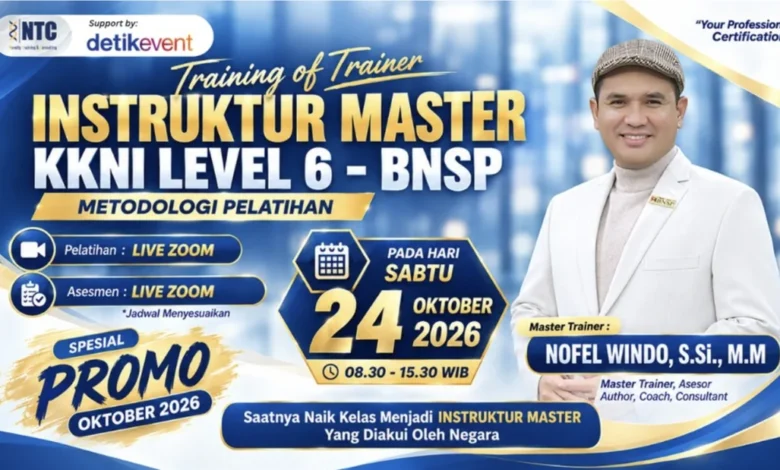
In an era where the professional training and development landscape is shifting toward standardized competencies, the demand for verifiable expertise has never been higher. For seasoned facilitators, corporate trainers, educators, and organizational coaches, the ability to demonstrate mastery through official channels is no longer merely a professional advantage—it is a necessity. The Certification of Competency for Master Instructor KKNI Level 6, issued by the National Professional Certification Agency (BNSP) of the Republic of Indonesia, represents the gold standard for those seeking to formalize their pedagogical influence and validate their years of practical experience.
As the corporate training sector continues to evolve, the distinction between experiential knowledge and certified competency becomes the primary differentiator for high-level practitioners. This certification program serves as a critical bridge, transforming individual professional milestones into a standardized, state-recognized credential that aligns with the Indonesian National Work Competency Standards (SKKNI).
The Evolution of Training Standards and the KKNI Framework
The Indonesian National Qualifications Framework (KKNI) is a manifestation of the government’s commitment to aligning educational and training outcomes with global labor market requirements. At Level 6, the Master Instructor certification signifies that an individual possesses not only the ability to convey knowledge but also the capacity to design, implement, and evaluate complex training programs that meet rigorous industrial standards.
Historically, the training industry was defined by "on-the-job" learning, where the quality of an instructor was measured primarily by client testimonials and years of service. While these metrics remain valuable, they lack the objectivity required by modern corporations and government bodies that prioritize risk mitigation and performance-based outcomes. By achieving BNSP certification, instructors align themselves with a national mandate to standardize the quality of human capital development. This shift is part of a broader trend across Southeast Asia to professionalize the instructional design and delivery sector, ensuring that those responsible for workforce upskilling are themselves held to the highest pedagogical benchmarks.
Program Structure and Mentorship Methodology
The upcoming certification cycle, scheduled for October 24, 2026, is facilitated by Nofel Windo, S.Si., M.M., an industry veteran who serves as a Master Trainer, BNSP Assessor, and consultant. The program is uniquely structured to address the common pain point of the certification process: the transition from theory to successful assessment.
Unlike passive seminars, this initiative focuses on end-to-end mentorship. Participants receive structured guidance that bridges the gap between their existing methodology and the specific requirements of the BNSP assessment process. This approach is essential because the assessment is not merely a test of knowledge; it is a demonstration of competency. Candidates must prove they can manage learning environments, handle participant dynamics, and adhere to administrative standards set by the BNSP.
The digital format, conducted via Zoom, reflects the modern reality of professional development. By removing geographical barriers, the program enables practitioners from across the Indonesian archipelago to participate in a high-stakes professional certification without the logistical overhead of travel, while maintaining the rigor of a live, synchronized training environment.
Strategic Value for Trainers, Educators, and Coaches
For those entrenched in the world of professional development, the implications of this certification are multifaceted:
- Market Differentiation: In a competitive consulting landscape, a BNSP-certified Master Instructor possesses a verifiable credential that is immediately recognizable to HR departments and procurement teams. It provides a shorthand for competence that LinkedIn endorsements or anecdotal success stories cannot replicate.
- Institutional Credibility: For academics, university lecturers, and corporate trainers, the KKNI Level 6 certification serves as a benchmark for quality assurance. It signals to institutions that the instructor is capable of delivering training that is pedagogically sound and outcome-oriented.
- Professional Network Integration: Beyond the certification itself, candidates gain access to a network of professionals who are similarly invested in the highest standards of the craft. The inclusion of an exclusive BNSP RI Trainer PIN acts as a physical and digital marker of this professional standing.
- Adherence to Best Practices: The certification process requires candidates to audit their own training materials, delivery styles, and assessment methods against national standards. This self-reflective process often leads to immediate improvements in the candidate’s own training efficacy.
The Macro Impact: Why Standardization Matters
The move toward mandatory or highly encouraged certification for instructors is part of a larger economic strategy to increase the productivity of the Indonesian workforce. When trainers are standardized, the quality of the "output"—the knowledge and skills transferred to the workforce—becomes more predictable and reliable.
Industry analysis suggests that corporations that mandate certified training for their internal staff see higher rates of knowledge retention and better alignment with strategic business goals. By fostering a cohort of Master Instructors, the BNSP is essentially creating a multiplier effect; each certified instructor carries the responsibility of upholding these standards in every session they conduct, thereby elevating the quality of education across all sectors.
Chronology and Logistics: Planning for the October 2026 Assessment
The program is designed as an intensive, single-day session, reflecting the time-sensitive nature of the target demographic.
- Registration Phase: Potential candidates are currently encouraged to secure their slots via the official platform. Given the high demand and the requirement for personalized mentorship, the intake is strictly capped to ensure that the instructor-to-participant ratio remains conducive to individual assessment preparation.
- Preparation Phase: Once registered, participants begin the transition into the mentorship program, where they are introduced to the assessment rubrics and the expectations of the BNSP assessors.
- Live Session (October 24, 2026): The core program runs from 08:30 to 15:30 WIB. The agenda is packed with technical training, competency mapping, and simulation exercises, all leading toward the final submission requirements.
- Assessment Phase: Following the training, participants move into the official assessment phase, where their competence is evaluated by a certified assessor. Success in this phase culminates in the issuance of the BNSP certificate.
Addressing the Professional Gap
A common misconception among veteran trainers is that they have already "outgrown" the need for certification. However, many experts argue that the most successful professionals are those who engage in continuous cycles of validation. The Master Instructor designation is not just about learning how to teach; it is about learning how to be measured.
In the current professional ecosystem, organizations are becoming increasingly risk-averse. When selecting trainers for large-scale corporate programs, stakeholders now frequently require proof of certification. A lack of such credentials can lead to lost contracts and limited opportunities for advancement. By formalizing their expertise, trainers protect their professional longevity and open doors to high-value projects that require government-endorsed credentials.
Final Considerations for Prospective Candidates
The decision to pursue the Master Instructor KKNI Level 6 certification is an investment in professional longevity. As the training industry continues to professionalize, the gap between those who are certified and those who rely solely on experience will widen.
Participants are urged to review the prerequisites carefully. While the program is designed to guide participants through the assessment process, the underlying requirement is a base level of professional instructional experience. The goal is to polish, validate, and certify, rather than teach the fundamentals of training from scratch.
For those ready to formalize their standing in the industry, the upcoming session offers a structured, efficient path to achieving a level of recognition that serves as a cornerstone for a career in professional education. Prospective attendees are encouraged to visit the official event page to review registration details, confirm eligibility, and ensure their participation in the October 2026 cohort, keeping in mind that capacity is limited to maintain the integrity of the mentorship program.
As the industry approaches this date, the professional training sector in Indonesia continues to demonstrate a clear trend: the future belongs to those who can demonstrate not just what they know, but how effectively they can transfer that knowledge within a framework of national excellence. This certification is the tool to ensure that transition.