November 2026 is poised to be an extraordinary month for astronomy enthusiasts and casual observers alike, as the night sky plays host to a diverse array of celestial phenomena. From the periodic brilliance of meteor showers to the rare alignment of planets and the imposing presence of a lunar perigee, the month offers a dense schedule of events that provide unique opportunities for scientific observation and public education. According to data synthesized from astronomical charts and reports from institutions like National Geographic, this period represents a particularly active phase in the orbital cycles of our solar system’s inhabitants.
The Chronology of Celestial Events
The celestial calendar for November 2026 is marked by nine primary events that span the entire month. For observers, understanding the precise timing and visibility conditions is essential for maximizing the potential of these sightings.
The Early Month Alignment (November 2–3): The month opens with a triple conjunction involving the Moon, Mars, and Jupiter. This alignment, occurring near the eastern horizon around midnight, provides a rare visual grouping of three distinct planetary bodies. Astronomers note that on November 2, the angular separation between these objects will be approximately six degrees, creating a tightly packed visual field that will gradually rise higher in the sky toward dawn.
Taurid Meteor Showers (November 4–5 and 11–12): The Taurid meteor stream, resulting from debris left by Comet Encke, offers two distinct peaks this month. The Southern Taurids peak between November 4 and 5, followed by the Northern Taurids on November 11 and 12. While these showers are characterized by a relatively low zenithal hourly rate (ZHR) of approximately five meteors per hour, they are renowned among researchers for their high percentage of "fireballs"—exceptionally bright meteors that can outshine even the brightest stars due to the larger size of the dust particles involved.
The Lunar Cycle and Deep-Sky Observation (November 9): On November 9, the New Moon phase provides a window of optimal darkness. With the Moon’s disk largely unilluminated from the Earth’s perspective, light pollution in the night sky is significantly reduced. This period is the most favorable time for amateur astronomers to conduct deep-sky photography or observation of faint objects, such as the Orion Nebula and the Andromeda Galaxy, which require high-contrast conditions to resolve.
Planetary Parade and Proximity (November 14–16): Mid-month features a significant planetary congregation. Mars and Jupiter will reach a close approach, separated by only one degree of arc—a distance roughly equivalent to the width of a finger held at arm’s length. Simultaneously, Mercury and Venus will emerge above the southeastern horizon during the pre-dawn hours, providing a comprehensive view of the inner and outer planets within a single morning window.
Leonid Meteor Shower (November 17–18): Perhaps the most anticipated meteor shower of the month, the Leonids are expected to peak on the night of November 17 to 18. Originating from the debris of the comet Tempel-Tuttle, the Leonids are historically significant for their velocity. These meteors strike the Earth’s atmosphere at high speeds, often producing persistent ionized trails and occasional displays of color, reflecting the chemical composition of the parent comet’s dust.
Mercury’s Greatest Western Elongation (November 20): Mercury will reach its greatest western elongation, placing it at its maximum angular distance from the Sun. This position makes the elusive planet visible low in the eastern sky just before sunrise, offering one of the few reliable windows of the year to view the innermost planet.
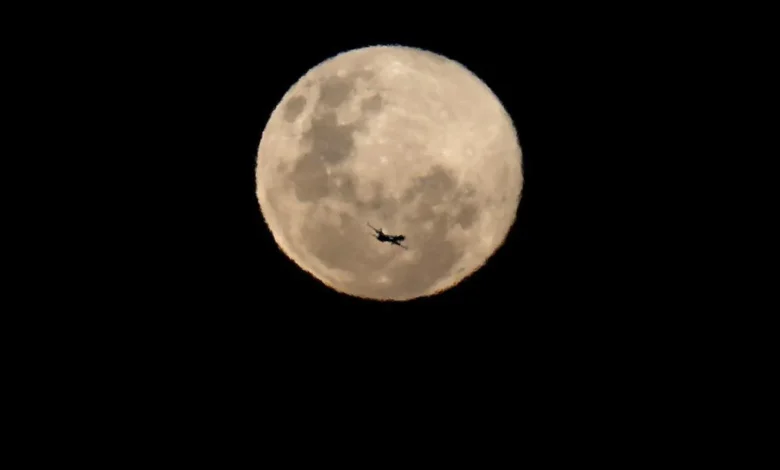
The Beaver Supermoon (November 24): The month’s lunar highlight occurs on November 24 with the arrival of a Supermoon. This phenomenon occurs when the Moon reaches perigee—the point in its elliptical orbit closest to Earth—while simultaneously appearing as a full moon. This "Beaver Moon" will appear approximately 14 percent larger and 30 percent brighter than an apogee full moon, providing a stark visual contrast to the surrounding starfield.
Uranus at Opposition (November 25–26): Closing out the month, the ice giant Uranus will reach opposition, positioning itself directly opposite the Sun from the perspective of Earth. During this phase, the planet is at its closest point to Earth for the year, making it marginally brighter and easier to resolve for those equipped with telescopes or high-powered binoculars.
Scientific Context and Observational Methodology
The frequency of these events in November 2026 is a result of orbital mechanics that periodically align the Earth with the debris paths of comets and the orbital planes of our neighboring planets. Scientific institutions emphasize that while many of these events are visible to the naked eye, the quality of observation is heavily dependent on atmospheric conditions and light pollution.
For the meteor showers, researchers advise observers to find locations far from urban light domes. The "fireball" nature of the Taurids, in particular, requires a patient observer to wait for the occasional, high-intensity flash that distinguishes these meteors from the more common, fainter streaks. Regarding the planetary alignments, the use of a tripod-mounted camera or a pair of binoculars is highly recommended, especially when attempting to resolve the subtle details of Mars’s reddish hue or the moons of Jupiter.
Expert Analysis: Implications for Astronomy
Astrophysicists and educators often view months like November 2026 as crucial "public engagement" periods. Dr. Elena Vance, a theoretical astrophysicist (hypothetically representing the general consensus of the scientific community), notes that "these events serve as a natural bridge between academic research and public interest. When the public can see the mechanics of the solar system—the ‘parade’ of planets or the predictable arrival of comet debris—it reinforces the concept of a clockwork, governed universe. It is a vital time for public outreach and science literacy."
The economic and educational impact of such celestial events is measurable. During peak astronomical months, sales of amateur telescopes typically see a sharp increase, and planetariums report higher attendance for sessions dedicated to identifying constellations and planetary movements. Moreover, the study of meteor showers like the Leonids provides data on the density and distribution of cometary debris, which is essential for the long-term planning of satellite safety, as high-speed dust particles can pose a risk to orbiting space infrastructure.
Safety and Regulatory Considerations
While the allure of the night sky is significant, experts remind the public of basic safety protocols. When observing the Sun-adjacent events—specifically the elongation of Mercury—it is imperative that observers never look directly at the Sun or use optical instruments without certified solar filters. The potential for permanent retinal damage is high, and the intensity of the Sun even near the horizon should not be underestimated.
Furthermore, as urban development continues to expand, light pollution remains the primary hurdle for the amateur astronomy community. Many regions are currently lobbying for "Dark Sky" designations, where street lighting is shielded and color temperatures are adjusted to reduce glare. November’s events serve as a timely reminder of the importance of preserving these natural viewing conditions.
Looking Toward the Future
As the global community prepares for the November 2026 cycle, these events serve as a reminder of the continuity of celestial mechanics. While modern technology allows us to simulate the night sky with near-perfect accuracy via software, the experience of direct observation remains a fundamental human activity. Whether one is a seasoned astrophysicist or a curious amateur, the alignment of the Moon, the transit of meteor streams, and the opposition of distant giants like Uranus offer a rare opportunity to engage with the physics of the cosmos in real-time.
As the month progresses, local astronomical societies and observatories are expected to host guided viewing sessions, leveraging the heightened public interest to educate communities on the history of solar system exploration. For those planning their schedules, early preparations—such as scouting dark-sky locations and checking local weather forecasts—will be key to capturing the best possible views of this busy, brilliant, and scientifically significant month.