International Day of Sign Languages 2026: Advocating for Full Human Rights and National Sign Language Access for the Global Deaf Community

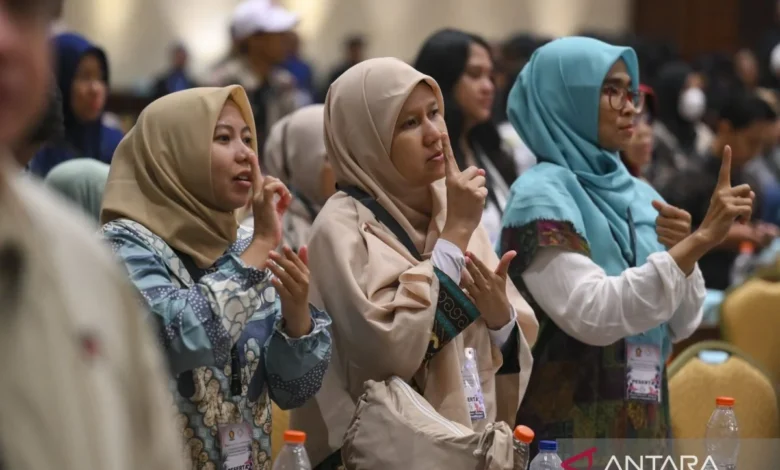
Language remains one of the most fundamental pillars of human existence, serving as an indispensable vehicle for communication, the acquisition of knowledge, educational advancement, and daily social interaction. For the global Deaf community, sign languages are not merely alternative methods of expression, but rather the primary and most natural means of fulfilling their fundamental right to communicate, access information, and engage fully in society. Every September 23, the global community observes the International Day of Sign Languages, a momentous occasion dedicated to raising public awareness about the vital role sign languages play in securing and protecting the human rights of Deaf individuals worldwide.
The observance falls during a particularly significant milestone year in 2026, coinciding with the 75th anniversary of the World Federation of the Deaf (WFD) and the 20th anniversary of the adoption of the United Nations Convention on the Rights of Persons with Disabilities (CRPD). Under the overarching theme of "Declaring Deaf People’s Human Rights," the 2026 commemoration calls for concrete, systemic action to ensure that the human rights of Deaf individuals are fully realized across all spheres of life. Central to this call to action is the demand for unhindered, full legal and practical access to national sign languages, bridging the gap between legislative promises and the lived realities of millions of people around the globe.
Historical Evolution and the Establishment of the Global Observance
The roots of the International Day of Sign Languages trace back to the mid-20th century, a transformative era for disability rights and international advocacy. The date of September 23 was specifically chosen to commemorate the founding of the World Federation of the Deaf in 1951. Since its inception, the WFD has operated as an international non-governmental organization dedicated to promoting the human rights of Deaf people, safeguarding their linguistic and cultural identities, and fostering international cooperation among national associations of the Deaf.
Over seven decades of persistent advocacy, the WFD has transformed from a pioneering coalition into a powerful global voice representing tens of millions of Deaf individuals. The culmination of decades of lobbying by international disability networks eventually led to formal recognition by the United Nations. On December 19, 2017, the United Nations General Assembly officially adopted Resolution A/RES/72/161, a landmark document established by consensus. Sponsored initially by the Permanent Mission of Antigua and Barbuda and co-sponsored by 97 member states, the resolution formally designated September 23 as the International Day of Sign Languages.
This historic resolution built upon the long-standing tradition of the International Week of the Deaf, which has been observed annually by the global community since 1958. The first official International Day of Sign Languages was celebrated on September 23, 2018. Since then, the annual event has served as a global platform to highlight the linguistic identity of Deaf people, challenge systemic ableism, and promote multilingualism as a core component of human rights.
Core Objectives and Strategic Priorities of the Observance
The United Nations and international human rights organizations emphasize that the International Day of Sign Languages is structured around several critical pillars, each designed to address systemic inequalities faced by the Deaf community.
First, the observance aims to fundamentally shift public perception regarding the nature of sign languages. Contrary to outdated misconceptions that view sign languages as mere collections of physical gestures or simplified pantomimes substituting spoken words, the UN explicitly recognizes sign languages as fully fledged, natural languages equipped with complex, independent grammatical structures and rich linguistic properties. Like any spoken language, sign languages vary across regions, cultures, and nations, possessing distinct vocabularies and syntactic rules.
Second, the commemoration strongly supports the holistic fulfillment of human rights for Deaf individuals. Access to sign language is inextricably linked to the realization of fundamental rights, including the right to education, equitable employment, healthcare access, legal representation, and participation in civic life. The UN resolution stresses the critical importance of early childhood exposure to sign language and accessible public services, ensuring that Deaf children can acquire language naturally from infancy—a crucial factor for cognitive and social development.
Third, the observance protects the distinct cultural and linguistic identity of the Deaf community. Sign languages embody the heritage, shared history, and cultural expressions of Deaf populations worldwide. Recognizing and preserving these languages validates the unique lived experiences of Deaf individuals and contributes to global linguistic and cultural diversity.
Finally, the day acts as a catalyst for promoting inclusive educational frameworks. Inclusive education requires schools and academic institutions to integrate sign language instruction into standard curricula, provide qualified sign language interpreters, and train educators who are fluent in national sign languages. Without these structural accommodations, academic settings risk inadvertently perpetuating systemic exclusion.
Global Statistics and Linguistic Diversity
To understand the magnitude of the challenges and the necessity of structural interventions, international demographic data provides crucial context. According to statistics compiled by the United Nations and the World Federation of the Deaf, there are currently more than 70 million Deaf people living across the globe.
Collectively, this vast population utilizes more than 300 distinct sign languages. Contrary to a common public misconception, sign language is not universal; international sign exists primarily as a pidgin language used in international conferences or informal cross-border settings, but individual countries and regions possess their own unique, native sign languages. For example, British Sign Language (BSL) and American Sign Language (ASL) are entirely mutually unintelligible, despite both countries being English-dominant.
Furthermore, demographic breakdowns reveal a stark developmental disparity: more than 80 percent of the world’s Deaf population resides in developing countries. In these regions, access to specialized education, early childhood language acquisition, and certified sign language interpretation services is frequently limited or entirely absent. This systemic lack of access severely restricts socioeconomic mobility, underscoring why international advocacy frameworks like the CRPD and the WFD’s 75th-anniversary mandates are essential for driving policy changes at the national level.
National Implementation and Advancements in Indonesia
In the national context, Indonesia has made notable strides in recognizing and institutionalizing sign language systems to foster a more inclusive society for its Deaf citizens. Two primary sign communication systems are predominantly utilized within the Indonesian archipelago: the System Isyarat Bahasa Indonesia (SIBI) and the Bahasa Isyarat Indonesia (BISINDO).
SIBI was formally developed and standardized to support educational instruction and formal communication in academic environments. To assist educators and students, the Ministry of Education, Culture, Research, and Technology (and its subsequent institutional iterations, including the Ministry of Primary and Secondary Education) has continually updated and distributed the official SIBI Dictionary, which details structural vocabularies complete with visual diagrams and descriptive mechanics for forming each sign.
Concurrently, BISINDO represents the indigenous sign language naturally developed and utilized organically by Deaf communities across various regions of Indonesia. BISINDO reflects the organic cultural expressions of the local Deaf populace and is widely embraced in social settings and community-led advocacy efforts. The dual utilization of SIBI and BISINDO highlights the dynamic linguistic landscape of the country, where institutional standards intersect with organic community practices.
Efforts to strengthen institutional inclusion have also progressed through targeted educational and technological initiatives. In mid-2026, the Indonesian Ministry of Primary and Secondary Education rolled out specialized training programs focused on sign language religious education—specifically Al-Qur’an sign language training—for educators. This initiative aims to expand inclusive educational services, ensuring that students with hearing impairments receive holistic spiritual and academic instruction tailored to their linguistic needs.
Moreover, technological innovations continue to reshape accessibility in Indonesia. Collaborative developments by national research institutions, such as the National Research and Innovation Agency (BRIN), have focused on creating indigenous sign language translation technologies. These systems aim to bridge communication gaps in public spaces, digital platforms, and administrative services. Similar initiatives by government bodies, such as the Ministry of Communication and Digital Affairs (Kemkomdigi), have leveraged digital campaigns and institutional milestones—such as anniversary outreach programs—to normalize sign language education among the general public, fostering an environment where inclusivity is built into daily civic interactions.
The Broader Economic and Social Implications
The implications of upholding the tenets of the International Day of Sign Languages extend far beyond symbolic recognition, carrying profound economic, social, and human rights consequences. From an economic perspective, ensuring full accessibility for Deaf individuals unlocks substantial human capital that is frequently marginalized by structural barriers. When educational systems provide early, fluent sign language instruction, Deaf students are better equipped to enter higher education, secure technical or professional employment, and contribute meaningfully to the national economy.
Socially, the mainstreaming of sign language interpretation in public broadcasting, legal proceedings, government briefings, and cultural events dismantles the invisible walls that isolate Deaf citizens from public discourse. When public information is made accessible through professional sign language interpreters or AI-driven translation tools—such as those emerging in modern consumer technology—society moves closer to genuine equity.
Furthermore, the 2026 observance serves as a vital reminder that human rights are non-negotiable. As the world reflects on 75 years of the World Federation of the Deaf and two decades of the CRPD, governments, civil society organizations, and private sectors are urged to move beyond passive acknowledgment. Implementing comprehensive legal protections, funding national sign language research, mandating sign language training for public-facing professionals, and guaranteeing accessible public infrastructure are no longer optional aspirations—they are essential requirements for building a truly equitable world where every hand can speak and every voice is understood.