Strategic Shifts in Electric Vehicle Ownership: A Comprehensive Analysis of Battery Subscription Models in Indonesia

The Indonesian electric vehicle market is undergoing a significant transformation in ownership structures, marked by the rapid adoption of battery-as-a-service (BaaS) or subscription models that aim to lower the entry barrier for prospective consumers. As of September 2026, the automotive landscape in Jakarta and across the archipelago reflects a deliberate shift toward making green mobility more affordable by decoupling the cost of the vehicle chassis from its most expensive component: the lithium-ion battery. By allowing consumers to lease the battery rather than purchase it upfront, manufacturers are successfully reducing the initial capital expenditure required for electric motorcycle acquisition, thereby accelerating the transition from internal combustion engine vehicles to sustainable alternatives.
The Evolution of the Battery-as-a-Service (BaaS) Model
The concept of battery leasing is not entirely new, but its implementation in Indonesia has reached a critical inflection point over the last twenty-four months. Historically, the high cost of battery packs—often accounting for 30% to 40% of the total vehicle price—served as a psychological and financial deterrent for mass-market consumers. By separating the battery ownership, manufacturers have effectively lowered the "on-the-road" price of electric motorcycles by millions of rupiah.
This model is part of a broader government initiative to hit ambitious net-zero emission targets. With the Indonesian Ministry of Industry reporting a population of over 280,000 electric motorcycles as of mid-2026, the industry is moving past the early-adopter phase. The shift toward subscription models is now viewed as the primary mechanism to scale these numbers toward the millions, aligning with national efforts to reduce reliance on imported fossil fuels and foster a robust domestic battery manufacturing ecosystem.
Comparative Overview of Market Offerings
The current market offers a variety of price points and service conditions, catering to different segments ranging from daily commuters to commercial fleet operators.
VinFast and the Entry-Level Strategy
VinFast has positioned itself as an aggressive entrant in the Indonesian market, utilizing a highly competitive subscription pricing strategy. Their lineup, including the Evo, Feliz II, and Viper models, supports a dual-battery architecture. For consumers opting for a single-battery configuration, the subscription fee is set at IDR 84,000 per month. Those requiring extended range via two battery packs pay IDR 144,000 per month. This pricing tier is currently among the most affordable in the market, designed to capture the price-sensitive demographic that utilizes these vehicles for urban delivery and daily transit.
Polytron’s Performance-Oriented Leasing
Polytron has tailored its subscription program to bridge the gap between performance and affordability. Their Fox 200 model carries a monthly battery lease of IDR 125,000. For the higher-performance Fox 500 and the popular Fox R, the monthly cost is IDR 200,000. Beyond just pricing, Polytron has introduced a critical value-add: performance guarantees. The company guarantees that if the battery’s State of Health (SoH) drops below 85% due to standard usage, the battery will be replaced. This provision addresses the primary consumer fear regarding the longevity and degradation of lithium-ion technology, effectively shifting the risk of battery aging from the owner to the manufacturer.
ALVA’s Premium Subscription Ecosystem
ALVA, known for its premium positioning, offers a program branded as BEBAS (Berlangganan Baterai Sewa). The program covers the N3 and CERVO models. For the N3, the costs are tiered at IDR 150,000 for a single battery and IDR 250,000 for a dual-battery setup. The CERVO, which utilizes a dual-battery system, is also pegged at IDR 250,000 per month. These figures are inclusive of taxes, providing transparency that is often appreciated by professional riders and corporate fleets. By keeping the battery under a lease, ALVA ensures that its high-performance vehicles remain economically viable without forcing a high upfront investment.
Chronology of Market Developments (2024–2026)
- Q1 2024: Initial government subsidies for electric vehicle conversions and purchases were launched to stimulate demand.
- Q3 2024: Market saturation in the premium segment led manufacturers to experiment with ownership models to expand into the mid-tier market.
- Q1 2025: The first major "Battery-as-a-Service" pilot programs were initiated by leading local brands, drawing inspiration from successful models in Vietnam and China.
- Q3 2025: Regulatory discussions regarding standardized battery swappable interfaces intensified, allowing for better interoperability between brands.
- Q3 2026: Widespread implementation of subscription models, with major players like Polytron, VinFast, and ALVA establishing standardized monthly billing cycles.
Fact-Based Analysis: Why Subscription Models Succeed
The success of the battery subscription model is rooted in three economic pillars:
- Risk Mitigation: The most common concern for electric motorcycle buyers is the "battery replacement" cost, which can occur after three to five years of heavy use. In a subscription model, the burden of maintenance, repair, and eventual recycling of the battery rests with the manufacturer.
- Price Elasticity: By reducing the initial down payment, manufacturers allow consumers to shift their expenditure from "capital investment" to "operational expenditure." For the gig economy worker—such as delivery riders—this transition makes the motorcycle essentially self-funding through daily operations.
- Circular Economy Integration: Manufacturers who lease batteries retain ownership of the asset. This creates a closed-loop system where batteries are returned at the end of their usable life, facilitating easier recycling and the recovery of critical minerals like nickel, cobalt, and lithium, which is essential for Indonesia’s ambition to become a global EV battery hub.
Official Stances and Broader Implications
The Indonesian government, through various ministries including the Ministry of Industry and the Ministry of Research and Technology (Mendiktisaintek), has expressed strong support for the expansion of the electric ecosystem. The push is not merely about selling units but about decarbonizing the transport sector and reducing the national energy import bill.
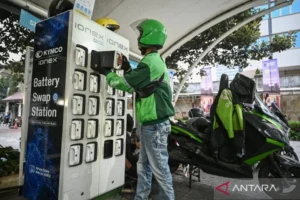
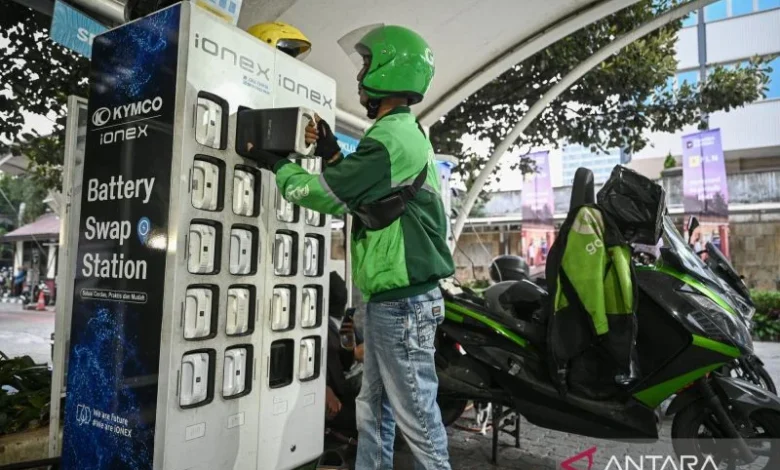
"The acceleration of the electric battery industry is not just an economic target but a strategic necessity," noted a spokesperson for the Parliamentary Commission (DPR RI) during a recent hearing on energy policy. The government is currently exploring further incentives that could potentially standardize battery technology, which would allow for cross-brand swapping stations. If achieved, this would effectively turn battery stations into a utility similar to petrol stations, further diminishing the "range anxiety" that continues to hinder widespread adoption.
However, challenges remain. Critics of the subscription model point to the "perpetual cost" aspect. While the upfront price is lower, the consumer is locked into a long-term monthly commitment that, over the course of five to seven years, may exceed the cost of purchasing the battery outright. Additionally, there is the issue of service continuity; consumers must ensure the brand they choose has a robust network of battery exchange stations, as a subscription is only as valuable as the availability of a fresh battery when the current one is depleted.
Consumer Guidance: Making the Right Choice
For prospective buyers, the choice between purchasing a battery and subscribing depends on individual usage patterns. Consumers who log high daily mileage—such as those involved in ride-hailing or delivery—often find that subscription models provide better peace of mind due to the guaranteed replacement of degraded batteries. Conversely, light users who cover fewer kilometers per month may find that the long-term cumulative cost of a subscription outweighs the benefit of the lower initial price.
Before committing to a plan, potential buyers are encouraged to evaluate:
- The Total Cost of Ownership (TCO): Calculate the monthly lease cost over a 36-month period and compare it to the battery purchase price (if available).
- The Service Network: Verify the density of battery swapping stations in the user’s primary travel routes.
- The Degradation Policy: Carefully read the "Terms and Conditions" regarding battery capacity degradation, specifically the threshold for free replacements.
As of late 2026, the Indonesian electric motorcycle market has matured into a sophisticated ecosystem. The diversification of ownership models is a clear signal that the industry is pivoting from niche appeal to mass-market viability. Whether the subscription model will remain the dominant form of ownership or eventually give way to standard purchases as battery costs continue to plummet globally remains to be seen, but for now, it stands as the most effective tool in the nation’s green mobility arsenal.