Honda Is Reportedly Developing an Affordable SUV for the Indian Market Using Horse Powertrain Technology

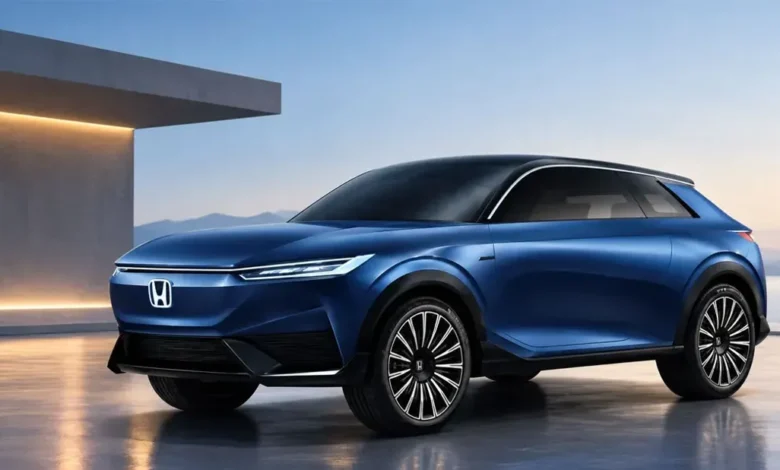
Honda is reportedly charting an ambitious path to expand its footprint in the hyper-competitive Indian automotive landscape by developing a new, entry-level SUV. According to industry reports, this strategic project aims to capture a significant market share by targeting a price point between Rs 9 lakh and Rs 12 lakh, equivalent to approximately IDR 168 million to IDR 225 million. This potential entry into the sub-compact SUV segment signals a departure from Honda’s traditional manufacturing philosophy, as the company is currently evaluating the integration of powertrains sourced from Horse Powertrain—a joint venture between Renault Group and Geely.
The Strategic Shift: Outsourcing Power
For decades, Honda has maintained a reputation for vertical integration, relying almost exclusively on its proprietary internal combustion engines. In the Indian market, models such as the Amaze have thrived on the 1.2-liter i-VTEC engine, while the City and the Elevate SUV have leveraged the robust 1.5-liter i-VTEC powertrain. However, the move to potentially adopt technology from Horse Powertrain represents a seismic shift in corporate strategy.
Horse Powertrain, which includes Saudi Aramco as a strategic stakeholder, specializes in the development of next-generation internal combustion engines, hybrid systems, transmissions, and range-extender technologies. By leveraging these external engineering assets, Honda aims to navigate the dual pressures of cost optimization and the urgent need for multi-fuel compatibility—ranging from traditional gasoline to compressed natural gas (CNG) and advanced hybrid architectures.
Industry analysts suggest that this collaboration is not merely a cost-saving measure but a tactical maneuver to accelerate the time-to-market for new models. As global automotive standards shift toward stricter emission norms, the ability to integrate ready-made, modular hybrid solutions from Horse Powertrain could significantly shorten the R&D cycle for Honda’s Indian operations.
Market Context and The Indian SUV Battlefield
The Indian automotive market has undergone a dramatic transformation over the last decade, with consumer preference shifting decisively from sedans and hatchbacks toward SUVs. Honda’s current flagship in the segment, the Elevate, competes in the mid-size SUV category with a starting price of roughly Rs 11.81 lakh. However, the high-volume growth in India lies firmly in the sub-4-meter SUV segment, currently dominated by rivals such as the Tata Nexon, Maruti Suzuki Brezza, and Hyundai Venue.
By developing a model priced between Rs 9 lakh and Rs 12 lakh, Honda would position this new vehicle directly beneath the Elevate. This "sub-Elevate" SUV would allow Honda to challenge the market leaders in the entry-level SUV tier, a segment that has historically been the primary driver of sales volume for manufacturers in India. If the project proceeds as scheduled, production is expected to commence in October 2028, aligning with Honda’s broader long-term strategy for the region.
Engineering Evolution: From 49 Months to 30
A critical component of this project is the internal mandate to overhaul Honda’s product development cycle. Traditionally, the Japanese automaker has operated on a 49-month development timeline for new vehicles. To remain competitive in the fast-paced Indian market, Honda is actively working to compress this cycle to 30 months.
This objective requires a significant reliance on external engineering partnerships. Reports indicate that Tata Technologies has been brought on board to assist with vehicle engineering and structural development, while Tata Consultancy Services (TCS) is expected to play a pivotal role in the design and implementation of the vehicle’s infotainment and connected-car architecture. This "open-ecosystem" approach to development marks a departure from Honda’s insular engineering culture, reflecting a pragmatic response to the digital-first demands of modern consumers.
Platform Synergies and Global Logistics
There is ongoing speculation regarding the platform architecture for this upcoming SUV. Sources suggest that Honda is currently evaluating existing platforms currently utilized in the Indonesian market. Indonesia serves as a crucial hub for Honda’s Southeast Asian operations, and many platforms engineered there are optimized for cost-effectiveness and durability in emerging markets—characteristics that mirror the requirements of the Indian consumer base.
While specific details regarding dimensions, transmission types, and power output remain under wraps, the cross-pollination of platforms between Indonesia and India could offer substantial economies of scale. By utilizing a proven platform, Honda can minimize the capital expenditure required for tooling and validation, allowing the company to focus its resources on powertrain integration and localizing features to suit Indian road conditions and preferences.
Official Stance and The Path Forward
Despite the growing body of evidence, Honda has yet to provide a formal confirmation of the project. A spokesperson for Honda Cars India noted that the company is committed to its "strategic vehicle" plan for the Indian market, which includes a pipeline of new products scheduled for 2028. However, the company has refrained from explicitly linking this public roadmap to the reports regarding the Horse Powertrain collaboration or the specific price targets mentioned by industry trackers.
This caution is typical for the automotive industry, where project feasibility studies often undergo multiple iterations before receiving final board approval. Nevertheless, the alignment of the 2028 timeline suggests that Honda is moving past the conceptual phase and into a more concrete implementation stage.
Implications for the Automotive Sector
The potential use of Horse Powertrain technology by a legacy manufacturer like Honda has far-reaching implications for the industry. It suggests that the "Make-It-All" era of car manufacturing is waning in favor of a modular approach, where OEMs act as assemblers of best-in-class technologies rather than sole manufacturers of every component.
- Supply Chain Efficiency: Partnering with a joint venture like Horse Powertrain allows Honda to bypass the immense costs of developing a new, compliant engine platform from scratch, particularly one that needs to meet both hybrid and CNG requirements.
- Competitive Pricing: By outsourcing the powertrain, Honda can potentially achieve the aggressive price point of Rs 9 lakh, which is necessary to gain traction against established domestic and South Korean competitors in India.
- Technological Agility: The inclusion of hybrid systems in a low-cost SUV would differentiate the Honda offering in a market increasingly sensitive to fuel prices and environmental regulations.
Looking Toward 2028
As the automotive industry approaches 2028, all eyes will be on Honda’s manufacturing facilities in India. The success of this project could serve as a blueprint for how legacy Japanese automakers navigate the transition to affordable, tech-integrated, and multi-powertrain vehicles in developing economies.
While the road to 2028 remains subject to market fluctuations, regulatory changes, and internal strategic pivots, the direction is clear: Honda is preparing a significant offensive to reclaim its position as a top-tier contender in India’s most important vehicle segment. Whether this will ultimately redefine the brand’s identity in the region remains a question for the coming years, but the intent to disrupt the status quo through new partnerships and accelerated development cycles is evident.
As of now, the automotive world awaits further technical disclosures. For the consumer, the prospect of a high-value, Honda-engineered SUV at an accessible price point represents a potential turning point in the Indian car market, promising to bring premium engineering standards to a wider segment of the population.