Spain Claims Maiden World Cup Title After Dramatic Extra-Time Victory Over Argentina

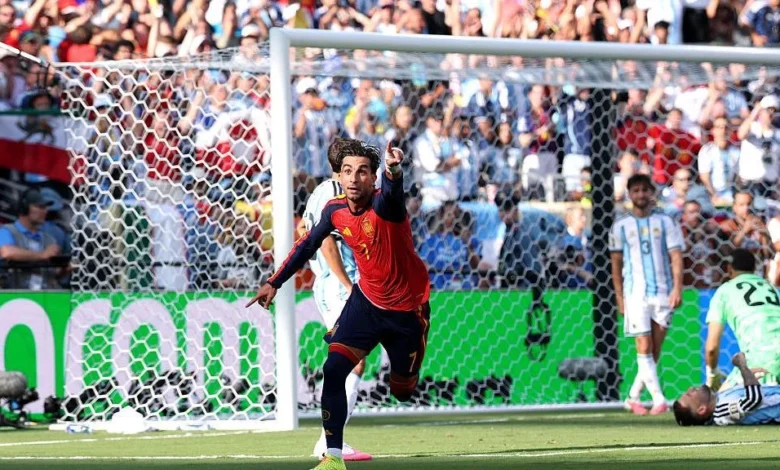
Spain has been crowned champions of the 2026 FIFA World Cup, clinching their first-ever global title after a hard-fought 1-0 victory over Argentina in a captivating final at the iconic MetLife Stadium, New Jersey. The decisive moment arrived in the 106th minute of extra time, with Ferran Torres finding the back of the net to etch his name in footballing history and secure Spain’s place at the pinnacle of international football. The match, held on Monday, July 20th, kicked off at 02:00 WIB (Western Indonesian Time), captivating a global audience of billions.
A Tense First Half: A Tactical Chess Match
From the opening whistle, both La Albiceleste and La Furia Roja engaged in an aggressive, end-to-end battle, showcasing the high stakes of the World Cup final. The initial minutes were characterized by swift attacks and tenacious defending, as both teams sought to assert their dominance.
Spain’s dynamic young talent, Lamine Yamal, nearly broke the deadlock in the 5th minute, his promising effort after a well-crafted assist narrowly missing its mark. Argentina responded swiftly, with the legendary Lionel Messi orchestrating a characteristic dribble deep into Spanish territory. However, the Spanish defense, marshaled effectively by their backline, managed to thwart the danger.
The first half continued as a tactical chess match, with neither side willing to concede an inch. Álex Baena of Spain had an opportunity from a corner kick, but the ball ultimately fell to an Argentine player, disrupting the attacking momentum. Argentina then earned a free-kick in a dangerous position near the Spanish penalty area, taken by Rodrigo De Paul. Unfortunately for the South American giants, the ball sailed too far to the right, failing to trouble the Spanish goalkeeper.
As the half wore on, Spain began to increase the pressure. In the 35th minute, Marc Cucurella delivered a menacing cross into the Argentine box, creating a clear chance. However, the referee’s whistle for offside intervened, much to the frustration of the Spanish contingent. Just minutes later, Mikel Oyarzabal seized upon an opportunity, unleashing a powerful shot towards the Argentine goal. Emiliano Martínez, the Argentine custodian, was forced into a spectacular save, tipping the ball over the bar.
Spain’s relentless offensive push continued. In the 43rd minute, Cucurella once again posed a significant threat, this time with a potent strike from just outside the penalty area. The ball narrowly whistled past the right post, a collective gasp echoing through the stadium. Despite the numerous attacking forays and the palpable tension, the first half concluded with the scoreline locked at 0-0, setting the stage for a dramatic second half.
Second Half Stalemate: Defensive Masterclasses and Missed Opportunities
The second half commenced with Spain continuing their aggressive approach, pressing the Argentine defense with renewed vigor. Álex Baena, demonstrating his quick reflexes, intercepted an Argentine pass and immediately fired a shot towards goal. Emiliano Martínez, however, was alert and made the save.
Dani Olmo then carved his way into the Argentine penalty area, delivering a cross intended for Marc Cucurella. The ball was, however, expertly intercepted by an Argentine defender, thwarting another potential scoring opportunity for La Furia Roja. Spain maintained their consistent offensive pressure, with Lamine Yamal frequently posing a threat. A precise pass from Yamal into the Argentine box failed to be met by a Spanish attacker, highlighting the defensive solidity of Argentina.
In the 66th minute, Lamine Yamal once again engineered a golden opportunity for his team. His exquisite cross was met by a powerful header from Ferran Torres, but Emiliano Martínez was in exceptional form, making another crucial save to keep his team level. Pau Cubarsí also tested the Argentine goalkeeper with a fierce shot towards goal, only to be denied by Martínez once more.
The closing stages of the second half saw a significant turning point. In the 90th minute and 4th second, Enzo Fernández of Argentina was shown a second yellow card for a foul on Pau Cubarsí. This resulted in Fernández’s expulsion from the match, leaving Argentina to defend with only ten players for the remainder of the game, including any potential extra time. Lamine Yamal took a free-kick in the 90th minute and 8th second, but Emiliano Martínez was once again the hero, saving the attempt and signaling the end of the second half with the score still deadlocked at 0-0.
Extra Time Drama: Torres Delivers the Decisive Blow
Entering extra time, Argentina faced an uphill battle, forced to defend with a numerical disadvantage against an energized Spanish side. Spain, with their full complement of eleven players, sought to capitalize on their advantage.
Nico Williams appeared to have broken the deadlock in extra time, his shot finding the net after a save from Emiliano Martínez. However, the goal was disallowed by the referee due to a perceived foul, a decision that added to the dramatic tension of the match.
Argentina struggled to gain significant possession of the ball, largely pinned back by Spanish attacks. Despite creating several promising opportunities, Spain was unable to convert their territorial dominance into goals during the first period of extra time.
The breakthrough finally arrived in the 106th minute. A sublime pass from Nico Williams found Ferran Torres, who expertly finished past the Argentine goalkeeper to score the decisive goal. The strike sent shockwaves of elation through the Spanish camp and their passionate supporters, putting Spain in a commanding 1-0 lead.
A Historic Triumph for Spain
The goal by Ferran Torres proved to be the only goal of the match, securing Spain’s maiden World Cup title. The final whistle blew, confirming Spain’s status as the 2026 World Champions. The victory marks a monumental achievement for Spanish football, capping a period of sustained excellence and development for the national team.
Post-Match Analysis and Implications
The victory for Spain is a testament to their consistent development of young talent and their tactical discipline. Players like Lamine Yamal, who has emerged as a global sensation at a young age, embody the future of Spanish football. The team’s ability to maintain composure under pressure and execute their game plan in crucial moments was evident throughout the tournament and particularly in the final.
For Argentina, the loss is a bitter pill to swallow, especially after reaching the final. While the red card to Enzo Fernández undoubtedly impacted their ability to compete in extra time, the team displayed immense resilience and fighting spirit throughout the competition. Lionel Messi, in what was likely his final World Cup appearance, once again showcased his unparalleled talent, though ultimately fell short of securing the ultimate prize.
The 2026 World Cup final will be remembered for its intense drama, tactical battles, and the historic triumph of Spain. It underscores the ever-evolving landscape of international football, where emerging nations and new stars continue to challenge the established order. The implications of this victory for Spanish football are profound, likely inspiring a new generation of players and further cementing the nation’s place among the elite footballing powerhouses.
Squads at the Final
Spain Starting XI:
Simon (GK); Porro, Cubarsi, Laporte, Cucurella; Ruiz, Rodri; Yamal, Olmo, Baena; Oyarzabal.
Argentina Starting XI:
Emi Martinez (GK); Montiel, Romero, Lisandro Martinez, Tagliafico; De Paul, Fernandez, Mac Allister, Gonzalez; Messi, Alvarez.
The 2026 FIFA World Cup, hosted across the United States, Canada, and Mexico, delivered a spectacle of global sport, culminating in a final that will be etched in the annals of football history. Spain’s maiden triumph signifies a new era, while Argentina’s valiant effort underscores the enduring passion and competitiveness of South American football.
(Reported by [Your Name/News Agency])