Banyumas Regional Secretary Position in Limbo as Bupati and Official Clash Over Resignation Versus Mutation Amid KPK Scrutiny

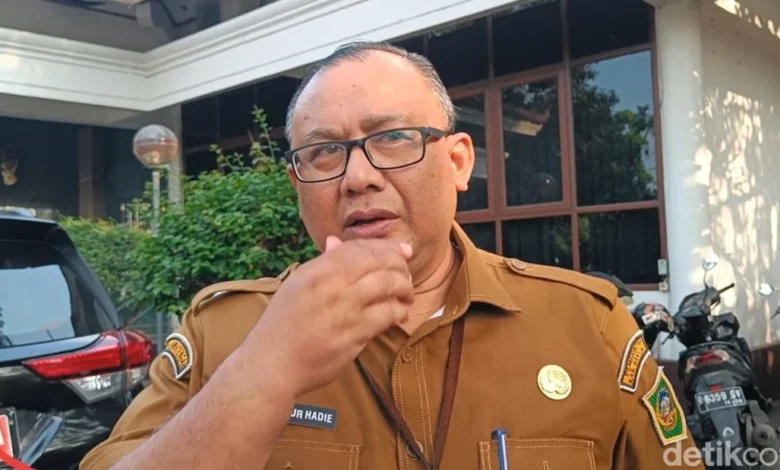
The administrative stability of the Banyumas Regency government in Central Java has found itself under intense public scrutiny following a stark discrepancy between local leadership accounts regarding the status of Regional Secretary (Sekda) Agus Nur Hadie. The unfolding administrative uncertainty comes at a sensitive political juncture, intersecting with an ongoing anti-corruption investigation by the Corruption Eradication Commission (KPK) involving Universitas Jenderal Soedirman (Unsoed).
The friction became public when Banyumas Regent (Bupati) Sadewo Tri Lastiono announced that the long-serving Sekda had formally submitted a letter of resignation. According to the Regent, the rationale cited in the official correspondence centered on the principles of bureaucratic rejuvenation and leadership rotation, given that Agus has held the high-ranking civil service position for a duration exceeding two years.
However, this narrative was swiftly and directly contradicted by the Regional Secretary himself. Agus firmly maintained that he did not submit a letter of resignation, but rather an official application for structural mutation or lateral transfer to another civil service position within the regency administration, such as a Head of Regional Apparatus Organization (OPD) or a Senior Expert Staff role.
This divergence in public statements from two of the highest-ranking figures in the Banyumas local government has triggered widespread speculation and raised questions regarding institutional transparency, bureaucratic procedures, and the potential ripple effects of federal anti-corruption inquiries at the regional level.
Chronology of Events and Administrative Submissions
To understand the complexity of the current situation, a detailed examination of the timeline provided by both officials is essential. The administrative maneuvering began months prior to the public disclosure, highlighting the deliberate processes required for high-level civil service movements in Indonesia under regional governance laws.
According to Agus Nur Hadie, his initial request for a structural reassignment was formally lodged with Regent Sadewo Tri Lastiono on May 12, 2026. At the time, the application was met with administrative constraints. Under civil service regulations governing structural mobility and competency assessments for echelon II officials, mandatory tenure requirements stipulate that an official must typically serve a minimum duration before being eligible for a lateral transfer evaluated by a selection panel (Pansel).
As a result of these regulatory hurdles, the initial May application remained under review, with the local government awaiting formal guidance and recommendations from the State Civil Service Agency (BKN) regarding the composition of the selection panel.
The timeline advanced significantly in September 2026. On September 14, 2026, Agus submitted a secondary application reiterating his request for mutation, motivated, as he stated, by a desire to experience a new working environment after more than two years at the helm of the regency’s civil administration.
Just days after this second submission, the regional administration was thrust into a broader legal spotlight. On September 20, 2026, the Regional Secretary received an official summons from the Corruption Eradication Commission (KPK) requiring him to present himself for questioning regarding an ongoing investigation into alleged corrupt practices within the environment of Universitas Jenderal Soedirman (Unsoed), a prominent public university located in Purwokerto, Banyumas.
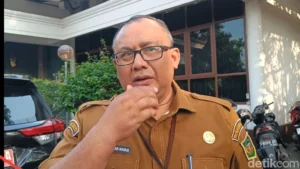
Complying with the federal directive, Agus appeared at the Banyumas City Police (Polresta) headquarters on Tuesday, September 22, 2026. He underwent several hours of questioning by anti-corruption investigators, emerging from the Sat Reskrim building mid-afternoon to address waiting media representatives before departing in a black official vehicle.
Following the KPK interview, Regent Sadewo publicly stated on Friday, September 25, 2026, that Agus had submitted a letter of resignation citing administrative rejuvenation. This was followed later the same day by Agus’s categorical denial of a resignation, clarifying that his documentation explicitly requested a mutation rather than a permanent departure from the civil service ranks.
Divergent Perspectives: Resignation Versus Structural Mutation
The core of the administrative disagreement hinges on the precise terminology and legal intent of the paperwork submitted by the Regional Secretary. Regent Sadewo interpreted the administrative filing through the lens of a voluntary stepping-down from the apex bureaucratic post.
"Pak Sekda submitted a resignation because he feels he has served for more than two years, and it is time for regeneration, he said," Sadewo explained to journalists at the regional government complex. When pressed by reporters on whether the administrative movement bore any connection to the ongoing KPK probe into the Unsoed corruption case, the Regent maintained a formal, procedural stance, reiterating that the documents themselves framed the transition around tenure duration.
Conversely, Agus offered a granular defense of his actions, emphasizing that a resignation implies leaving the civil service entirely, whereas a mutation is a routine bureaucratic rotation common within Indonesian local governance structures.
"That is not true. What is actually true is that I submitted an application for mutation or a shift to become the head of an OPD or expert staff within the Banyumas Regency Government," Agus stated during a phone interview. "The reason is simply to seek a new working atmosphere."
Agus further addressed the temporal coincidence between his second mutation request on September 14 and his KPK interrogation on September 22, explicitly rejecting any causal relationship between the two events. He pointed out that the foundation of his administrative transfer request was laid months prior in May, long before the federal anti-corruption agency issued its summons.
Institutional Framework and the Role of Oversight Bodies
The resolution of this administrative limbo does not rest solely with the Regent or the Regional Secretary. Under Indonesian civil service law, the reassignment or replacement of a high-ranking regional secretary involves a multi-layered regulatory procedure designed to ensure merit-based appointments and political neutrality.
Regent Sadewo announced that to address the situation, the local government must first establish an independent assessment team. This team composition involves multi-stakeholder representation, including delegates from the provincial government and academic institutions.
"For the assessment, I must form a team first. There are representatives from the province, then academics. Regarding the procedural rules for how this administrative transition is handled, that falls under the authority of the Agency for Human Resources Development (BKPSDM)," Sadewo detailed.
Despite the procedural complexities and the public back-and-forth, the Regent confirmed that daily administrative operations remain unaffected. He noted that he met with Agus on the morning of September 25, where the two officials engaged in standard governance discussions, including logistical coordination regarding the Trans Banyumas public transit system within the Regent’s office.
From the perspective of the Regional Secretary, the procedural pathway for a formal mutation remains lengthy. Agus outlined that once the regional government receives formal technical recommendations from the State Civil Service Agency (BKN) concerning the five-member selection panel (Pansel), a comprehensive competency assessment (Uji Kompetensi) must be administered to relevant echelon II officials.
The outcomes of this competency evaluation are subsequently submitted to the Regent, who holds the ultimate authority to determine lateral postings. Following this determination, a second technical recommendation must be secured from BKN before the formal Regent Decree (SK) can be issued and a public swearing-in ceremony can take place. Consequently, Agus emphasized that any physical transition in leadership is subject to a protracted bureaucratic timeline.
Broader Context: The Unsoed Investigation and Regional Implications
The administrative friction surrounding the Banyumas Regional Secretary cannot be viewed in isolation from the broader legal scrutiny currently enveloping regional institutions. The involvement of top-tier local civil servants in federal anti-corruption inquiries underscores the systemic vulnerabilities often present at the intersection of local government administration and educational or public enterprise entities.
Universitas Jenderal Soedirman, as a major state tertiary institution situated in Purwokerto, frequently collaborates with local municipal and regency governments on various developmental, research, and community service projects. When financial irregularities or procurement discrepancies arise within such institutions, federal investigators frequently cast a wide net to interview municipal officials who may have held supervisory, advisory, or collaborative roles during the implementation of contested projects.
While Agus Nur Hadie has maintained his cooperation with law enforcement and asserted his innocence regarding any administrative impropriety linked to the Unsoed case, the convergence of his ongoing transfer requests with high-profile investigative summonses has inevitably fueled public debate and media speculation.
Implications for Local Governance and Stability
The public divergence between the Regent and the Regional Secretary presents a critical test for administrative governance in Banyumas. Effective local administration relies heavily on cohesive communication and aligned messaging between political leadership (the Regent) and bureaucratic leadership (the Regional Secretary). When public discrepancies arise over fundamental employment statuses—such as whether a chief bureaucrat is resigning or simply seeking a transfer—it can foster an environment of uncertainty among lower-tier civil servants and create confusion among the citizenry.
Furthermore, the situation highlights the delicate balance regional leaders must maintain when navigating federal anti-corruption probes. Transparency, strict adherence to civil service regulations, and a clear, unambiguous public relations strategy are paramount to preserving public trust in local institutions.
As the Banyumas Regency government awaits the formation of the assessment team, the formulation of the BKN-backed selection panel, and the eventual technical recommendations from federal oversight bodies, the exact future posting of Agus Nur Hadie remains dependent on procedural due process. Whether the outcome results in a lateral mutation to another regional department or a more permanent restructuring of the regency’s administrative leadership, the episode serves as a notable case study in the intersection of local civil service mobility, bureaucratic procedure, and federal investigative oversight in contemporary Indonesia.