Semarang Merchants Begin Rebuilding After Devastating Market Fire, Facing Financial Hurdles

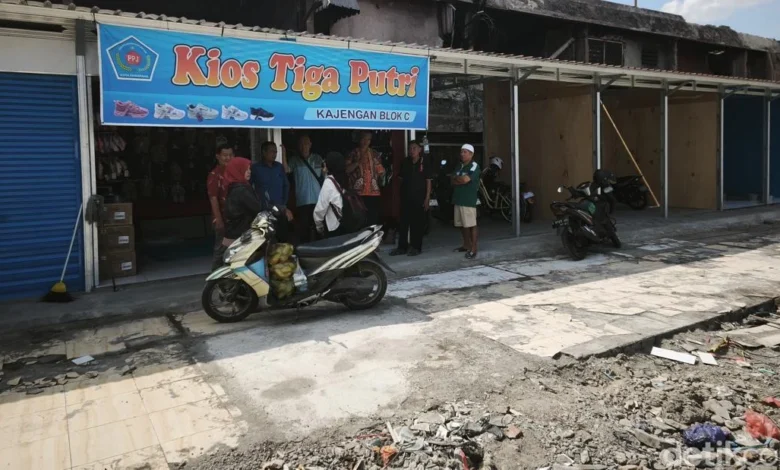
Semarang, Indonesia – Merchants at Pasar Kanjengan in Semarang Tengah District, Semarang City, are beginning to occupy newly constructed stalls following a devastating fire that ravaged the market earlier this year. The rebuilding effort, however, is being shouldered by the affected traders themselves, with each contributing Rp 4.5 million (approximately $300 USD) towards the construction of temporary, semi-permanent structures.
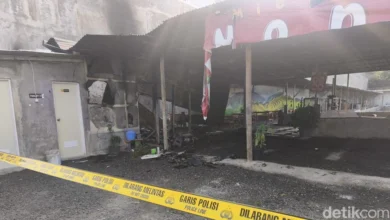
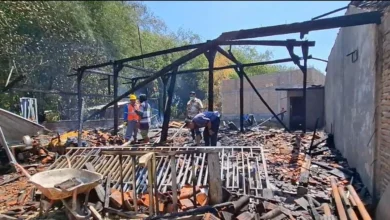
The scene at Pasar Kanjengan on Thursday, July 23rd, still bore the scars of the inferno. Piles of debris remained in several areas, a stark reminder of the catastrophic blaze that engulfed the market from Wednesday, April 29th, to the early hours of Thursday, April 30th. Official reports indicate that a staggering 476 market stalls were completely destroyed in the fire.
On the northern side of the market, a row of semi-permanent structures has emerged. These buildings, characterized by corrugated iron roofs and plywood walls, comprise 30 individual stalls arranged in a straight line. While many traders were observed gathering at the site, only one stall, selling sandals and shoes, had commenced operations.
Self-Funded Reconstruction Amidst Uncertainty
The initiative to build these temporary stalls was a collective undertaking by the affected merchants. Atmaji, the Chairman of the Semarang City Merchants and Service Association (PPJ), confirmed that the construction began in early July 2026. Each merchant contributing Rp 4.5 million for a 2×3 meter stall, ready for immediate occupancy.
"It’s entirely self-funded, purely from our own resources. Rp 4.5 million for a 2×3 meter space, ready to occupy," Atmaji stated during an interview.
Currently, an estimated 10 to 20 merchants have pooled their resources to fund the construction. The capital for these contributions has primarily been sourced through the Kredit Usaha Rakyat (KUR) program, a government-backed microfinance initiative aimed at supporting small and medium-sized enterprises.
"We build first, then apply for KUR from the bank. We’ve been approved for KUR. The majority of us have borrowed from BRI and BPD. The Department of Trade assisted in facilitating access to KUR, and then the KUR funds are channeled here. This is only a partial group, currently around 10 to 20 people," Atmaji explained.
The aftermath of the fire left the livelihoods of many merchants in a state of precarious uncertainty. Now, a portion of these traders are preparing to return to their operating spaces at Pasar Kanjengan, albeit in a significantly altered form.
"Our fate was uncertain. Now that we are here, and there’s a recommendation, it’s only for this one lane for now," a merchant, who wished to remain anonymous, commented.
Individual Struggles and Hopes for Recovery
Ruswanto, a 64-year-old sandal and shoe vendor, is one of the first to reopen his business in the new temporary stall. He recounted the immense financial strain, having initially invested Rp 27 million (approximately $1,800 USD) in his merchandise. His immediate goal is to increase his stock to a value of Rp 70-80 million (approximately $4,700-$5,400 USD).
"This is just a small portion. The plan is to at least fill this space with Rp 70 million to Rp 80 million worth of goods. Right now, this only represents Rp 27 million," Ruswanto shared, having been operating in the new stall for just three days.
To secure the necessary capital, Ruswanto had to borrow from relatives, as all his previous inventory was lost in the fire. "It’s certainly difficult. I’m borrowing from relatives, as all our goods were completely destroyed," he confessed.
Despite the challenges, Ruswanto expressed gratitude for his loyal customer base. However, he remains hopeful for additional financial support to sustain and grow his business. "I have regular customers, thank God, many are loyal. My hope is to receive capital. If we can get a funding injection, we can repay it in installments over a few months, that would be great," he stated.
Official Plans for Market Reconstruction
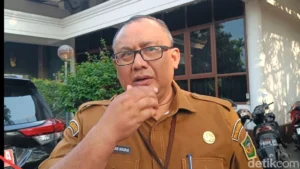
Bagaskara Yuwono Ario Negoro, Head of the Department of Trade of Semarang City, elaborated on the ongoing reconstruction efforts. He confirmed that the first phase of construction involved 30 temporary stalls. Plans are underway for an additional 30 stalls to be erected in the area behind Block D of Pasar Kanjengan, aiming for an improved infrastructure.
"There are 30 stalls in the first phase. Subsequently, behind Block D, we are planning for more, hopefully even better. The second phase will also involve around 30 stalls," Bagaskara explained.
He further clarified that these semi-permanent kiosks are intended to accommodate 62 merchants in total. This number represents a portion of the approximately 100 traders who were directly impacted by the fire.
"In total, it will accommodate around 62 merchants. The number of those directly affected by the fire is approximately 100 traders," Bagaskara stated.
The future utilization of the remaining fire-affected spaces within Pasar Kanjengan remains undecided. Bagaskara indicated that the city administration is awaiting further directives from the Mayor of Semarang.
"Regarding future plans, we are still uncertain and awaiting guidance from the Mayor," he concluded.
Background and Chronology of the Pasar Kanjengan Fire
The fire at Pasar Kanjengan, a vital marketplace in Semarang, occurred on the night of Wednesday, April 29th, 2026, and continued into the early hours of Thursday, April 30th, 2026. The blaze, which reportedly started around 9:00 PM local time, rapidly spread through the densely packed market, fueled by the dry conditions and the flammable materials commonly found in market stalls.
Initial reports from the Semarang Fire Department indicated that the cause of the fire was under investigation, with early suspicions pointing towards an electrical short circuit or unattended cooking. The scale of the disaster was immense, with hundreds of stalls and the livelihoods of numerous traders reduced to ashes within hours.
Immediate Aftermath and Community Response
In the immediate aftermath of the fire, the Semarang City government, through the Department of Trade, initiated efforts to assess the damage and provide assistance to the affected merchants. Temporary shelters were reportedly set up, and emergency aid, including food and basic necessities, was distributed.
However, the long-term solution for the displaced traders presented a significant challenge. The market, a hub for small-scale businesses, played a crucial role in the local economy. The destruction of such a large number of stalls threatened the economic stability of many families.
The decision by the merchants to self-fund the rebuilding of temporary stalls highlights the urgency of their situation and their determination to resume business as quickly as possible. The reliance on personal savings and micro-loans underscores the financial vulnerability of many small traders in Indonesia.
Economic Implications and Broader Impact
The Pasar Kanjengan fire and the subsequent rebuilding efforts have broader economic implications for Semarang City. The market is not only a place of commerce but also a significant source of employment and income for a large segment of the population. The disruption caused by the fire can have a ripple effect on local supply chains and consumer access to goods.
The reliance on the KUR program for reconstruction funding, while a positive step, also points to the need for continued government support and financial literacy programs for small businesses. The process of applying for and securing loans can be complex for individuals with limited financial experience.
Furthermore, the incident raises questions about fire safety regulations and infrastructure within traditional markets. While modern markets often incorporate fire-resistant materials and safety systems, older markets, like Pasar Kanjengan, may require upgrades to mitigate such risks in the future.
Future Outlook and Recommendations
The current phase of rebuilding at Pasar Kanjengan is a testament to the resilience of the merchant community. However, the long-term sustainability of their businesses will depend on continued support and strategic planning.
- Government Assistance: While the traders are self-funding the temporary structures, sustained government support in the form of low-interest loans, grants, and business development programs will be crucial for their recovery and growth. This could include assistance with rebuilding more permanent and resilient structures in the future.
- Improved Infrastructure: The Department of Trade and local authorities should prioritize the implementation of enhanced fire safety measures in all traditional markets across Semarang. This includes regular inspections, installation of fire detection and suppression systems, and fire safety training for merchants.
- Financial Literacy and Business Support: Providing merchants with access to financial literacy training and business management workshops can empower them to better manage their finances, access credit effectively, and develop more robust business strategies.
- Community Collaboration: Continued dialogue and collaboration between merchants, market associations, and government agencies are essential to address challenges and ensure the long-term viability of Pasar Kanjengan and other markets.
The journey of rebuilding Pasar Kanjengan is far from over. The courage and determination of the merchants, coupled with strategic support from the authorities, will be key to restoring this vital economic hub and ensuring the livelihoods of the community it serves. The current efforts, though small in scale, represent a significant step towards normalcy and a hopeful future for the traders of Semarang.