Mystery and Tension in Central Java: Arson Attack on Non-Halal Eatery in Sukoharjo Follows Months of Community Friction

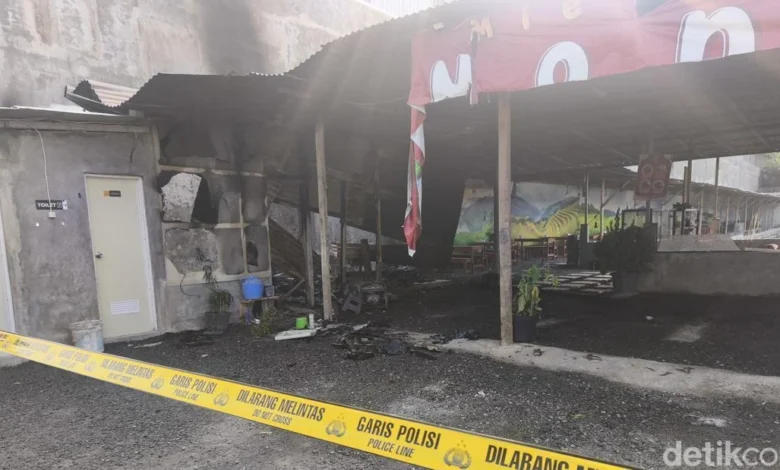
The tranquil landscape of Parangjoro Village in Grogol District, Sukoharjo Regency, Central Java, was recently shattered by an act of targeted violence that has brought issues of religious sensitivity, local commerce, and community relations to the forefront of regional discourse. The establishment in question, known locally as the Warung Mie dan Babi Tepi Sawah—a dining venue specializing in non-halal noodle and pork dishes—became the target of a brazen arson, vandalism, and armed intimidation attack orchestrated by a group of unidentified perpetrators. While local law enforcement agencies have launched a comprehensive investigation to apprehend those responsible, the incident serves as a stark reminder of the delicate fault lines that can emerge when commercial shifts intersect with culturally conservative neighborhoods.
The escalation of tensions in Parangjoro is not an isolated occurrence but rather the culmination of a protracted dispute that had been simmering for months. According to investigative details and statements compiled from the location, the site of the incident was originally operated as a commercial fishing pond. However, in a bid to diversify his business portfolio and capture a niche culinary market, the owner, Jodi Sutanto, decided to pivot his enterprise. In late March 2026, Sutanto officially transformed the venue into a culinary establishment offering non-halal cuisine, specifically targeting pork enthusiasts with his signature noodle dishes.
Almost immediately following the opening of the non-halal eatery, the venture encountered resistance from a segment of the local populace. In communities across Indonesia where cultural and religious homogeneity heavily influences social norms, the introduction of non-halal culinary establishments—particularly those operating openly in residential or semi-rural peripheries—frequently triggers local anxiety. In Parangjoro, this anxiety rapidly materialized into overt opposition. Within weeks of the grand opening, several local residents organized protests to voice their strong disapproval of the business, culminating in the unauthorized erection of banners and signboards expressing community rejection of non-halal culinary activities in their neighborhood.
Chronology of Escalation: From Mediation to Violence
To understand the trajectory that led to the destructive attack on September 12, 2026, observers must examine the timeline of events that characterized the preceding months. The friction between the business owner and local residents was marked by distinct phases of tension, administrative intervention, and an unsettling quiet before the storm.
Late March 2026 marked the operational inception of the Warung Mie dan Babi Tepi Sawah. The transition from a fishing pond to a non-halal food stall was executed swiftly, catching some neighbors by surprise. By mid-April, community dissent had organized into visible protests, complete with banners demanding the cessation of non-halal food sales in the area.
Recognizing the potential for public disorder, local government authorities stepped in to mediate the escalating conflict. On Tuesday, April 21, 2026, the local government of Sukoharjo Regency facilitated a formal mediation session. This meeting brought together representatives of the local community and the business owner, Jodi Sutanto, in an effort to find a peaceful resolution. During the dialogue, the community representatives maintained an uncompromising stance: they reiterated their total rejection of the non-halal culinary business in their vicinity and demanded that Sutanto either convert his menu to halal options or relocate his business entirely to a more suitable commercial zone. Faced with such a critical business decision, Sutanto stated that he needed time to consider his options, leaving the meeting without a finalized agreement.
Despite the unambiguous hostility displayed during the mediation and the ongoing presence of protest banners, Sutanto chose to keep the warung operational. For several weeks following the government-sponsored talks, the situation entered an unexpected lull.
Speaking with media representatives after the attack, Jodi Sutanto recounted the eerie nature of this quiet period. He noted that after a final wave of protests in mid-May 2026, all overt demonstrations and visible opposition ceased entirely. "Since the last demonstration, it was very silent, there was no movement at all," Sutanto explained. Yet, despite the apparent calm, the owner admitted to experiencing a lingering sense of foreboding. "I had a bad feeling about it," he added, reflecting on the psychological unease that preceded the violent midnight assault.
The Breaking Point: The Attack on September 12
The fragile peace that had settled over Parangjoro was violently disrupted in the early hours of Saturday, September 12, 2026. According to eyewitness accounts and preliminary police reports, the Warung Mie dan Babi Tepi Sawah was suddenly targeted by four unidentified individuals, commonly referred to in Indonesian law enforcement parlance as Orang Tidak Dikenal (OTK).
The perpetrators arrived at the premises under the cover of darkness and executed a coordinated assault. Beyond setting fire to parts of the structure, the attackers engaged in systematic vandalism of the property. Crucially, the assault went beyond mere property damage; the four perpetrators reportedly brandished sharp weapons, directly threatening individuals present at the scene to ensure compliance and instill terror. The combination of arson, property destruction, and armed intimidation transformed a localized commercial dispute into a serious criminal offense carrying severe legal penalties under the Indonesian Criminal Code (KUHP).
Official Response and Ongoing Police Investigation
In the wake of the attack, the local constabulary moved swiftly to secure the crime scene and launch a formal criminal investigation. The Sukoharjo Regency Police (Polres Sukoharjo) assumed jurisdiction over the case, mobilizing forensic teams and investigative units to track down the perpetrators.
The Chief of Sukoharjo Police, AKBP Anggaito Hadi Prabowo, provided updates to the press regarding the status of the investigation. He confirmed that law enforcement personnel are actively analyzing all available evidence, with a particular focus on electronic surveillance systems in the vicinity of the village. "The investigation is still ongoing by sweeping CCTV footage and detecting two perpetrators using a motorcycle," AKBP Anggaito stated during an interview.
While four individuals were reportedly involved in the direct execution of the attack at the warung, police intelligence and forensic teams are scrutinizing traffic cameras and residential security systems along potential escape routes to identify the suspects and determine whether a broader network or planning committee was behind the assault. In addition to technological surveillance, investigators are heavily reliant on human intelligence and eyewitness testimony to piece together the events of that night.
"We currently have six witnesses," AKBP Anggaito elaborated, detailing the composition of the witness pool. "The witnesses who were directly at the location number two people, namely the owner himself and a local resident." The remaining witnesses include neighbors and individuals who may have observed suspicious activities leading up to or immediately following the incident. Police have emphasized that witness cooperation is vital, particularly in tight-knit rural or semi-urban communities where residents may possess valuable information regarding the identity or affiliations of the attackers.
Current Status of the Establishment and Forensic Restrictions
For Jodi Sutanto, the immediate aftermath of the arson attack has brought business operations to a complete and indefinite halt. The physical damage inflicted upon the Warung Mie dan Babi Tepi Sawah, combined with the active police investigation, has rendered the establishment unusable for the foreseeable future.
Furthermore, procedural protocols enforced by the police have prevented Sutanto from even beginning the cleanup or repair process. The entire perimeter of the restaurant remains cordoned off by official yellow police lines to protect the integrity of the crime scene and allow forensic experts to gather microscopic evidence, soot samples, and fingerprint traces.
"It is temporarily closed because the problem is we can’t do anything," Sutanto lamented when asked about his immediate plans. "We want to clean up, install fixtures, and so on, but it is not permitted because it is still an active crime scene investigation—the problem lies right there. And the police line is still up."
The inability to rehabilitate the property compounds the economic hardship faced by the owner. Having already navigated the costs of transitioning from a fishing pond to a restaurant, facing community boycotts, and enduring government-led mediations, Sutanto now confronts the daunting prospect of significant capital losses, insurance complexities, and profound uncertainty regarding his future in Parangjoro.
Broader Socio-Economic and Legal Implications
The incident in Parangjoro, Sukoharjo, transcends a simple case of arson and vandalism; it serves as a micro-cascading reflection of broader socio-legal challenges present within contemporary Indonesian society. The clash highlights the persistent tension between the constitutional right to conduct lawful business and enterprise versus community sensitivities surrounding cultural, religious, and dietary norms.
In Indonesia, where regional autonomy and community participation play significant roles in local governance, businesses—particularly those dealing in non-halal goods, entertainment, or services that run counter to prevailing local conservative values—frequently find themselves navigating a complex social landscape. While national laws protect the right of citizens to establish legal commercial enterprises anywhere in the country provided they hold the requisite permits, customary norms and community consensus often exert powerful informal pressure.
Legal analysts and human rights observers frequently point out that when community disagreements arise over commercial operations, the proper channels for resolution must invariably involve administrative dialogue, legal mediation, or formal judicial review. The resort to vigilantism, arson, and armed violence represents a dangerous breakdown of the rule of law. If unchecked, such violent reactions threaten to establish a troubling precedent where minority business preferences or controversial commercial ventures can be suppressed through intimidation and destruction rather than legal frameworks.
Furthermore, the Sukoharjo incident places local governance and law enforcement under intense scrutiny. Authorities are tasked with a dual responsibility: on one hand, they must thoroughly investigate and prosecute the perpetrators of the arson and armed threats to demonstrate that criminal acts of vigilantism will not be tolerated under Indonesian law; on the other hand, local governments must proactively manage community tensions through sensitive town-planning, zoning regulations, and inclusive public consultations before business permits are issued in culturally sensitive zones.
As the investigation into the Parangjoro arson attack proceeds, the residents of Sukoharjo and observers across Central Java wait anxiously for the police to translate their CCTV leads and witness statements into concrete arrests. For Jodi Sutanto, the path forward remains obscured by police tape and the bitter memory of a midnight raid, leaving open the difficult question of whether the Warung Mie dan Babi Tepi Sawah will ever reopen its doors, or if the ashes in Parangjoro mark the definitive end of a contested culinary experiment.
Related posts: