The Steep Cost of Becoming a Village Secretary in Pati Revealed During Sudewo’s Corruption Trial

Semarang – Revelations of exorbitant fees for village secretary positions, reportedly reaching up to IDR 175 million, have emerged during the corruption trial of former non-active Pati Regent Sudewo at the Semarang Corruption Court. These startling figures were disclosed by village heads who testified as witnesses, shedding light on alleged malpractices in the recruitment of village officials.
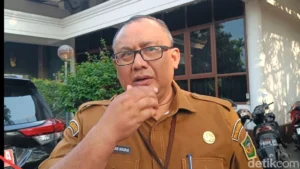
The trial, which commenced on Tuesday, July 22, 2026, has become a focal point for scrutiny into the administrative and financial dealings within the Pati Regency. The testimony of Sukiman, the Village Head of Mencong and Chairman of the Puncakwangi Village Heads Association, provided a significant glimpse into these alleged practices. Sukiman recounted being summoned to the residence of Suharmanto, the former Chairman of the Puncakwangi Sub-district Village Heads Association and a member of the Pati Regional People’s Representative Council (DPRD). It was at this meeting, held in late 2025, that Sukiman encountered Abdul Suyono, an individual described as being closely associated with Sudewo.
Allegations of a Coordinated Scheme
Sukiman’s testimony strongly suggested that Abdul Suyono’s involvement in the village official recruitment process was not an independent act but rather occurred with the knowledge or at the behest of the Regent. When questioned by the Public Prosecutor (JPU), Ramaditya, about whether Suyono would dare to manage the recruitment without the Bupati’s (Regent’s) approval, given his known proximity to Sudewo, Sukiman affirmed this assessment. He explained that his belief was rooted in media reports frequently depicting Sudewo and Suyono together, establishing Suyono’s influence.
During the meeting, Abdul Suyono reportedly informed Sukiman about an upcoming recruitment drive for village officials. Sukiman was then allegedly instructed to relay this information to other village heads in the Puncakwangi Sub-district, emphasizing that candidates aspiring for village official positions would need to prepare a substantial sum of money. The specific amounts cited were IDR 175 million for the Village Secretary (Sekdes) position and IDR 125 million for other roles such as village treasurers (Kasi) and village administrators (Kaur).
The prosecution further presented excerpts from Sukiman’s official police statement (BAP), which detailed Suyono’s admission to being part of a team responsible for managing village official recruitment in four sub-districts: Jakenan, Jaken, Puncakwangi, and Winong. Crucially, Suyono allegedly instructed that Sudewo’s name should not be mentioned during the recruitment process. This directive, coupled with Suyono’s acknowledged closeness to the Regent, fueled suspicions of a covert operation orchestrated with Sudewo’s implicit consent.
When interrogated by the prosecutor about whether Suyono had indicated that this recruitment process was distinct from others, involving a dedicated team including himself, Sukiman confirmed. Furthermore, Sukiman corroborated that Suyono had explicitly requested that village heads and prospective officials refrain from mentioning Regent Sudewo’s name, despite Suyono’s well-known affiliation with the Regent. Sukiman’s response, "Betul. Ya, karena ini tidak urusan bupati" (Correct. Yes, because this is not the Regent’s business), highlighted the perceived disconnect between Suyono’s actions and the official duties of the Regent, yet underscored the underlying suspicion of their connection.
Sukiman also conveyed Suyono’s assertion that candidates who failed to pay the demanded sums would be barred from participating in the registration process, and that without such payments, the recruitment would not proceed. However, Sukiman stated that he ultimately refused to pass this information to the other village heads. He cited a lack of authority in the recruitment process as his reason for not wanting to misrepresent the situation or inadvertently cause trouble.
Echoes of Extortion Across Sub-districts
The allegations of a financially driven recruitment process were not confined to Sukiman’s testimony. Ahmad Useri, the Village Head of Sumbersari in Kayen Sub-district, also provided testimony that echoed similar concerns. Useri reported receiving information from Agus Susanto, the Village Head of Slungkep, regarding a planned recruitment drive in 2026. According to Useri’s BAP, which was read out by the prosecutor, the required payments were IDR 130 million for the Kaur position and IDR 180 million for the Sekdes position. Useri confirmed that his BAP accurately reflected this information and acknowledged that candidates who did not pay the stipulated amounts would be ineligible to participate in the registration.
A similar pattern emerged from the testimony of M. Safakuri, the Village Head of Pundenrejo in Tayu Sub-district. Safakuri recounted receiving comparable information from Imam Solihin, the Village Head of Gadu. The reported figures were IDR 150 million for the Village Secretary position and IDR 120 million for the Kaur and Kasi positions. Safakuri, however, also stated that he did not disseminate this information to other village heads in his sub-district. His rationale was that the proposed amounts were excessively high and that the necessary regulations for the recruitment process had not yet been finalized. This indicates a significant level of apprehension among village heads regarding the legitimacy and feasibility of these alleged financial demands.
Sudewo’s Defense: A Legacy of Corruption?
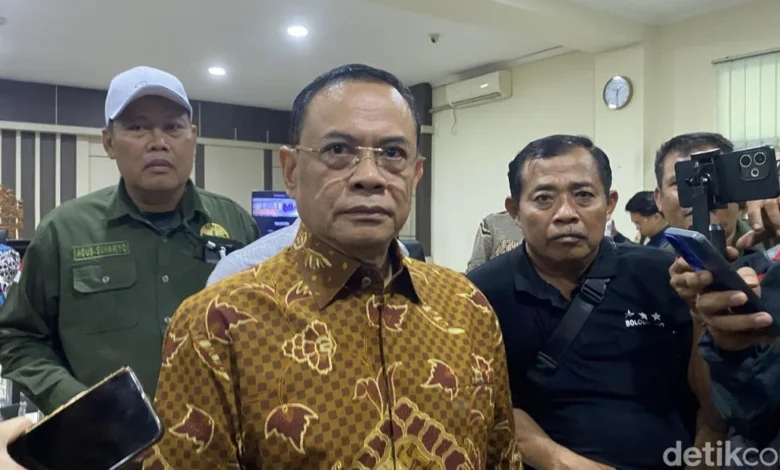
Responding to the testimonies presented, Sudewo, the accused former Regent, offered a starkly different perspective. He posited that the village heads who testified were overly credulous, readily accepting information about purported fees for village official positions. Sudewo argued that such practices, if they existed, were not unique to his tenure but were a continuation of a system established during previous administrations.
"These witnesses are village heads," Sudewo stated at the Corruption Court on Wednesday, July 22, 2026. "There are seven village heads, and broadly speaking, village heads tend to believe information from certain individuals, including Agus Susanto and Abdul Suyono, and then assume that the information was conveyed with my knowledge."
Sudewo attributed the village heads’ quick acceptance of the alleged payment scheme to their belief that similar practices had been prevalent in past village official recruitments. "Why did they so quickly assume it was with my knowledge, believing that village official recruitment would involve money, because the witnesses said that every village official recruitment in previous years always involved money?" he questioned. "So, in 2022, 2021, 2020, and so on, every time village officials were recruited, money was always involved, which made them believe it so easily."
He maintained that the practice of using money for village official recruitment was not initiated by him but was a legacy of "previous regimes." Sudewo emphasized that, during his time as Regent of Pati, no village official recruitment had actually taken place. He further explained that the regulations governing such recruitments were not yet finalized.
"In my case, it hadn’t been implemented. It was scheduled to be implemented in June 2026," Sudewo elaborated. "The socialization of the mechanism for recruiting village officials hadn’t even happened, the implementation guidelines and technical instructions weren’t ready. Yet, there were already practices in the field involving money."
Sudewo concluded by suggesting that the village heads failed to discern the difference between his leadership and that of his predecessors, making them susceptible to believing such claims due to the established historical precedent of monetary transactions in village official appointments.
Broader Implications and Context
The revelations from the Sudewo trial point to a deeply entrenched issue of patronage and potential corruption within the local governance structure of Pati. The alleged practice of demanding substantial sums for positions that are crucial for the effective functioning of village administration raises serious questions about meritocracy, transparency, and accountability.
Timeline of Alleged Events:
- Late 2025: Sukiman, Village Head of Mencong, reportedly meets with Abdul Suyono, who allegedly discusses the upcoming recruitment of village officials and the associated financial requirements.
- Early 2026 (or prior): Ahmad Useri, Village Head of Sumbersari, receives information from Agus Susanto, Village Head of Slungkep, regarding recruitment fees.
- Early 2026 (or prior): M. Safakuri, Village Head of Pundenrejo, learns about similar financial demands from Imam Solihin, Village Head of Gadu.
- June 2026 (Projected): Sudewo states that village official recruitment was scheduled to take place.
- July 22, 2026: Testimonies from village heads are presented during the corruption trial of Sudewo at the Semarang Corruption Court.
- July 22, 2026: Sudewo provides his defense and refutes the allegations, attributing the practices to previous administrations.
The figures cited – ranging from IDR 120 million to IDR 180 million – represent a significant financial burden, particularly for individuals aspiring to serve their communities. The implications of such a system are far-reaching:
- Compromised Quality of Officials: The focus on financial capacity over merit could lead to the selection of less qualified individuals, potentially hindering effective village governance.
- Erosion of Public Trust: Allegations of "selling" positions undermine public confidence in the integrity of local government institutions.
- Perpetuation of Corruption: If such practices are indeed systemic, they create an environment where corruption can flourish, making it difficult to eradicate.
- Disparities in Access: The high cost of entry could disproportionately exclude individuals from less affluent backgrounds, limiting opportunities for diverse representation in village leadership.
The Sudewo trial, therefore, serves as a critical juncture for examining and addressing these deeply rooted issues. The court’s proceedings will be closely watched for its potential to bring accountability and pave the way for reforms that ensure a more transparent and equitable system for selecting public officials in the Pati Regency and potentially beyond. The defense’s argument that this is a legacy issue also points to a need for broader systemic reform, not just accountability for individuals.
The legal ramifications for Sudewo and any other individuals implicated will depend on the evidence presented and the court’s verdict. However, the testimonies have already cast a long shadow over the integrity of local administrative processes, demanding a thorough investigation and a commitment to upholding ethical standards in public service. The focus on the "unwritten rules" of village official appointments highlights a critical need for clear, accessible, and strictly enforced regulations to prevent such alleged abuses of power and financial impropriety in the future.
The contrast between the witnesses’ detailed accounts of specific financial demands and Sudewo’s defense, which broadly attributes blame to past administrations and the village heads’ credulity, underscores the complexity of the case. It raises questions about whether Sudewo was a direct perpetrator, a beneficiary of a pre-existing corrupt system, or an innocent bystander caught in a web of past practices. The court’s role will be to meticulously dissect these claims and establish the truth through evidence.
The prosecution’s strategy appears to be building a case that links Abdul Suyono’s actions, as a close confidant of Sudewo, to the Regent’s knowledge and implicit approval. The alleged instruction to conceal Sudewo’s name is particularly significant, as it suggests an awareness of the impropriety of the actions and an attempt to distance the Regent from direct involvement. The defense, conversely, aims to sever this link, portraying Sudewo as a victim of circumstance and a system he inherited rather than a creator of it.
The ongoing trial is more than just a legal proceeding; it is a public examination of the ethical underpinnings of local governance. The outcome could have significant implications for public trust and the future of administrative recruitment processes in the region. As the proceedings continue, the focus will remain on factual evidence and its interpretation within the framework of Indonesian law, aiming to ensure that justice is served and that the integrity of public office is upheld.