President Prabowo Subianto’s Lighthearted Remark on Police Autonomy Ignites Discussion on Indonesia’s Civil-Military Framework

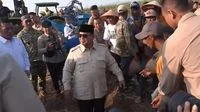
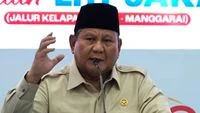
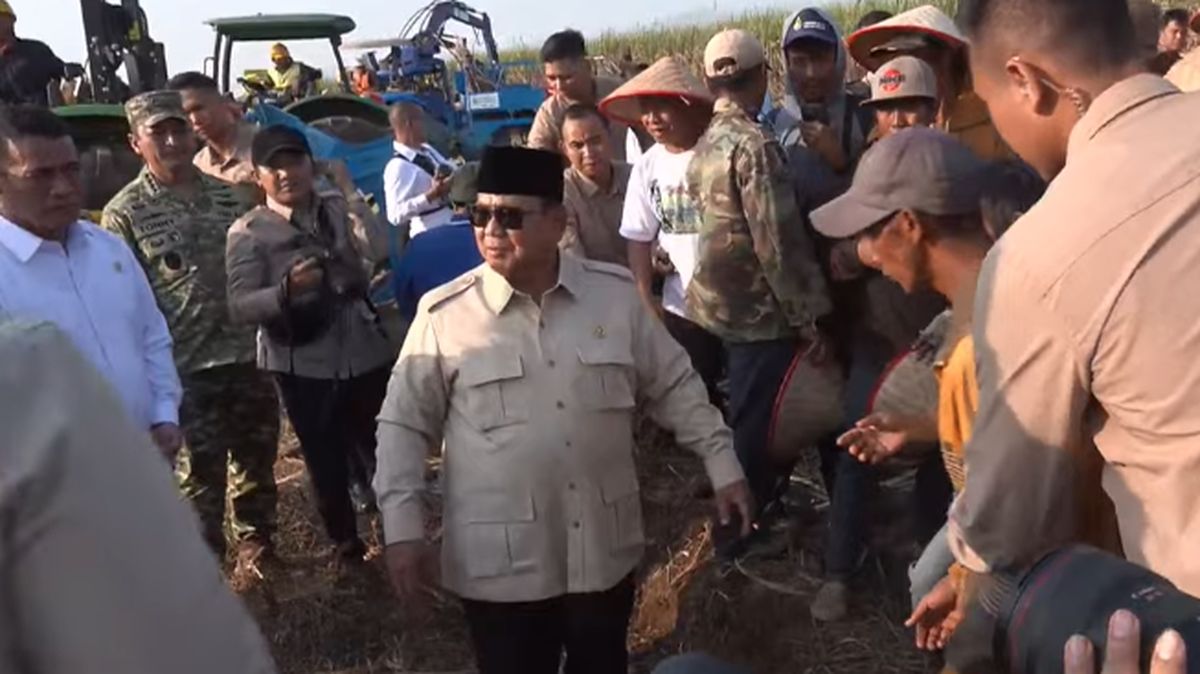
Indonesian President Prabowo Subianto, during a recent harvest festival in Malang, East Java, playfully remarked on the Indonesian National Police (Polri) not being under the Ministry of Defense (Kemenhan) like the Indonesian National Armed Forces (TNI). The comment, delivered with characteristic humor and met with laughter from attendees, including high-ranking officials such as National Police Chief General Listyo Sigit Prabowo, TNI Commander General Agus Subiyanto, and Minister of Defense Sjafrie Sjamsoeddin, provided a momentary glimpse into the distinct institutional architectures governing Indonesia’s security forces and the ongoing evolution of its civil-military relations. While made in jest, the remark subtly underscored a fundamental aspect of Indonesia’s post-Reformasi governance—the clear separation of roles and chains of command between its military and police.
The event, a "Panen Raya" or grand harvest, held on Friday, July 17, was part of a broader government initiative to bolster national food security, a key priority under President Prabowo’s administration. Such events often see the involvement of various state apparatus, including the TNI, which frequently participates in civic action programs and agricultural support. It was within this context that President Prabowo recounted an anecdote from his tenure as the Minister of Defense under the previous administration of President Joko Widodo (Jokowi), specifically concerning the procurement of tactical vehicles.
The Maung Jeep Anecdote and the Remark
President Prabowo began by reminiscing about being presented with the option to procure the Maung tactical jeep, a vehicle proudly manufactured by the state-owned defense industry, PT Pindad. He described being offered two choices: a foreign-made jeep, which was cheaper and ostensibly of good quality, or the Maung, a product of Indonesian ingenuity, albeit at a slightly higher price point. His decision to opt for the domestically produced Maung, despite the cost difference, highlighted a commitment to national industrial independence and supporting local innovation. "Yes, I chose the more expensive one, but it’s made by Indonesian children themselves, the Maung. Which our officers now use, they now use the Maung," he stated, emphasizing the pride in national production.
It was during this narration that the President inserted his lighthearted jab. "When I was Minister of Defense, I was presented with [the option], ‘Sir, the TNI…’ At that time, I was Menhan, so I couldn’t handle the Polri, sorry, the police don’t want to be under the Minister of Defense," Prabowo quipped, eliciting chuckles from the audience. The jest, while seemingly innocuous, touched upon a crucial distinction in Indonesia’s security sector governance that has been meticulously established over two decades.
Institutional Framework: TNI vs. Polri
The President’s comment, even in jest, serves as an opportune moment to delve into the distinct institutional frameworks that govern the TNI and Polri in Indonesia, a separation that is a cornerstone of the country’s democratic reforms.
The Indonesian National Armed Forces (TNI):
The TNI, comprising the Army (TNI-AD), Navy (TNI-AL), and Air Force (TNI-AU), is constitutionally mandated to defend the sovereignty of the state, protect the territorial integrity of the Unitary State of the Republic of Indonesia, and safeguard all Indonesian nations and territories from threats and disturbances. Administratively, and for matters of policy and budgeting, the TNI falls under the direct purview of the Ministry of Defense. This structure ensures civilian oversight over the military, a critical aspect of democratic governance. The Minister of Defense, a civilian appointee, is responsible for formulating defense policy, managing the defense budget, and overseeing the procurement and development of defense capabilities. While the Minister handles administrative and policy matters, the operational command of the TNI ultimately rests with the President as the Supreme Commander of the Armed Forces. This dual structure aims to balance civilian control with military professionalism and operational effectiveness.
The Indonesian National Police (Polri):
In contrast, the Indonesian National Police (Polri) operates under a completely different chain of command. Established as a civilian law enforcement agency, Polri is directly accountable to the President of the Republic of Indonesia. It does not fall under any ministry, including the Ministry of Defense. This direct subordination to the President underscores its role as the primary institution responsible for maintaining public order, enforcing laws, providing protection, and serving the community. Its functions include criminal investigation, traffic management, anti-terrorism operations, and general policing duties. This independent structure is vital for ensuring that law enforcement remains impartial and free from potential military influence, a key lesson learned from the pre-Reformasi era.
Historical Context of Separation (Reformasi Era):
The distinct separation of TNI and Polri is a direct outcome of the comprehensive reforms that swept Indonesia following the fall of the New Order regime in 1998. Prior to Reformasi, both the military and the police were integrated under a single command structure known as ABRI (Angkatan Bersenjata Republik Indonesia – Armed Forces of the Republic of Indonesia). This integration, particularly under the New Order, led to the military having extensive involvement in civilian affairs, including internal security and political roles, often blurring the lines between defense and law enforcement.
The reform agenda aimed to professionalize both institutions, reorienting the TNI towards external defense and the Polri towards internal security and law enforcement. Key legislative milestones facilitated this transformation:
- Tap MPR No. VI/MPR/2000 and No. VII/MPR/2000: These Provisional People’s Consultative Assembly Decrees laid the groundwork for the separation, stipulating that TNI and Polri are distinct entities with different roles.
- Law No. 2 of 2002 on the Indonesian National Police: This landmark legislation formally established Polri as an independent, professional, and apolitical institution directly under the President, separating it from the Ministry of Defense and the TNI command structure.
- Law No. 34 of 2004 on the Indonesian National Armed Forces: This law further cemented the TNI’s role as a defense force, clearly defining its duties and reaffirming civilian oversight through the Ministry of Defense.
This institutional separation was a deliberate and crucial step towards strengthening democratic governance, preventing the overreach of military power into civilian life, and ensuring that law enforcement operates independently, accountable to the rule of law and the highest civilian authority, the President.
The Maung Jeep Initiative and Domestic Defense Industry
President Prabowo’s anecdote about choosing the Maung jeep highlights Indonesia’s concerted efforts to strengthen its domestic defense industry and reduce reliance on foreign suppliers.
PT Pindad (Persero):
PT Pindad is a state-owned enterprise based in Bandung, West Java, specializing in the manufacture of defense and security products. With a history tracing back to the Dutch colonial era, Pindad has evolved into a strategic national asset, producing a wide range of military equipment, including small arms, ammunition, armored vehicles, and cannons. Its existence is crucial for Indonesia’s strategic independence, allowing the country to develop and produce its own defense capabilities, thereby enhancing national security and economic resilience.
Development and Significance of the Maung:
The Maung (meaning ‘Tiger’ in Sundanese) is a light tactical vehicle developed by PT Pindad. Designed for various operational needs, including reconnaissance, rapid deployment, and logistical support for military and police units, the Maung represents a significant achievement in Indonesian automotive and defense engineering. Its development aligns with the government’s strategic vision for self-sufficiency in defense equipment. By choosing the Maung, President Prabowo, both as Minister of Defense and now as President, champions the "buy local" policy, which not only stimulates the domestic economy and creates jobs but also ensures that critical defense technologies and manufacturing capabilities remain within the country. This policy reduces vulnerability to external supply chain disruptions and political pressures that can arise from dependence on foreign arms manufacturers. The widespread adoption of the Maung by TNI officers, as noted by Prabowo, signifies growing confidence in local products.
The Panen Raya Event: Food Security and Military’s Role
The "Panen Raya" event in Malang, beyond being the setting for President Prabowo’s remark, carries significant weight in the context of national development. Food security is a critical pillar of national resilience, and the Indonesian government has consistently prioritized increasing domestic agricultural production.
The involvement of the TNI in such agricultural initiatives is not new. The military often participates in civic mission programs, assisting farmers with planting, harvesting, and infrastructure development in rural areas. This dual function of the TNI—defending the nation and contributing to national development—is enshrined in its doctrine, particularly in its role as a "territorial force." The presence of high-ranking military and police officials at a harvest festival underscores the whole-of-government approach to tackling national challenges, with various state institutions contributing to overarching strategic goals like food self-sufficiency. It also serves to foster positive civil-military relations at the grassroots level.
Official Presence and Implicit Reactions
The attendance of General Listyo Sigit Prabowo, the National Police Chief, General Agus Subiyanto, the TNI Commander, and Sjafrie Sjamsoeddin, the Minister of Defense, at the event was notable. Their joint presence, despite the President’s jest, indicates a spirit of cooperation and understanding among the nation’s top security and defense leaders. The fact that the remark was met with laughter, including presumably from the Kapolri himself, suggests that it was received in the spirit of good humor intended by the President, rather than as a serious challenge to institutional structures.
There were no official statements released in response to the President’s comment, which is expected given its lighthearted nature. However, the implicit understanding among these leaders is that the institutional separation of TNI and Polri is a settled matter, a fundamental aspect of Indonesia’s democratic framework. Any public "reaction" would likely reaffirm this established constitutional order. The joke, therefore, served more as an informal acknowledgment of a well-understood reality rather than an opening for debate on revisiting the established separation.
Broader Implications and Presidential Style
President Prabowo Subianto’s playful remark, while minor, touches upon several important aspects of Indonesian governance and civil-military dynamics.
Reinforcing Civilian Supremacy: The joke, by drawing attention to the distinct reporting lines, implicitly reinforces the principle of civilian supremacy. The President, as the head of state and government, stands at the apex of both the military and police command structures, albeit through different channels. This hierarchical clarity is crucial for democratic accountability.
Importance of Synergy: Despite their separate chains of command, the effective functioning of Indonesia’s security apparatus relies heavily on synergy and coordination between the TNI and Polri. They frequently collaborate on various operations, including disaster relief, counter-terrorism, and maintaining public order. The presence of both TNI and Polri leadership at a national development event like the Panen Raya symbolizes this ongoing inter-agency cooperation.
Prabowo’s Communication Style: President Prabowo is known for a communication style that often blends serious policy discussions with a personable, sometimes humorous, approach. This characteristic was evident during his time as Minister of Defense and continues into his presidency. Such remarks, while informal, can sometimes serve to lighten the atmosphere while also subtly highlighting important institutional facts to a broader audience. It humanizes the leaders and makes complex governance structures more accessible.
Maintaining Institutional Integrity: The post-Reformasi separation of TNI and Polri has been a critical factor in enhancing the professionalism and public trust in both institutions. It allows the military to focus on national defense without being entangled in day-to-day law enforcement issues, and enables the police to develop expertise in civilian policing without military interference. President Prabowo’s remark, by referencing this separation, even in humor, indirectly acknowledges its importance and continued relevance.
Conclusion
President Prabowo Subianto’s humorous comment regarding the Polri’s independence from the Ministry of Defense, delivered during a significant national food security event, was more than just a lighthearted interjection. It served as an informal yet potent reminder of Indonesia’s meticulously crafted institutional architecture governing its security forces. The clear delineation between the TNI, under civilian oversight via the Ministry of Defense, and the Polri, directly accountable to the President, is a hard-won achievement of the Reformasi era. This structure underpins Indonesia’s democratic stability, ensuring professional conduct, civilian supremacy, and specialized focus for both the military and the police. The anecdote also highlighted the government’s commitment to strengthening the domestic defense industry through initiatives like the Maung jeep, further reinforcing national self-reliance. As President, Prabowo Subianto now oversees both critical institutions, and his seemingly casual remark subtly reaffirmed the enduring principles of governance that define their roles within the modern Indonesian state.