Trump Warns of Renewed Military Strikes Against Iran After New Year Amid Stalled Nuclear and Maritime Negotiations

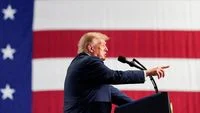
United States President Donald Trump has indicated that his administration is prepared to resume military operations against Iran following the turn of the year should ongoing diplomatic efforts fail to yield a comprehensive agreement. The warning comes amid a period of heightened geopolitical friction in the Persian Gulf, characterized by fractured indirect talks, escalating naval confrontations in the Strait of Hormuz, and heightened security alerts across Middle Eastern military installations housing American personnel.
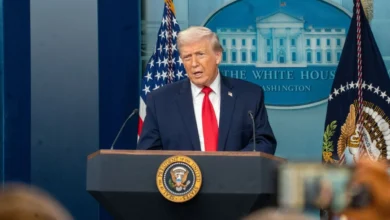
The remarks, delivered during an extensive policy interview with Fox News, reflect a growing sense of frustration within the White House regarding the trajectory of diplomatic channels with Tehran. While acknowledging that backchannel communications remain technically active, President Trump expressed severe skepticism regarding the sincerity of Iranian negotiators, utilizing colorful rhetoric to describe what he perceives as deliberate stalling tactics designed to buy time for the regime.
"They are professional tap dancers, and all they do is talk," President Trump stated during the interview, characterizing the ongoing dialogue as ultimately unproductive. "They just keep talking, but it is all nonsense."
This diplomatic deadlock is unfolding concurrently with an intensifying security crisis at sea. The Strait of Hormuz—a vital global chokepoint through which a significant percentage of the world’s petroleum passes daily—has transformed into a flashpoint. Recent weeks have witnessed renewed Iranian kinetic activity targeting commercial oil tankers, defying an aggressive United States Navy blockade designed to choke off maritime commerce connected to Iranian ports and economic lifelines.
When pressed by interviewers on how Washington intends to respond if Iranian vessels or allied proxies attempt to violently breach the naval blockade, President Trump issued an uncompromising ultimatum. Any Iranian watercraft attempting to run the blockade will face immediate kinetic engagement, up to and including being fired upon and sunk by American naval forces.
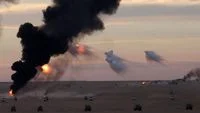
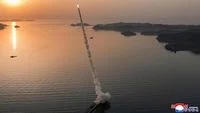
This bellicose posture underscores a broader strategic shift in Washington’s approach to the Islamic Republic, merging maximum economic pressure with explicit threats of direct military intervention. The latest escalation follows unconfirmed or developing reports of kinetic strikes directed at commercial shipping in the immediate vicinity of the Strait of Hormuz, as well as targeted drone and rocket provocations aimed at United States military infrastructure stationed in the Kingdom of Bahrain.
Background Context and Diplomatic Stalemate
The current crisis represents the culmination of years of structural degradation in United States-Iran relations, tracing back to the U.S. withdrawal from the Joint Comprehensive Plan of Action (JCPOA) and the subsequent implementation of a "maximum pressure" campaign. Economic sanctions have severely crippled the Iranian economy, inducing hyperinflation, currency devaluation, and widespread domestic unrest. In response, Tehran has systematically abandoned compliance with various nuclear enrichment caps, advancing its uranium enrichment program closer to weapons-grade thresholds while intensifying its reliance on regional proxy networks.
Despite intermittent efforts by international intermediaries—including European nations, Oman, and Qatar—to establish a viable framework for renewed negotiations, deep-seated distrust has prevented any substantial breakthrough. Tehran demands the complete removal of all economic sanctions prior to returning to full compliance, while Washington insists upon a broader agreement that not only freezes nuclear development but also curtails Iran’s ballistic missile program and its support for regional militias in Lebanon, Yemen, Iraq, and Syria.
The failure of these indirect diplomatic tracks has left both capitals bracing for potential escalation. For Washington, the priority remains safeguarding global energy corridors and protecting regional allies. For Tehran, asymmetric maritime harassment and proxy warfare remain key instruments of deterrence against superior conventional American military might.
Chronology of Recent Escalations
The deterioration of the security environment in the Persian Gulf and surrounding waterways follows a distinct timeline of escalating provocations and military repositioning over the past several quarters:
- Early Autumn: United States intelligence agencies detect increased movement of Iranian anti-ship cruise missiles and fast-attack craft along the coastline facing the Strait of Hormuz. In response, the Pentagon deploys additional naval assets, including guided-missile destroyers and amphibious ready groups, to reinforce the U.S. Fifth Fleet operating out of Bahrain.
- Mid-Autumn: The U.S. Navy officially institutes an enhanced maritime interdiction posture, effectively tightening a blockade around sanctioned Iranian shipping lanes. Several commercial vessels suspected of smuggling Iranian petroleum in violation of international sanctions are boarded and redirected.
- Late Autumn: Iran responds to the enforcement of the naval blockade by deploying Islamic Revolutionary Guard Corps Navy (IRGCN) fast-attack boats to harass commercial tankers flying international flags. Minor collisions and near-misses are reported in international waters near the narrowest sections of the Strait of Hormuz.
- Early December: Reports emerge of a coordinated drone attack targeting American military logistics installations in Bahrain. Although air defense systems intercept the incoming threats with minimal structural damage and no reported casualties, the incident prompts a high-level National Security Council review in Washington.
- Mid-December: President Trump grants the interview with Fox News, explicitly linking the success of diplomatic efforts to the post-New Year timeline and threatening kinetic strikes if negotiations remain deadlocked.
Strategic Implications and Global Market Reactions
The threat of renewed military conflict between the United States and Iran carries profound implications for global security, international diplomacy, and the world economy. Energy markets have already exhibited volatility in response to the tightening blockade and threats of kinetic action in the Strait of Hormuz. Energy analysts warn that any sustained military engagement that closes or restricts traffic through the waterway could trigger immediate, severe spikes in global crude oil prices, threatening fragile post-pandemic economic recoveries across Asia, Europe, and the Americas.
Furthermore, regional actors such as Saudi Arabia, the United Arab Emirates, and Israel are monitoring the situation with acute anxiety. While these nations share Washington’s strategic objective of containing Iranian regional hegemony, they remain deeply concerned that a full-scale military conflict could result in asymmetric retaliatory strikes against their own critical infrastructure, desalination plants, and oil facilities.
International partners of the United States, particularly European signatories to previous diplomatic frameworks, have expressed deep concern over the breakdown in talks. These capitals continue to advocate for de-escalation and renewed diplomatic engagement, warning that the margin for error in the Persian Gulf is dangerously narrow, and that a miscalculation by either naval forces could spark an uncontainable regional war.
As the calendar approaches the new year, the international community watches anxiously to see whether backchannel diplomacy can rescue the stalled talks or if the region is inexorably headed toward a renewed phase of open military confrontation.