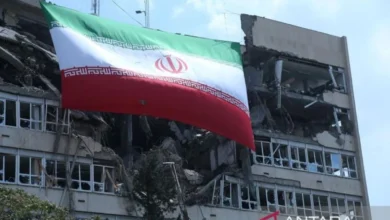
Kuwait Intercepts Iranian Missile and Drone Attacks Targeting US Military Facilities Amid Escalating Regional Tensions

The Kuwaiti military successfully intercepted a significant barrage of Iranian missiles and drones on Sunday, July 19, marking a sharp escalation in regional hostilities that have seen Tehran and the United States engage in a series of retaliatory strikes over the past eight days. The General Staff of the Kuwaiti Armed Forces confirmed that its national air defense systems were activated in the early hours of the morning to neutralize incoming threats following what the government characterized as a "sinful Iranian aggression." This development represents a dangerous expansion of the ongoing friction between the Islamic Republic of Iran and U.S. forces stationed in the Middle East, dragging the historically neutral but strategically vital nation of Kuwait into the direct line of fire.
According to official statements released by the Kuwaiti Ministry of Defense, the military’s sophisticated radar and interception networks identified multiple aerial targets originating from Iranian territory. "Kuwaiti air defenses are currently confronting an enemy missile and drone attack following the sinful aggression carried out by Iran," the military statement read, emphasizing that the sovereign airspace of the Gulf nation had been violated. Residents of Kuwait City reported hearing the piercing wail of air raid sirens across the capital, a sound rarely heard since the regional conflicts of decades past. As the interceptions occurred, the military utilized its official account on the social media platform X to reassure the public, stating that "any explosions heard are the result of the air defense system intercepting enemy attacks."
Detailed Chronology of the Aerial Assault
The sequence of events began late Saturday night and extended into the early hours of Sunday, July 19. Military observers noted a spike in Iranian drone activity shortly after midnight, with Kuwaiti radar systems picking up several low-flying unmanned aerial vehicles (UAVs) and ballistic trajectories consistent with short-range missiles. By 2:00 AM local time, the first interceptions were reported over the northern desert regions of Kuwait, near the border with Iraq.
Iranian state-affiliated media outlets and military spokespersons in Tehran were quick to claim responsibility for the operation. The Iranian military stated that it had launched a "large-scale drone and missile strike" specifically designed to cripple logistical and defensive infrastructure. The primary targets identified by Tehran were Camp Buehring—a major U.S. Army facility formerly known as Camp Udairi—and the Ali Al Salem Air Base. Iran claimed its drones successfully targeted an ammunition depot at Camp Buehring, though Kuwaiti and U.S. officials have yet to confirm any significant damage to the facilities, maintaining that the vast majority of threats were neutralized mid-air.
The use of "suicide drones" or loitering munitions has become a hallmark of Iranian regional strategy, and Sunday’s attack appeared to follow this pattern. By saturating air defenses with a mix of slow-moving drones and faster missiles, the objective was likely to overwhelm the Kuwaiti and American Integrated Air and Missile Defense (IAMD) systems. However, the coordinated response between Kuwaiti batteries and U.S. technical support appears to have prevented a catastrophic hit on high-value targets.
Strategic Importance of Camp Buehring and Ali Al Salem
The choice of targets highlights the strategic nature of the Iranian strike. Camp Buehring, located in the northwestern Kuwaiti desert, serves as a critical staging area and training ground for U.S. and coalition forces. It is essential for the logistics of the U.S. Central Command (CENTCOM), providing facilities for armor, aviation, and infantry units. The base is a cornerstone of the U.S. military presence in the northern Persian Gulf, facilitating rapid response capabilities across the region.
Similarly, the Ali Al Salem Air Base is a vital hub for the U.S. Air Force and the Kuwaiti Air Force. It hosts the 386th Air Expeditionary Wing and serves as a primary tactical airlift hub for operations throughout the Middle East. By targeting the radar systems at Ali Al Salem, Iran aimed to blind the regional surveillance network, which would have left the northern Gulf vulnerable to subsequent waves of attack. The failure to disable these systems suggests a high level of readiness on the part of the Kuwaiti military, which has invested heavily in Western-made defense technology, including the Patriot PAC-3 missile system.
The Broader Context of U.S.-Iran Hostilities
This latest engagement does not exist in a vacuum but is part of an intensifying eight-day cycle of violence between Washington and Tehran. The current flare-up began following a series of strikes on U.S. assets in Iraq and Syria, which the U.S. attributed to Iranian-backed militias. In response, the U.S. conducted precision strikes against Islamic Revolutionary Guard Corps (IRGC) facilities, leading Iran to transition from proxy warfare to direct military intervention from its own soil.
Kuwait’s involvement is a direct consequence of its long-standing security partnership with the United States. Since the liberation of Kuwait in 1991, the country has hosted thousands of American personnel. Currently, Kuwait houses the largest concentration of U.S. troops in the region outside of active combat zones, with estimates placing the number at approximately 13,500 personnel. While Kuwait has often attempted to play the role of a regional mediator—maintaining diplomatic channels with Tehran while remaining a staunch U.S. ally—the direct targeting of its territory by Iran marks a significant shift in the regional security dynamic.
Military and Technical Analysis of the Attack
Analysts suggest that the drones used in the Sunday attack were likely variants of the Shahed-series, which have been widely utilized in various contemporary conflicts. These drones are difficult to detect due to their low radar cross-section and ability to fly at low altitudes. The accompanying missiles were likely short-range ballistic missiles (SRBMs) capable of reaching Kuwaiti territory within minutes of launch from southern Iran or mobile platforms.
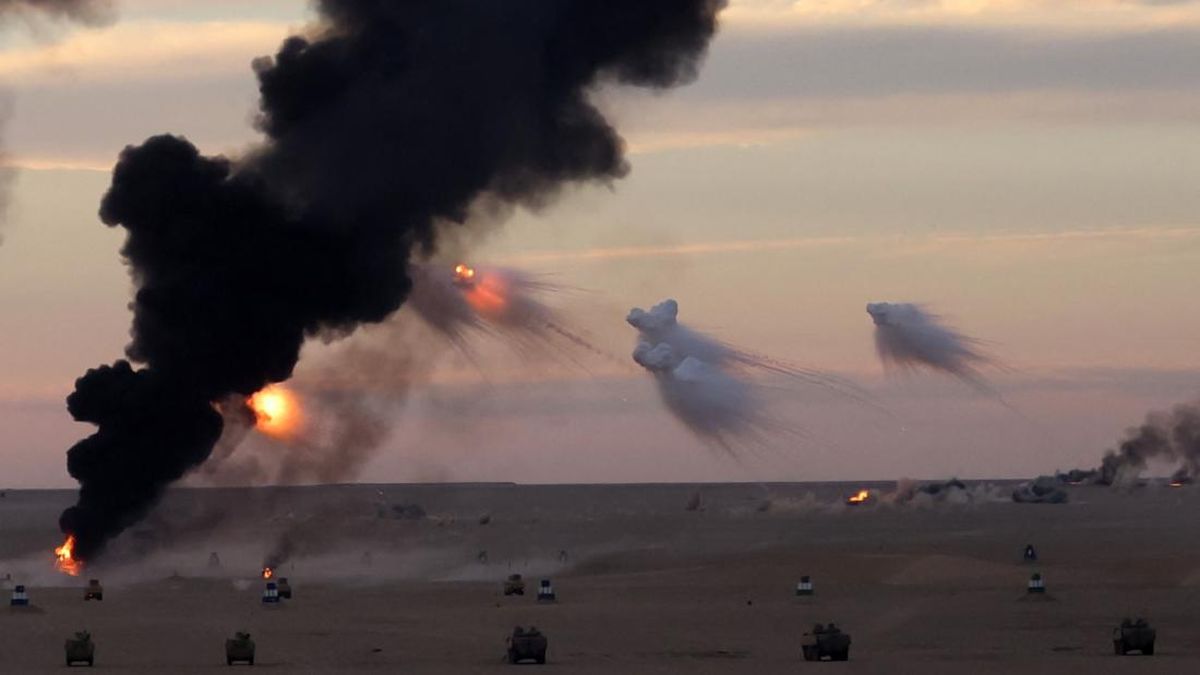
The successful interception by Kuwaiti forces demonstrates the efficacy of the "Defense of Kuwait" strategy, which has focused on a multi-layered shield. This includes the Patriot missile batteries, which are designed to engage both aircraft and ballistic missiles, as well as shorter-range point-defense systems. The coordination between the Kuwaiti General Staff and U.S. forces at Camp Arifjan (the primary U.S. headquarters in Kuwait) was likely instrumental in managing the battle space and ensuring that civilian areas in Kuwait City were protected from falling debris.
Official Reactions and Diplomatic Implications
The Kuwaiti government has expressed "deep condemnation" of the attack, calling it a violation of international law and a threat to regional peace. A spokesperson for the Kuwaiti Ministry of Foreign Affairs stated that the nation reserves the right to respond to any threat to its sovereignty. "The security of Kuwait is a red line," the official noted. "We will take all necessary measures at the diplomatic and military levels to protect our people and our land."
In Washington, the White House and the Department of Defense issued statements reaffirming their commitment to Kuwait’s security. A Pentagon spokesperson noted that the U.S. remains in close contact with Kuwaiti counterparts to assess the situation and ensure the continued protection of coalition forces. The U.S. has warned Iran that further escalations will be met with "proportionate and decisive" force.
Tehran, meanwhile, framed the attack as a defensive measure against "foreign interference." The Iranian Ministry of Foreign Affairs argued that the presence of U.S. bases in neighboring countries is the primary source of instability in the Middle East. By targeting these bases, Iran seeks to project power and signal that no facility hosting U.S. troops is safe from its reach, regardless of the host nation’s diplomatic stance.
Economic and Regional Impact
The escalation of conflict in the Persian Gulf has immediate and far-reaching implications for global markets. Kuwait is a major oil producer and a key member of OPEC. Any prolonged military activity near its oil fields or shipping lanes could lead to a spike in global energy prices. While the Sunday attacks targeted military installations rather than energy infrastructure, the proximity of the strikes to the northern oil fields has put the industry on high alert.
Furthermore, the "spillover" effect of the U.S.-Iran conflict into Kuwait complicates the diplomatic efforts of other Gulf Cooperation Council (GCC) members. Nations like Saudi Arabia and the United Arab Emirates are watching the situation closely, as they also host U.S. military facilities and share similar vulnerabilities to Iranian drone and missile technology. The attack on Kuwait may prompt a unified GCC response or a call for an emergency summit to discuss collective regional defense.
Future Outlook and the Risk of Escalation
The situation remains fluid as military forces in Kuwait remain at the highest state of readiness. The international community is calling for restraint, but the "tit-for-tat" nature of recent engagements suggests that the cycle of violence may not have reached its peak. For Kuwait, the challenge lies in maintaining its national security without becoming a permanent battlefield for larger powers.
Military experts warn that if Iran continues to target U.S. facilities in Kuwait, the U.S. may feel compelled to launch retaliatory strikes directly from Kuwaiti soil, which would further erode Kuwait’s traditional role as a neutral actor. Conversely, if Kuwait chooses to distance itself from the U.S. military presence to avoid being targeted, it risks losing its primary security guarantee against regional threats.
As of Sunday evening, the skies over Kuwait were reported to be clear, but the psychological impact of the sirens and the visible interceptions has left the population on edge. The Kuwaiti military has urged citizens to follow official channels for updates and to avoid spreading unverified information on social media. The coming days will be critical in determining whether this "sinful aggression" was an isolated incident or the beginning of a new, more dangerous phase of the Middle East’s perennial conflict.