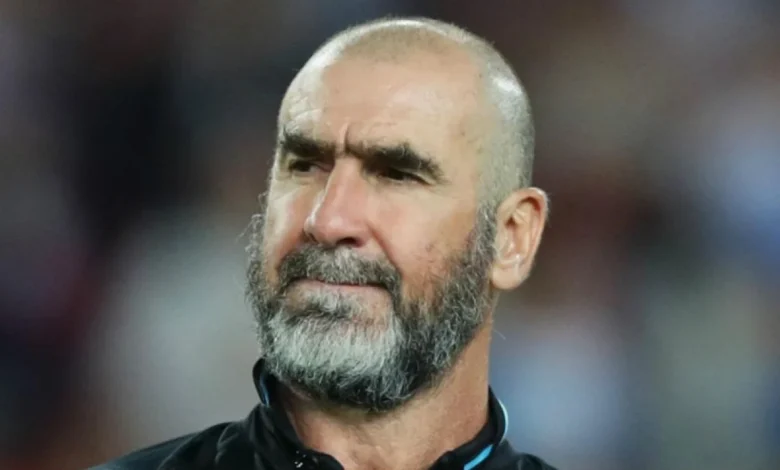
The intersection of professional sports and the entertainment industry has long served as a fertile ground for crossover talent, revealing that many celebrated Hollywood actors and world-renowned musicians once possessed the technical prowess and discipline required for top-tier professional football. While their current acclaim rests on box office returns, chart-topping albums, and global tours, a significant number of international stars navigated the rigorous paths of elite football academies and professional leagues before transitioning into the arts. This phenomenon underscores the shared psychological demands of high-stakes performance, where the transition from a stadium pitch to a film set or concert stage often involves a seamless shift of competitive intensity.
The Gritty Transition: Vinnie Jones and the Wimbledon Legacy
Perhaps no figure illustrates this transition more starkly than British actor Vinnie Jones. Long before he became a fixture in Guy Ritchie’s gritty crime capers such as Lock, Stock and Two Smoking Barrels (1998) and Snatch (2000), Jones was the archetype of the "hard man" in English football during the 1980s and 90s.
Jones’s footballing career was defined by an aggressive, uncompromising style of play. He spent the bulk of his professional tenure with Wimbledon, where he became a key member of the infamous "Crazy Gang." His career reached its zenith in 1988, when he helped Wimbledon secure a monumental FA Cup victory over a heavily favored Liverpool side. Throughout his career, Jones donned the kits of Leeds United, Sheffield United, Chelsea, and Queens Park Rangers, and he earned nine international caps for the Wales national team.
The transition from sport to screen was not merely a career pivot but a strategic branding shift. In the entertainment industry, Jones effectively leveraged his fearsome footballing reputation to secure roles that required a menacing on-screen presence. His ability to channel the same intensity from the midfield onto the cinematic set allowed him to bridge the gap between two disparate industries, cementing a legacy that transcends his initial career as a professional athlete.
Eric Cantona: From Old Trafford Legend to Silver Screen Auteur
While Jones transitioned from the pitch to the screen, Eric Cantona performed a rare feat of achieving legendary status in both spheres. Widely considered one of the most influential figures in the history of Manchester United, Cantona’s impact on English football during the 1990s remains a cornerstone of the sport’s modern era.
After joining Manchester United in 1992, Cantona became the catalyst for the club’s dominance, leading them to four Premier League titles in five seasons. His on-field persona—characterized by his upturned collar and masterful technical skill—made him an icon of the game. However, his abrupt retirement in 1997 signaled a pivot that few expected.
Cantona’s entry into acting was not a vanity project but a serious artistic pursuit. He appeared in the critically acclaimed film Elizabeth (1998) alongside Cate Blanchett and later played himself in Ken Loach’s Looking for Eric (2009). Data from the Manchester United archives indicates that Cantona has contributed to over 25 film projects, demonstrating a commitment to the craft of acting that rivals his dedication to football. Analysts suggest that Cantona’s ability to project a larger-than-life persona was essential in his successful rebranding from a mercurial footballer to a respected French character actor.
The Philosophical Pivot: Frank Leboeuf’s Cinematic Ambition
Frank Leboeuf represents a distinct case of a professional athlete intentionally reinventing himself through formal academic training. A stalwart defender, Leboeuf was a pivotal part of the France squad that achieved glory at the 1998 FIFA World Cup and Euro 2000. Having played for Strasbourg, Chelsea, and Marseille, his footballing resume is characterized by tactical intelligence and defensive composure.
Upon his retirement, Leboeuf opted for a path that took him far from the footballing hubs of Europe. He moved to Los Angeles to immerse himself in the American acting industry, enrolling at the prestigious Lee Strasberg Theatre & Film Institute. His transition was validated in 2014 when he secured a role in the Academy Award-nominated film The Theory of Everything.
Leboeuf’s career path serves as a case study in professional adaptation. By treating acting as a discipline requiring the same level of training as elite sport, he successfully navigated the transition. His continued involvement in football as a television analyst provides a unique perspective, as he bridges the gap between the technical intricacies of the game and the narrative-driven world of modern media.
The FA Youth Cup Connection: Nicky Byrne’s Musical Rebirth
Before the global phenomenon that was the boyband Westlife, Nicky Byrne was a promising young goalkeeper. His trajectory began in the Irish youth system, where he played for Home Farm and St. Kevin’s Boys before being scouted by Leeds United in 1995.
Byrne’s footballing credentials were not insignificant; he was part of the Leeds United squad that claimed the FA Youth Cup in 1997. However, the cutthroat nature of professional football meant that contracts were rarely guaranteed, and upon the conclusion of his tenure at Elland Road, Byrne shifted his focus toward his secondary passion: music.
The implications of this shift are clear: the discipline Byrne learned in the high-pressure environment of English academy football served as a foundation for his success in the music industry. The rigors of daily training, media scrutiny, and team coordination mirrored the demands of international pop stardom. His subsequent success with Westlife, which included multiple chart-topping hits like My Love and Flying Without Wings, underscores how the transition from athletics to the performing arts often relies on the same core traits of resilience and adaptability.
The Resilience of Julio Iglesias: From the Bernabéu to Global Stardom
Perhaps the most poignant story of transition belongs to Spanish music icon Julio Iglesias. In 1959, a young Iglesias was signed to the Real Madrid youth academy as a goalkeeper, a position that demanded high reflexes and significant physical endurance. His path toward a potential career with the legendary first team was abruptly halted in 1962 following a near-fatal car accident.
The accident resulted in a long period of paralysis and intensive rehabilitation. During this recovery, Iglesias began to play the guitar, a tool for physical therapy that eventually unlocked a dormant creative talent. This period of forced inactivity became the pivot point for his life; the transition from the football field to the concert stage was born out of necessity.
Iglesias’s subsequent success—selling over 300 million records worldwide—is a testament to the idea that professional athletes often possess the mental fortitude to overcome career-ending injuries by channeling their energy into new, high-demand disciplines. His narrative remains a cornerstone of cultural history in Spain, illustrating that the loss of a sporting dream can often be the precursor to a greater, unforeseen artistic legacy.
Analysis: Why Athletes Succeed in Entertainment
The common thread among these figures—Jones, Cantona, Leboeuf, Byrne, and Iglesias—is the capacity to thrive in high-pressure environments. Psychologists note that the professionalization of sport requires a high degree of emotional regulation, spatial awareness, and a comfort with public scrutiny—all of which are primary requirements for acting and musical performance.
From a sociological perspective, the transition from sports to entertainment also benefits from the existing "star power" established during an athletic career. When a high-profile footballer transitions to the screen, they often bring a built-in audience, providing a unique market advantage. However, the longevity of these individuals in their second careers proves that while their name recognition might open doors, their talent and work ethic are what allow them to remain relevant for decades.
As the sports and entertainment industries continue to integrate—driven by the rise of streaming platforms, social media, and the "celebrity athlete" model—it is likely that we will see more crossovers in the coming years. The lessons from these five individuals suggest that the boundary between the pitch and the stage is thinner than it appears, and that the dedication required to excel in one is remarkably transferable to the other. Whether it is the tactical mind of a defender translated into a nuanced performance or the physical rhythm of a goalkeeper influencing a musical composition, the synthesis of these two worlds continues to provide some of the most compelling narratives in modern media.