End of the Road: Why These Popular Indonesian Cars Were Discontinued in 2025 and What It Means for Used Car Buyers


The Indonesian automotive landscape experienced a significant shift throughout 2025, as several prominent manufacturers made the strategic decision to discontinue a selection of their well-known vehicle models. Driven by evolving market demands, tightening global emissions standards, regulatory pushes toward electrification, and the introduction of next-generation replacements, these vehicles were quietly phased out of assembly lines and dealership showrooms.
While the discontinuation of a vehicle often signals the end of an era for specific automotive nameplates, it rarely spells an abrupt end for the cars themselves. As these models transition out of the new-vehicle market, they immediately inject fresh inventory into Indonesia’s thriving secondary automotive sector. For prospective car buyers, the phasing out of these models presents a unique window of opportunity. Because production and official sales concluded relatively recently—mostly within the past year—concerns regarding the scarcity of spare parts, major mechanical obsolescence, and intensive maintenance are largely mitigated.
To understand how the Indonesian automotive market arrived at this juncture, it is essential to examine the broader industry trends of 2025, analyze the specific vehicles that reached the end of their lifecycle, review their current secondary market valuations, and explore the strategic implications for both consumers and manufacturers.
A Strategic Shift in the Indonesian Automotive Industry
The year 2025 will be remembered by industry analysts as a transitional milestone for the Indonesian automotive sector. For decades, internal combustion engine (ICE) vehicles dominated showroom floors across the archipelago. However, aggressive government initiatives promoting low-carbon emission vehicles (LCEV), hybrid electric vehicles (HEVs), and battery electric vehicles (BEVs) forced original equipment manufacturers (OEMs) to rethink their product portfolios.
Automotive strategists faced a dual challenge: complying with increasingly stringent environmental regulations while catering to a consumer base that is becoming more environmentally conscious yet remains highly cost-sensitive. Consequently, automakers began rationalizing their lineups. Models that relied exclusively on traditional fossil-fuel powertrains or those that overlapped with newly introduced, technologically superior global platforms were systematically culled. This house-cleaning exercise allowed manufacturers to redirect capital, factory tooling, and marketing budgets toward electrification and high-demand crossover segments.
Chronology of Discontinuations: How the 2025 Phase-Out Unfolded
The phasing out of these popular models did not happen overnight; it was a calculated, chronological process executed by various brands throughout the twelve months of 2025.
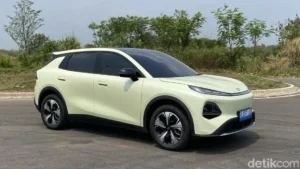
The first major shockwave occurred in the early spring. In March 2025, Chery Sales Indonesia (CSI) made headlines by halting the production of the Chery Tiggo 5 X. The compact crossover had established a foothold in the competitive entry-level SUV segment, but the Chinese manufacturer quickly pivoted its strategy to favor a unified global nomenclature and a refined product lineup, prioritizing the Tiggo Cross for the Indonesian market.
As the automotive industry transitioned into the mid-year period, Honda Prospect Motor (HPM) implemented one of the most high-profile changes of the year. Following the introduction of the latest generation of its hugely popular five-passenger SUV in June 2025, Honda officially pulled the plug on the HR-V Turbo variant. The decision underscored Honda’s aggressive electrification roadmap, which centers heavily on transitioning its core SUV offerings to advanced hybrid powertrain technologies rather than forced-induction pure-gasoline setups.
By the time the third quarter arrived, supply chain adjustments and shifting import economics caught up with the passenger car segment. In September 2025, PT Suzuki Indomobil Sales confirmed that the importation and subsequent commercial sales of the Suzuki Baleno Hatchback had come to an end. The decision marked the conclusion of a successful run for the imported hatchback, prompting Suzuki to concentrate its local retail efforts on more dominant multi-purpose vehicles (MPVs) and compact SUVs tailored for domestic transport needs.
The final major restructuring wave occurred toward the tail end of the fourth quarter of 2025. Toyota Astra Motor quietly wound down the production and domestic sale of its traditional, pure-gasoline-powered Toyota Veloz variants. By closing the chapter on the standard ICE Veloz just before the turn of the year, Toyota completed its transition of the popular family hauler into a strictly hybrid-only lineup, aligning with its multi-pathway carbon-neutrality strategy.
Detailed Breakdown of Discontinued Models and Secondary Market Valuations
For consumers tracking these developments, the secondary market serves as the primary hunting ground for securing former showroom favorites at depreciated price points. Industry data compiled from major Indonesian online automotive classifieds provides a clear picture of how these discontinued models are currently performing in the used car ecosystem.
Honda HR-V Turbo: Premium Performance at a Discount
The departure of the Honda HR-V Turbo left a distinct void for driving enthusiasts who preferred the brisk acceleration of its 1.5-liter VTEC Turbo engine over the efficiency-focused nature of the newer hybrid iterations. Despite its discontinuation, the HR-V Turbo retains high residual desirability due to its aggressive styling, premium cabin features, and robust build quality.
On the used car market, pricing for the Honda HR-V Turbo varies depending on the production year and vehicle condition. Models from the 2022 manufacturing year currently trade in the neighborhood of Rp310 million. Meanwhile, relatively fresh examples from the 2024 model year—just months before production officially ceased—hold strong values, commanding approximately Rp360 million. Automotive analysts note that because the core body architecture of this generation remains in production with hybrid powertrains, body panels, interior modules, and chassis components will remain widely available through official Honda service networks for years to come.
Chery Tiggo 5 X: Entry-Level Value Proposition
The Chery Tiggo 5 X carved out a dedicated following among urban motorists seeking modern features, high-tech infotainment systems, and contemporary styling at an affordable price point. When Chery Sales Indonesia streamlined its portfolio in March 2025 to favor the Tiggo Cross, existing owners of the Tiggo 5 X found themselves holding a vehicle with a compressed production timeline.
However, this transition has created a compelling proposition for budget-conscious used car buyers. A well-maintained Chery Tiggo 5 X from the 2024 production run can now be acquired on the secondary market for around Rp165 million. This aggressive price depreciation offers high value-for-money relative to the vehicle’s equipment levels, though prospective buyers are advised to verify warranty transfer terms and parts availability through authorized Chery service centers.
Suzuki Baleno Hatchback: The End of an Imported Era
As a long-standing favorite in the compact hatchback category, the Suzuki Baleno Hatchback built a reputation for fuel efficiency, low maintenance overhead, and nimble urban handling. The decision to halt imports in September 2025 effectively ended its domestic sales tenure, shifting Suzuki’s passenger car focus elsewhere.
Despite the cessation of new imports, the massive population of Baleno Hatchbacks already operating on Indonesian roads ensures a healthy ecosystem for maintenance and repairs. Secondary market pricing reflects the vehicle’s enduring utility: a 2020 model year Baleno Hatchback generally commands an average price of around Rp144 million. For those seeking a nearly-new vehicle without paying new-car depreciation taxes, final-batch models produced up to 2025 are currently valued at approximately Rp219 million.
Toyota Veloz Bensin: Transitioning the Nation’s Favorite Family Hauler
As one of the most ubiquitous family vehicles on Indonesian asphalt, the Toyota Veloz has long been a pillar of national mobility. The late-2025 phase-out of the pure internal combustion engine (ICE) Veloz in favor of an exclusively hybrid lineup marks a monumental psychological shift for buyers accustomed to traditional petrol engines.
Because millions of Toyota IMV and DNGA-platform vehicles share mechanical architecture with the Veloz, parts availability is virtually guaranteed for decades. On the pre-owned market, a 2020 model year conventional Veloz trades around Rp175 million. Meanwhile, late-model ICE units manufactured right up to the 2025 production cutoff command roughly Rp260 million, reflecting their low mileage and near-new condition.
Market Implications: What the 2025 Shake-Up Means for the Future
The retirement of these four key models in 2025 carries several broader implications for the Indonesian automotive ecosystem.
First, it highlights the accelerated pace at which electrification is reshaping showrooms. Traditional internal combustion engines are no longer safe from discontinuation simply because they sell in high volumes; if they do not fit a manufacturer’s long-term carbon-reduction roadmap or regulatory compliance targets, they will be systematically replaced.
Second, for consumers, the secondary market has emerged as a sanctuary of value. The stigma traditionally attached to discontinued cars is rapidly dissolving in Indonesia. Savvy buyers increasingly recognize that when a manufacturer discontinues a model due to a global platform shift—rather than brand failure or structural defect—the resulting depreciation creates a prime buying opportunity. Essential components, routine maintenance consumables, and specialized mechanical repairs remain fully supported by manufacturer guarantees and robust aftermarket supply chains.
Finally, automotive economists emphasize that prices in the used vehicle market remain fluid. The valuation figures cited across these models are baseline estimates derived from nationwide transaction data. Real-world purchase prices are ultimately subject to individual vehicle inspection, mileage, service history, geographic location, and the skill of direct negotiation between buyer and seller. As Indonesia continues its journey toward a modernized, electrified automotive future, the vehicles of yesterday will continue to play a vital, accessible role in keeping the nation moving.