Dilemma of Commuter Rail Capacity: Indonesia Returns to the Debate Over Importing Used Trains to Address Jabodetabek’s Growing Transport Demands

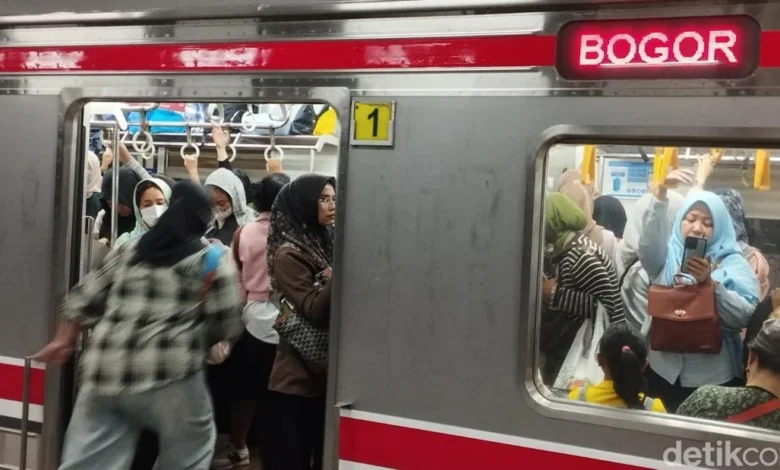
The perennial challenge of maintaining sufficient rolling stock for the Greater Jakarta (Jabodetabek) Commuter Line has returned to the forefront of national infrastructure policy. In a significant shift from the stance taken during the 2023 legislative cycle, the Indonesian government and the House of Representatives (DPR) have moved toward approving the importation of "non-new"—or used—electric multiple unit (EMU) trainsets. This decision, championed by the management of PT Kereta Api Indonesia (KAI) and its subsidiary, PT Kereta Commuter Indonesia (KCI), aims to bridge an urgent capacity gap that officials argue cannot be met solely by domestic production in the immediate term.
The Evolution of the Import Controversy
The discourse surrounding the importation of used KRL (Kereta Rel Listrik) trains has been one of the most contentious topics in Indonesia’s transportation sector over the last three years. In 2023, the proposal to import used trainsets from Japan was met with fierce resistance from various stakeholders, including the Ministry of Industry and certain members of the legislature. At the time, the government opted to prioritize a multi-pronged strategy: purchasing new units from Chinese manufacturers, commissioning domestic production from state-owned PT INKA, and implementing a massive retrofit program for aging carriages.
The 2023 rejection was grounded in a recommendation from the Financial and Audit Development Agency (BPKP), which advised against imports, citing the potential to undermine the growth of local industries. The then-Minister of Industry, Agus Gumiwang Kartasasmita, was a vocal proponent of this domestic-first approach, emphasizing that the state’s duty was to bolster PT INKA’s production capabilities rather than relying on foreign surplus. Legislators, including Andre Rosiade of Commission VI, famously challenged the transport operators, demanding accountability for why domestic orders were not placed earlier to avoid the necessity of imports.
However, the reality of 2026 presents a different landscape. With passenger numbers continuing to climb, the policy pendulum has swung back toward the necessity of importing used trains as an interim "bridging" solution.
A Chronology of Supply Chain Challenges
The current shortfall in rolling stock did not emerge overnight; it is the result of a complex interplay between procurement delays, rising demand, and aging infrastructure.
- 2020–2021: During the height of the COVID-19 pandemic, PT INKA’s production facilities in Banyuwangi were fully operational but lacked sufficient orders from KCI. Industry observers and parliamentary critics now point to this period as a missed opportunity, arguing that if procurement contracts had been finalized in 2021, the new trainsets would have been ready for deployment by 2023.
- March 2023: Under intense pressure to replace aging trainsets, KCI finally placed significant orders with PT INKA. However, due to the lead times required for sourcing components and manufacturing complex rolling stock, these units were scheduled for delivery starting in 2025.
- 2023–2024: The national debate reached an impasse. The government attempted to mitigate the shortage through a massive retrofit initiative, extending the operational life of existing, older trains.
- September 2026: KAI officially proposed a new import plan during a hearing with Commission VI of the DPR. The management justified the move by citing a critical need to maintain service levels for a daily passenger load that now frequently exceeds 1.3 million commuters.
The 2026 Strategic Pivot: Data-Driven Necessity
The justification for the 2026 importation plan is rooted in empirical data provided by PT KAI. According to the current leadership, led by President Director Bobby Rasyidin, the commuter rail network saw an 11.3% growth in passenger traffic during the first half of 2026 compared to the same period in the previous year.
The KAI proposal calls for the procurement of 23 trainsets. These are categorized into two distinct operational needs:
- 7 trainsets with an SF12 configuration: Designed for high-density lines where infrastructure allows for 12-car trains to maximize capacity.
- 16 trainsets with an SF8 configuration: Intended for routes where station platform lengths are currently constrained and cannot accommodate the longer 12-car sets.
Furthermore, a significant portion of the existing fleet has surpassed 40 years of service. Maintaining these units has become increasingly expensive and technically challenging, raising safety and reliability concerns. The "bridging" strategy involving used imports is intended to provide immediate relief while the long-term pipeline of new, domestically produced trains continues to be phased into the network.
Parliamentary Shift: From Resistance to Consensus
In a notable reversal of the legislative climate from three years ago, the Commission VI of the DPR has signaled its approval for the importation plan. During the Rapat Dengar Pendapat (RDP) held on September 23, 2026, the commission concluded that the importation of non-new trainsets is a necessary evil to ensure the stability of public transportation.
Andre Rosiade, now serving as the Deputy Chair of Commission VI—having been one of the most vocal opponents of the 2023 import plan—noted that the approval comes with strict conditions. The primary directive is that the imports must be integrated into a sustainable strategy that does not permanently derail the development of the domestic rail industry. The committee emphasized that the focus remains on "increasing local industry capabilities," but acknowledged that the immediate, daily needs of the 1.3 million commuters take precedence.
Implications for the Future of Urban Mobility
The decision to import used trains carries both economic and social implications for Indonesia.
Economic Impacts:
The importation of used trains is generally more cost-effective in the short term, allowing the government to allocate capital expenditure to broader infrastructure upgrades, such as signal improvements and station expansions. However, the reliance on foreign legacy equipment carries the risk of higher maintenance costs in the long run if spare parts become scarce or if the technology becomes obsolete.
Social Impacts:
For the average Jakarta commuter, the primary concern is reliability and frequency. Overcrowding has been a persistent grievance, and the addition of 23 trainsets is expected to significantly reduce headways and ease station congestion. The ability to deploy SF8 and SF12 configurations with greater flexibility allows KAI to tailor its services to the physical constraints of older stations, a critical step in modernizing the network.
Industrial Implications:
The government is now faced with the delicate task of balancing immediate utility with the national industrial policy. The Ministry of Industry, which previously held a hardline stance against imports, is now under pressure to ensure that these "bridging" imports do not stifle the progress of PT INKA. The strategy appears to be a hybrid model: utilizing imported used stock for immediate capacity relief while continuing to support the domestic production of new trainsets for long-term fleet replacement.
Conclusion: A Pragmatic Compromise
The 2026 decision to import used KRL trains marks a turning point in Indonesia’s approach to transit infrastructure. It reflects a move toward pragmatic governance, where the rigid adherence to ideological positions—such as the total avoidance of used goods—has been replaced by a data-driven focus on immediate service delivery.
As Jakarta continues to grapple with its status as one of the most congested cities in the world, the efficient operation of its commuter rail system is not merely a logistical goal but an economic imperative. By accepting the necessity of used imports, the government and the legislature have acknowledged that while domestic industrialization is the ultimate goal, the immediate comfort and mobility of millions of citizens cannot be sidelined by the complexities of long-term production timelines. The success of this policy will now be measured by how quickly these trains can be integrated into the network and whether this influx of capacity can finally stabilize the service levels that the Jabodetabek region has long demanded.
Related posts: