IDF Suspends Atalef Suicide Drone Fleet Following Blast That Killed Two Soldiers in Northern Gaza

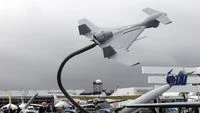
The Israel Defense Forces have ordered an immediate grounding of their entire Atalef loitering munition fleet following a catastrophic operational failure in northern Gaza that resulted in the deaths of two Israeli soldiers. The incident, which occurred on Friday, September 25, has reignited intense scrutiny regarding the reliability and safety protocols surrounding autonomous and remote-piloted weaponry deployed in high-intensity urban combat environments. According to military disclosures and reports from regional media, the loitering munition—colloquially referred to as a suicide drone—suffered a catastrophic malfunction that caused it to veer off its intended flight path, land erratically within a military encampment, and detonate prematurely.
The fatality of the two service members has prompted the highest echelons of the Israeli military to initiate comprehensive internal reviews, sideline the specific weapon system for an initial 48-hour assessment period, and deploy specialized engineering teams to dissect the technical anomalies plaguing the hardware. This tragic event is not an isolated occurrence but rather the culmination of a documented pattern of mechanical and software instability associated with the Atalef platform, raising critical questions about military procurement, field-level safety compliance, and the risks of deploying complex autonomous systems under battlefield stress.
Background Context and Technical Profile of the Atalef System
The Atalef, whose name translates from Hebrew to "Bat," is an advanced loitering munition integrated into the operational architecture of the Israel Defense Forces. Loitering munitions represent a hybrid category of weapon systems that combine characteristics of unmanned aerial vehicles (UAVs) and cruise missiles. Designed to hover over a designated area for an extended duration, search for targets, and subsequently destroy them by crashing directly into them with an onboard explosive payload, these systems provide ground commanders with tactical flexibility and precision-strike capabilities without requiring immediate line-of-sight artillery support.
Since the outbreak of the contemporary conflict in Gaza, the IDF has increasingly relied on various classes of tactical drones to clear urban terrain, locate concealed combatants, and minimize direct exposure to hostile sniper fire and improvised explosive devices. The Atalef platform was specifically engineered to support infantry battalions and reconnaissance units operating in densely populated environments where traditional artillery or air support carries a high risk of collateral damage.
However, the operational environment in northern Gaza—characterized by ruined infrastructure, heavy electronic jamming, atmospheric dust, and fluctuating electromagnetic interference—places severe demands on the guidance systems, communication links, and fusing mechanisms of tactical drones. While these platforms are marketed for their high precision and operational autonomy, their performance in prolonged combat operations has frequently exposed vulnerabilities in hardware durability and safety redundancy.
A Troubled History of Malfunctions and Safety Warnings
The fatal explosion on September 25 was preceded by a series of alarming red flags regarding the reliability of the Atalef platform. Investigative reporting by the Israeli military publication N12 revealed that the drone type had experienced a history of failure to detonate on at least seven distinct prior occasions during field deployments. These failures typically involved munitions failing to explode upon impact with designated targets, leaving unexploded ordnance scattered in operational zones and presenting acute hazards to advancing ground troops.
More alarmingly, the safety risks materialized internally well before the fatal incident in late September. Reports indicate that during the preceding year, three separate units of the Atalef drone unexpectedly detonated while undergoing routine handling, diagnostic checks, or pre-flight inspections by IDF personnel. These inadvertent detonations within secure or semi-secure military perimeters highlighted critical vulnerabilities in the weapon’s arming sequence and explosive trigger mechanisms.
In response to these near-misses and pre-detonation incidents, the IDF’s Yahalom Unit—an elite combat engineering corps specializing in explosive ordnance disposal, bomb squad operations, and tunnel warfare—issued strict safety directives to units operating the platform in the field. According to defense reporting published by The Jerusalem Post, field commanders were given explicit, mandatory instructions regarding protocol upon encountering malfunctioning or downed Atalef drones. Troops were strictly ordered never to approach, touch, or attempt to move any crashed or unexploded Atalef unit. Instead, units were mandated to establish a secure perimeter and immediately summon specialized bomb disposal technicians to neutralize the hazard safely. Despite these rigorous protocols and heightened awareness among frontline troops, the inherent unpredictability of the system ultimately led to the recent fatalities.
Chronology of the September 25 Incident
The sequence of events leading to the deaths of the two IDF soldiers unfolded rapidly within a fortified military position in northern Gaza.
- Launch and Flight Phase: The operation commenced as a standard tactical deployment where the Atalef loitering munition was prepared for a mission intended to support ground maneuvering elements. The initial launch phase proceeded without reported anomalies, and the drone ascended into the airspace over the operational sector.
- Loss of Control and Erratic Flight: Shortly after achieving cruising altitude, the drone experienced an uncommanded deviation from its programmed flight path. Telemetry and eyewitness accounts indicated that the platform began to behave erratically, losing directional stability and failing to respond to operator override commands, likely due to a guidance system failure, software glitch, or severed communication link.
- Decent and Impact: Rather than continuing toward a designated target area or executing a safe self-neutralization protocol, the drone drifted backward toward friendly lines and made an uncontrolled, erratic landing directly inside the perimeter of the IDF military position.
- Detonation: Upon or immediately following ground contact, the onboard warhead detonated. The proximity of the explosion to personnel within the encampment proved immediately fatal for the two soldiers stationed at the site.
- Immediate Aftermath: Emergency response protocols were activated instantly. Medical personnel at the scene attempted to treat the wounded, but both soldiers succumbed to their injuries at the location. The area was immediately cordoned off to prevent secondary detonations from potential unexploded sub-munitions or compromised safety systems.
Military Response and Ongoing Investigation
The immediate reaction from the IDF leadership underscored the gravity of the incident. Chief of the General Staff Lieutenant General Eyal Zamir intervened directly, ordering the formation of an expert investigative team to conduct a comprehensive forensic and operational review of the accident.
The investigative panel is headed by a senior brigadier jenderal from the ground forces, ensuring that the inquiry possesses the rank, authority, and technical expertise required to evaluate complex military hardware. The mandate of this team extends beyond a simple review of human error; it is tasked with performing a deep-dive technical assessment of the Atalef’s avionics, software logic, fuze safety systems, and manufacturing quality control. Investigators are examining whether the malfunction stemmed from a systemic design flaw, a software vulnerability susceptible to battlefield interference, degraded components due to environmental exposure in Gaza, or procedural errors during pre-flight handling.
Concurrently, the military establishment took the decisive step of grounding the entire fleet of Atalef tactical suicide drones for an initial period of 48 hours. This grounding order was not merely symbolic; it mandated a comprehensive, mandatory safety audit across all units currently utilizing the platform. Technicians and engineering officers were ordered to inspect every active unit, review maintenance logs, update firmware where necessary, and re-verify compliance with Yahalom Unit safety guidelines. The military emphasized that the fleet would remain grounded until safety assessments confirmed that the risk of uncommanded detonation had been mitigated to an acceptable level.
Broader Implications for Autonomous Warfare and Defense Procurement
The fatal incident involving the Atalef drone carries significant implications that extend well beyond the immediate tactical adjustments of the IDF. It touches upon the broader global discourse concerning the integration of autonomous and semi-autonomous lethal systems into modern military forces.
As modern conflicts increasingly trend toward the integration of robotics, artificial intelligence, and loitering munitions, armies worldwide face a delicate trade-off between tactical advantage and technological reliability. Suicide drones offer unprecedented capabilities for real-time reconnaissance and precision engagement, effectively acting as flying precision artillery that can hunt targets dynamically. However, unlike traditional artillery shells or guided missiles that rely on mechanical firing pins and predictable ballistic trajectories, loitering munitions are complex computers with wings, carrying high explosives and operating via vulnerable wireless networks.
The repeated malfunctions and ultimate fatalities associated with the Atalef platform highlight several critical systemic challenges:
- Hardware-Software Integration: The complexity of fusing flight control software with live explosive payloads creates a high-consequence failure environment. A minor glitch in sensor data or flight stabilization can transform a precision weapon into an unpredictable hazard for friendly forces.
- Environmental Stress in Combat Zones: High temperatures, dust, humidity, and intense electronic warfare environments (such as GPS spoofing and radio frequency jamming) degrade the performance of sensitive microelectronics, increasing the probability of system failure over extended operational deployments.
- Safety Versus Operational Tempo: In high-intensity combat scenarios, pressure to maintain a high operational tempo can lead to compressed maintenance cycles, rushed pre-flight checks, and potential oversight of subtle mechanical degradation in advanced weaponry.
- The Human Element in Autonomous Systems: Even as militaries strive for greater autonomy to protect soldiers, human operators remain responsible for launching, monitoring, and occasionally recovering these systems. When automation fails, operators are frequently placed directly in harm’s way, as demonstrated by the tragic outcome in northern Gaza.
Conclusion and Future Outlook
The loss of two soldiers to a malfunctioning friendly weapon system represents a sobering moment for the Israeli military command. While the investigation led by the senior brigadier general continues to unpack the precise mechanical and software triggers behind the September 25 explosion, the broader lessons of the incident are already shaping internal defense reviews.
The decision to ground the Atalef fleet and subject it to rigorous technical scrutiny demonstrates a institutional commitment to addressing safety flaws, even amid active wartime operations where the demand for tactical loitering munitions remains exceptionally high. Moving forward, the findings of the IDF investigative team are expected to influence not only the future operational protocols of the Atalef system but also the design, safety redundancy standards, and procurement criteria for next-generation tactical robotics utilized by modern armed forces navigating the complexities of 21st-century warfare.
Related posts: