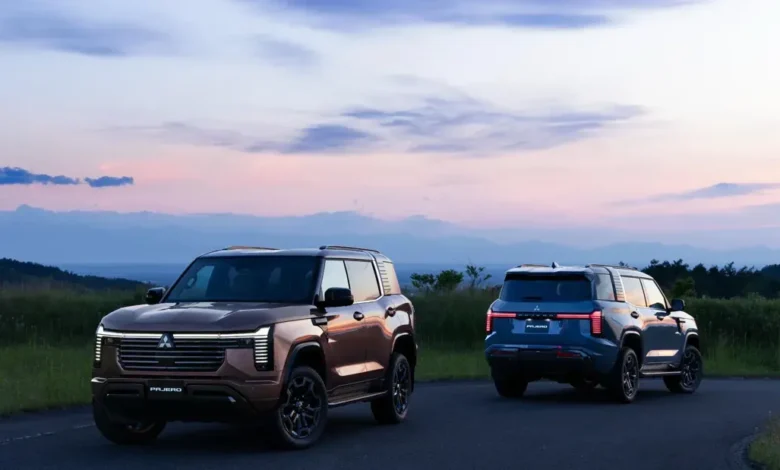
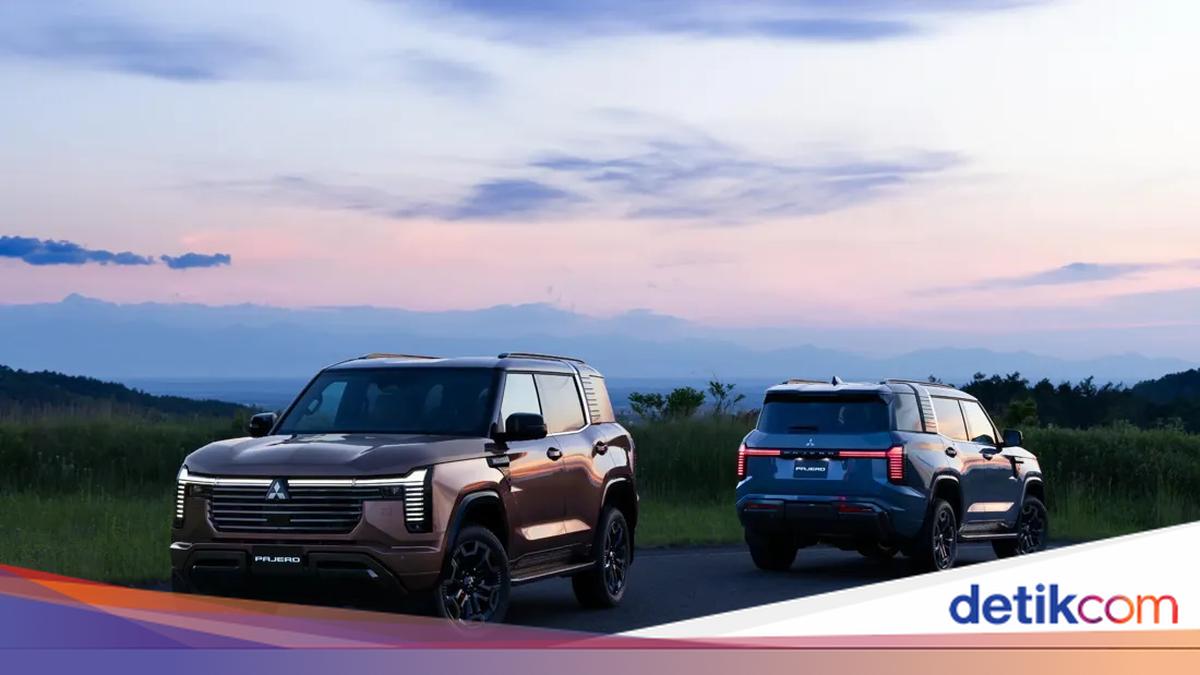
The automotive landscape witnessed a significant shift this week as Mitsubishi Motors Corporation officially unveiled the next iteration of its flagship SUV, the Mitsubishi Pajero. The revival of this iconic nameplate, which had been dormant since the cessation of production in 2021, marks a pivotal moment for the Japanese manufacturer. While global excitement surrounds the return of this legendary off-road icon, Mitsubishi Motors Krama Yudha Sales Indonesia (MMKSI) has clarified the strategic positioning of the vehicle within the Indonesian market, emphasizing a distinct separation between the flagship Pajero and the mass-market Pajero Sport.
A Legacy Reborn: The Evolution of the Pajero
The Mitsubishi Pajero is not merely a vehicle; it is a storied institution within the automotive world. Originally conceptualized as a rugged, go-anywhere machine, the Pajero carved its reputation through sheer dominance in the world’s most grueling motorsport event: the Dakar Rally. Over its decades-long history, the Pajero secured 12 overall victories in the Dakar, earning the nickname "King of the Desert."
The model’s departure from assembly lines in 2021 left a vacuum in the brand’s portfolio, signaling a period where Mitsubishi pivoted toward electrification and crossover SUVs. The decision to bring the nameplate back signifies a return to the brand’s core heritage—an uncompromising, full-sized SUV designed for endurance and off-road supremacy. However, this new model is built on an entirely modern platform, incorporating advancements in powertrain technology, chassis rigidity, and interior sophistication that were non-existent during the original production run.
Understanding the Duality: Pajero vs. Pajero Sport
A critical point of confusion for consumers globally, and particularly in Southeast Asian markets, is the conflation of the "Pajero" and "Pajero Sport" monikers. Industry analysts note that while the names share a linguistic root, their engineering lineages and market segmentations are entirely divergent.
The Pajero, often branded as the Montero or Shogun in international territories, represents the brand’s flagship "Big SUV" category. It is a vehicle engineered to compete at the highest tier of the luxury and utility spectrum. Conversely, the Pajero Sport—known in some markets as the Challenger or Montero Sport—is a "Medium SUV." It is typically built upon the ladder-frame architecture shared with the Mitsubishi Triton pickup truck.
This distinction is vital to understanding MMKSI’s current product strategy. While the Pajero serves as a halo product showcasing the absolute pinnacle of Mitsubishi’s engineering, the Pajero Sport remains the volume driver, catering to the needs of the mid-to-large family segment in Indonesia and across the ASEAN region.
Official Stance: MMKSI’s Perspective
Director of Sales & Marketing Division at PT MMKSI, Irwan Kuncoro, addressed the media regarding the implications of the global launch. He expressed high regard for the enthusiasm generated by the All-New Pajero, yet maintained a pragmatic approach toward its entry into the Indonesian market.
"As part of the Mitsubishi Motors SUV heritage, both the All-New Pajero and the Pajero Sport carry the same strong DNA and tradition," Kuncoro stated. "However, they arrive with distinct characters, positioning, and purposes, specifically tailored to answer the diverse needs of our customers."
Kuncoro confirmed that there are no immediate plans to introduce the flagship Pajero to the Indonesian lineup within the current fiscal year. Instead, MMKSI remains firmly committed to the Pajero Sport, which has enjoyed a long-standing tenure as one of the brand’s most trusted models in the country. "While the All-New Pajero is currently being considered as a potential addition to our portfolio in the future, our primary focus remains the continued success and support of the Pajero Sport," he added.
Global Strategy: The "Dual-Track" Approach
The decision to retain both models is not unique to Indonesia; it is a core component of Mitsubishi’s broader global strategy. Chief Product Specialist at Mitsubishi Motors, Kunitoshi Itagaki, emphasized that the two vehicles are intended to coexist rather than cannibalize one another.
In statements provided to international media outlets in Australia and Thailand, Itagaki noted that the company intends to maintain the Pajero Sport in its regional lineups for the foreseeable future. "The new Pajero is a fundamentally different model, serving as our flagship," Itagaki explained. "The decision to offer these vehicles is entirely market-dependent, but fundamentally, our global plan is to keep the Pajero Sport as a core pillar of our medium-segment offerings."
This "dual-track" approach allows Mitsubishi to capture two distinct demographics: the traditional SUV enthusiast seeking the prestige and capability of a full-sized flagship, and the practical consumer seeking the versatility and affordability of a ladder-frame medium SUV.
Historical Context and Market Impact
To appreciate the significance of this move, one must look at the timeline of Mitsubishi’s SUV development:
- 1982: The first generation of the Mitsubishi Pajero is introduced, setting the standard for recreational 4WD vehicles.
- 1996: The Mitsubishi Challenger (later rebranded as Pajero Sport) is launched, creating a more accessible SUV based on pickup truck components.
- 2001-2021: The Pajero maintains its status as a rally champion and luxury SUV, while the Pajero Sport gains massive traction in emerging markets like Indonesia, Thailand, and the Philippines.
- 2021: Production of the classic flagship Pajero concludes, leading to speculation that the nameplate might be retired permanently.
- 2026: The All-New Pajero is unveiled globally, signaling a strategic revitalization of the brand’s premium image.
The market impact of this move is expected to be subtle yet profound. By reintroducing the Pajero, Mitsubishi is signaling a return to its identity as a manufacturer of rugged, high-performance machinery. In Indonesia, where the Pajero Sport has become a status symbol, the absence of the flagship Pajero has allowed competitors in the "Big SUV" segment—such as the Toyota Land Cruiser or the Nissan Patrol—to dominate. While MMKSI currently has no plans to import the new flagship, the mere presence of the model in the global market elevates the perception of the entire brand.
Future Implications for the Indonesian Automotive Sector
For the Indonesian market, the continued reliance on the Pajero Sport reflects a deep understanding of local consumer behavior. The Pajero Sport is prized for its high ground clearance, diesel powertrain reliability, and parts availability—factors that are critical in a country with varied geographical infrastructure.
However, as the Indonesian economy continues to mature and consumer demand for premium, technologically advanced vehicles grows, the potential for the flagship Pajero to enter the market remains a valid point of discussion. Analysts suggest that if MMKSI were to bring the vehicle to Indonesia, it would likely be positioned as a limited-edition or "niche" luxury offering rather than a volume seller.
For now, the status quo remains. Mitsubishi Motors is successfully leveraging the heritage of the Pajero name to build excitement, while ensuring that its bread-and-butter models continue to satisfy the practical requirements of its primary customer base. As the automotive industry shifts toward a future defined by electrification and intelligent driving systems, the return of the Pajero serves as a reminder that even in a rapidly changing world, brand legacy remains a potent asset in consumer decision-making.
As the situation develops, MMKSI has promised to utilize its official communication channels to provide updates on any potential future shifts in its product lineup. For the millions of loyal Pajero Sport owners in Indonesia, the message is clear: the brand they trust is moving forward, and the legendary DNA of the Pajero continues to course through the veins of their current vehicles, ensuring that the legacy of the "King of the Desert" remains relevant on every Indonesian road.