MotoGP Australia 2026 at Phillip Island Cancelled Due to Severe Weather and Medical Evacuation Risks

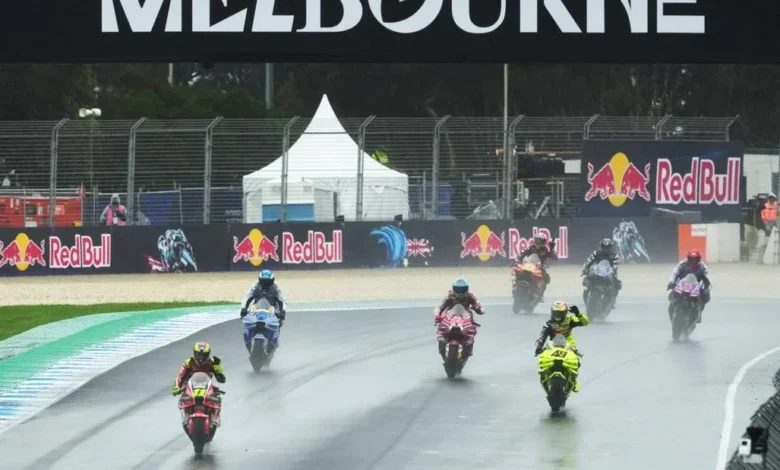
The 2026 MotoGP Australian Grand Prix at the iconic Phillip Island Circuit has been officially cancelled, marking a somber conclusion to the venue’s long-standing tenure as a premier motorcycle racing destination. The decision was reached by race officials following a sudden and dense onset of fog in the Melbourne region, which rendered the medical helicopter services incapable of operating. Under the strict safety protocols governing the FIM MotoGP World Championship, the inability to guarantee rapid medical evacuation for riders in the event of a catastrophic accident necessitates an immediate halt to all on-track activities.
This cancellation is particularly poignant as the 2026 season was slated to be the final year for the Phillip Island circuit as a host for the Australian round of the MotoGP world championship, with the event scheduled to transition to the Adelaide street circuit beginning in 2027. Despite the anticipation surrounding the final race at this historic coastal track, the safety of the competitors remained the paramount concern of the FIM, race organizers, and the participating factory teams.
The Chronology of the Cancellation
The morning of the race began under uncertain conditions. While the track surface itself remained largely dry and suitable for racing, the atmospheric conditions surrounding the Phillip Island area began to deteriorate rapidly. Meteorology reports indicated that an unexpected blanket of low-lying fog—common in the coastal region but exacerbated by sudden shifts in humidity—had descended, significantly reducing visibility.
According to official race control protocols, the medical helicopter is a mandatory safety asset that must be able to reach a regional trauma center within a specific timeframe should a rider suffer a major injury. As the fog thickened, air traffic control and the medical response team determined that flight operations were no longer viable. Following a series of inspections and consultations with team managers, the race was officially abandoned. The decision underscored the volatility of the Phillip Island climate, a factor that has challenged organizers for decades, given the circuit’s exposed position overlooking the Bass Strait.
Davide Tardozzi and the Ducati Perspective
Among the most vocal supporters of the cancellation was Ducati Team Manager Davide Tardozzi. A veteran of the paddock and a figure intimately familiar with the dangers of motorcycle racing, Tardozzi emphasized that the decision was not a matter of competitive debate but one of fundamental safety.
"Safety for the riders is the primary directive; it is the absolute prerequisite for any competitive session," Tardozzi stated in the wake of the announcement. "While it is true that we are potentially losing an opportunity to secure valuable championship points, Ducati’s stance remains unchanged: the physical wellbeing of our riders is the only thing that matters. We do not engage in negotiations regarding safety. When the medical helicopter is grounded, the race cannot proceed. We must adhere to the protocols established to keep these athletes alive."
Tardozzi’s perspective is informed by a career spent witnessing both the glory and the tragedy of the sport. His insistence on safety is not merely bureaucratic but rooted in his own history within the paddock, particularly his experiences with the legendary Carl Fogarty.
The Ghost of Phillip Island: The Legacy of Carl Fogarty
To provide context for the gravity of the decision, Tardozzi referenced the career-ending incident involving Carl "Foggy" Fogarty. Fogarty, a four-time World Superbike Champion and a titan of the sport during the 1990s, suffered a devastating accident at Phillip Island in 2000. The crash, occurring between the circuit’s fast third and fourth turns, resulted in a severe shoulder injury that effectively ended his professional racing career.
"I have spoken to our riders about this," Tardozzi remarked. "I have witnessed first-hand the impact of a severe accident here. The memory of what happened to Fogarty at this circuit remains vivid. I never want to see a rider go through that, and I certainly do not want to see a situation where a rider is left vulnerable because the proper medical infrastructure cannot be deployed due to weather. If the risk cannot be mitigated, the track must be closed."
Infrastructure and Medical Protocols in MotoGP
The reliance on air ambulance services in MotoGP is a standard requirement for all FIM-sanctioned events. Unlike automotive racing, where a driver is shielded by a chassis, motorcycle riders are exposed to the elements and the track surface, making the "Golden Hour"—the first 60 minutes following a traumatic injury—critical to survival.
The medical infrastructure at a Grand Prix includes a fully equipped medical center at the circuit, staffed by trauma surgeons and anesthesiologists. However, the helicopter serves as the bridge to tertiary care facilities in larger cities. When the ceiling of visibility drops below safety thresholds—usually dictated by the aviation authority—the circuit is effectively isolated from the necessary advanced surgical support.
Data from the past decade shows that while weather-related delays are common in motorsports, the permanent cancellation of a main race due to helicopter grounding is a rare occurrence. It highlights the unique geography of Phillip Island, where the sea-breeze interaction with the coastal terrain can create localized weather patterns that are nearly impossible to forecast with 100% accuracy hours in advance.
Broader Implications and the Move to Adelaide
The cancellation serves as a bittersweet coda to the Phillip Island era. The circuit has been a fixture on the calendar since 1989 and is widely regarded by riders as one of the most technical and rewarding tracks in the world. However, the transition to the Adelaide street circuit in 2027 is aimed at modernizing the event and potentially mitigating some of the logistical challenges associated with the remote Phillip Island location.
Industry analysts suggest that the 2026 cancellation may accelerate discussions regarding the safety infrastructure requirements for the move to Adelaide. While the new venue will be a street circuit—inherently posing different safety challenges compared to a purpose-built track—the incident at Phillip Island reinforces the sport’s ongoing commitment to a "zero-compromise" safety philosophy.
From a championship standpoint, the cancellation creates a mathematical shift in the standings. Teams and riders who rely on the specific characteristics of the Phillip Island layout to gain ground on their rivals will now have to re-evaluate their strategies for the remaining rounds of the season. For Ducati, which has historically performed well at the Australian venue, the loss of potential points is viewed as a necessary sacrifice for the preservation of the sport’s integrity.
Analysis: A New Era of Risk Management
The events of the 2026 Australian Grand Prix demonstrate the evolving nature of risk management in elite motorcycle racing. The sport has moved significantly away from the "race at all costs" mentality that permeated the 20th century. Today, race direction is heavily influenced by data, real-time telemetry, and a rigorous adherence to safety standards that prioritize the rider over the spectacle.
Critics of the decision have pointed to the fact that the track itself was not inherently dangerous during the lull in the weather. However, such arguments often overlook the "what if" scenario that race officials must account for. In high-stakes sports, decisions are made based on the worst-case scenario rather than the current status quo. If a multi-bike pile-up had occurred in the immediate aftermath of a medical helicopter grounding, the resulting outcry would have been catastrophic for the sport’s governing body.
As the paddock prepares to move on from Phillip Island, the 2026 cancellation will likely be remembered not as a failure of event management, but as a definitive statement on the priorities of modern MotoGP. The sport continues to grow in global popularity, and with that growth comes an increased responsibility to protect the men and women who push the limits of physics every weekend.
The legacy of the Australian Grand Prix at Phillip Island remains one of high-speed thrills and historic victories. While its final chapter was written by the fog, the decision to halt the race ensures that no rider will have to face the consequences of an avoidable tragedy on the island. The focus of the championship now shifts to the final stages of the season, where the lessons of safety and responsibility learned in Australia will undoubtedly continue to guide the decision-making process for the remainder of the calendar.
Related posts: