Timnas Indonesia Faces FIFA ASEAN Cup 2026 Without Captain Jay Idzes as Skuad Garuda Retains Confidence Ahead of Opener Against Singapore

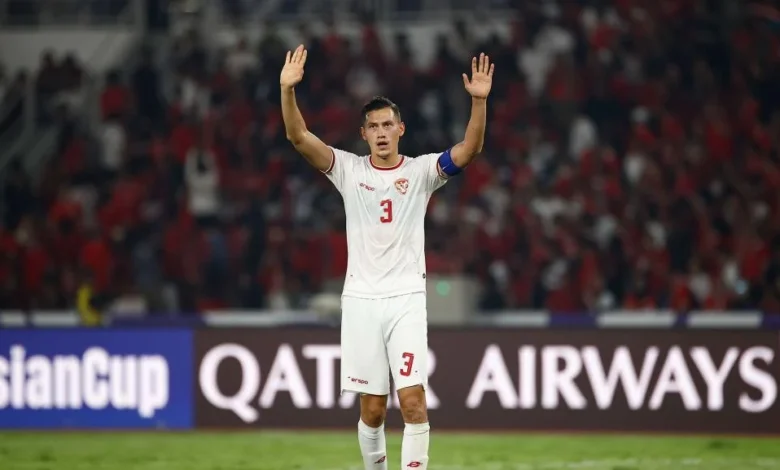
The landscape of Southeast Asian football is bracing for another high-stakes tournament as the FIFA ASEAN Cup 2026 officially commences, bringing together the region’s most competitive national teams in a battle for continental supremacy. For the Indonesian National Team, commonly known as Skuad Garuda, the journey toward regional glory begins under challenging circumstances. The team must navigate the rigorous group stage without one of its most influential figures and foundational pillars: team captain and central defender Jay Idzes.
Idzes, who has established himself as an indispensable leader both on and off the pitch for the national setup, was officially ruled out of the tournament squad following a medical assessment that confirmed a left thigh muscle injury. The setback comes as a significant blow to the Garuda’s defensive organization and tactical flexibility, forcing the technical staff to rapidly reconfigure their defensive blueprint just hours before their opening fixture. Despite the undeniable void left by the absence of their skipper, the atmosphere within the Indonesian training camp remains resolute. Players and coaching staff alike have publicly expressed unwavering confidence in the depth of the current roster, signaling that the collective spirit and individual talents within the squad are more than capable of rising to the occasion.
The immediate test of this resilience arrives swiftly, as Indonesia prepares to host Singapore in their opening Group A fixture at the iconic Gelora Bung Karno Main Stadium (SUGBK) in Jakarta. The match, scheduled for Friday at 20:00 Western Indonesia Time (WIB), marks the official curtain-raiser for Indonesia’s campaign in a fiercely competitive group that also features regional rivals Malaysia and the dynamic side from Bangladesh. As the stadium lights illuminate a packed venue expected to house tens of thousands of roaring supporters, the Garuda will step onto the hallowed turf not just to chase three points, but to prove that their ambitions extend far beyond the capabilities of any single individual.
The Weight of Leadership and the Impact of Jay Idzes’s Absence
To understand the magnitude of Jay Idzes’s absence, one must examine the meteoric rise and stabilizing influence he has brought to the Indonesian backline since becoming eligible for the national team. Renowned for his composure under pressure, positional intelligence, and vocal leadership, Idzes quickly transitioned from a newcomer to the undisputed heartbeat of the defensive unit. His ability to orchestrate the defensive line, intercept opposition build-ups, and initiate attacks from deep positions has been a cornerstone of Indonesia’s recent tactical evolution under international guidance.
The injury, identified specifically as a left thigh muscle strain, occurred during club commitments, compounding the physical toll of a demanding professional calendar. Medical evaluations confirmed that forcing Idzes to participate in the tournament would carry an unacceptable risk of aggravating the condition into a long-term layoff. Consequently, the difficult decision was made to withdraw him from the 23-man tournament roster, robbing Indonesia of its primary defensive anchor and inspirational captain.
In modern football, the loss of a captain of Idzes’s caliber often reverberates deeply through a squad’s morale. However, the initial reactions emerging from the Indonesian camp suggest a group determined to turn adversity into motivation. Speaking to the media during a crowded pre-match press conference held at the SUGBK media center on Thursday, versatile defender Kevin Diks addressed the elephant in the room with refreshing candor and optimism.
"Ya, we miss Jay. Of course we do, because he is our captain, our leader, and an exceptional player," Diks stated, acknowledging the emotional and tactical weight of the situation. "But at the same time, football does not wait for anyone. We have a job to do, and we must fight with the players who are here in this room, in this camp. We have immense quality, profound depth, and incredible talent across this entire squad. Everyone is ready to step up and fulfill their responsibilities."
The Tactical Dilemma and John Herdman’s Strategic Response
The burden of restructuring the team in the wake of Idzes’s injury falls squarely upon the shoulders of head manager John Herdman. Known for his meticulous tactical preparation and man-management prowess, Herdman did not attempt to downplay the severity of the situation, recognizing that losing a player of Idzes’s profile changes the dynamics of the defensive structure significantly.
"Let’s be entirely transparent: the absence of Jay Idzes is genuinely a very difficult situation for us," Herdman admitted during the official press conference. "When you lose a player who dictates the rhythm of your defensive transitions and provides such steady leadership, it forces an immediate recalibration. You cannot simply replace a player like Jay with a carbon copy because those qualities are rare."
However, Herdman was quick to pivot from the negative implications to the positive opportunities presented by the situation. Rather than dwelling on the missing personnel, the experienced tactician emphasized the readiness and hunger of the remaining 23 players selected for the tournament squad.
"At the same time, football is a squad game. We brought 23 players here because every single one of them earned their place and possesses the capability to perform at this level," Herdman asserted. "There are 23 players in this dressing room who are fully prepared, highly motivated, and intensely eager to unbridle their potential and unmask their quality on the international stage. This tournament is an opportunity for others to write their own chapters."
Analysts and pundits have noted that Herdman’s tactical adaptability will face an immediate examination. The probable formations under consideration are expected to rely on a collaborative defensive effort, utilizing a mix of experienced domestic league veterans and European-based talents to distribute the leadership responsibilities previously centralized in Idzes. The communication void at the back will likely be shared among the remaining central defenders and the goalkeeper, requiring heightened coordination during set-pieces and high-pressing phases from opposing attackers.
Group A Dynamics: A Lethal Path Through Southeast Asia
The timing of Idzes’s injury could hardly be more testing, given the treacherous nature of Group A in the FIFA ASEAN Cup 2026. Indonesia finds itself bracketed in one of the tournament’s most storied and fiercely contested groups, sharing the stage with traditional regional powerhouses and rapidly developing football nations.
Aside from neighboring rivals Malaysia—whose encounters with Indonesia historically transcend mere sporting events to become cultural spectacles—the group features a disciplined and tactically organized Singapore side, alongside a Bangladesh team known for its physical resilience and capacity to upset higher-ranked opponents. Every single match in Group A carries immense weight, leaving little room for error or transitional adaptation.
Singapore, the opening opponent, enters Friday night’s clash at the SUGBK with cautious optimism. Historically, fixtures between Indonesia and Singapore are characterized by high intensity, tactical chess matches, and an electric atmosphere generated by partisan crowds. For Singapore, facing a wounded Indonesian side might appear to be a window of opportunity, but the Lions are well aware that a cornered Garuda squad backed by a roaring home crowd can be a terrifying proposition.
The tournament format demands a fast start. With only the top teams guaranteed smooth passage to the knockout stages, dropping points at home on the opening matchday could drastically complicate calculations for the remainder of the group phase. Consequently, Herdman’s tactical approach against Singapore is expected to balance defensive solidity with aggressive attacking transitions, ensuring that the absence of Idzes does not translate into defensive timidity.
The Road Ahead: Resilience, Depth, and National Expectations
As the clock ticks down to the opening whistle at the Gelora Bung Karno Main Stadium, the narrative surrounding the Indonesian National Team has shifted from one of potential vulnerability to a collective crusade of proof. The absence of Jay Idzes is undoubtedly a sporting tragedy for the player and a tactical hurdle for the team, but it has simultaneously illuminated the depth of talent currently available within Indonesian football’s expanding ecosystem.
The modern era of the national team has seen a concerted effort to broaden the talent pool, integrating players from elite domestic competitions with a sophisticated diaspora network playing across competitive leagues worldwide. This hybridization has fostered a culture of healthy competition for every starting berth. When a marquee name steps aside due to injury, the player stepping into the vacancy is rarely a developmental project; rather, they are seasoned professionals eager to cement their legacy in national colors.
For the passionate millions of Indonesian football fans, the expectation remains unabated. The yearning for regional dominance in the ASEAN Cup has been a generational quest, and the supporters filling the stands in Jakarta on Friday night will demand nothing less than total commitment, tactical discipline, and a victory to launch the campaign.
Ultimately, football tournaments are rarely won solely by starting XIs; they are conquered by squads that demonstrate resilience through adversity, tactical flexibility in moments of crisis, and an unshakeable belief in the collective ethos. As the Skuad Garuda steps out under the blinding lights of the SUGBK tonight, they do so carrying the hopes of an entire nation—and the silent, powerful backing of a captain who, though watching from the sidelines, remains an integral part of their journey toward glory.