Hari Olahraga Nasional: Reflecting on the Historical Significance and Future Path of Indonesia’s Sporting Culture

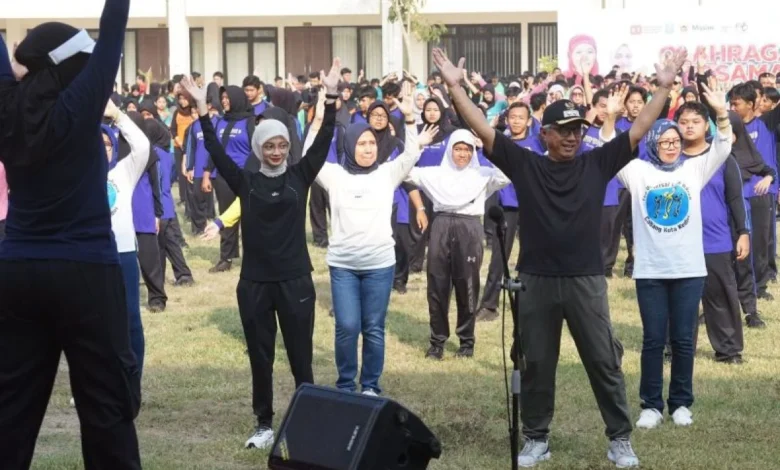
Every September 9, Indonesia observes Hari Olahraga Nasional (Haornas), or National Sports Day, a date that serves as both a historical anchor and a catalyst for the nation’s physical fitness culture. This annual commemoration is not merely a ceremonial event but a profound reflection of Indonesia’s post-independence struggle to gain international legitimacy and its ongoing commitment to fostering a healthy, disciplined, and unified citizenry through physical activity. As the nation marks the 43rd anniversary of the official declaration of Haornas in 2026, the occasion prompts a critical look at the evolution of sports from a tool of diplomatic identity to a cornerstone of public health and national character.
The Genesis of a Movement: The 1948 PON in Solo
The roots of Indonesia’s National Sports Day are deeply embedded in the volatile yet hopeful landscape of 1948. Following the proclamation of independence in 1945, the young Republic of Indonesia faced immense pressure to assert its sovereignty on the global stage. In 1948, the nation aspired to participate in the XIV Olympic Games in London. However, the Indonesian delegation encountered severe administrative hurdles; the international community had not yet fully recognized Indonesia as a sovereign state, and its athletes faced the prospect of competing under the flag of the colonial power they had just fought to oust.
Refusing to compromise their national identity, Indonesian sports leaders took a bold step: they organized the first Pekan Olahraga Nasional (PON) in Solo, Central Java, from September 9 to 12, 1948. This inaugural PON served as a powerful political statement, demonstrating that Indonesia possessed the institutional capacity, the athlete base, and the organizational prowess to manage a multi-sport event independently. The opening date of this monumental event, September 9, was later enshrined in history as the symbolic birth of the national sports movement, eventually providing the foundational date for what would become Haornas.
Chronology of Institutionalization
While the spirit of Haornas began in 1948, its formalization as a national observance took several decades. The timeline of its establishment is as follows:
- September 9, 1948: The first PON is held in Solo, marking the start of organized national sports competition.
- September 9, 1983: President Soeharto officially declares the commencement of Haornas during the inauguration of the renovated Sriwedari Stadium in Surakarta, the historical site of the first PON.
- 1985: The legal status of the commemoration is solidified through Presidential Decree (Keppres) Number 67 of 1985, which formally mandates September 9 as National Sports Day.
- 2000s–Present: Haornas evolves from a purely symbolic day into a government-led campaign to promote the "Sports Industry" and "Sports Tourism" as pillars of national development.
This progression reflects a shift in national priorities. Initially, the focus was on identity and existence; by the mid-1980s, the focus shifted toward organized development and mass participation. In the contemporary era, the government has integrated sports into the national economic agenda, focusing on the potential of major events to drive tourism and local development.
The Broader Impact: Sports as a Catalyst for Public Welfare
The significance of Haornas transcends the medals won by elite athletes. According to the Ministry of Youth and Sports (Kemenpora), the commemoration acts as a vital tool to address the shifting public health landscape in Indonesia. With the rise of sedentary lifestyles and the prevalence of non-communicable diseases, the government has increasingly emphasized the role of physical activity as a preventive health measure.
Analysis from health experts suggests that integrating sports into daily routines significantly lowers healthcare expenditures. By promoting exercise, the state aims to build a more resilient workforce. Beyond health, sports are viewed as a "social glue." The communal nature of Indonesian sports—from village-level badminton matches to massive stadium events—serves to build character, instill the values of fair play, and bridge societal divides. This is particularly relevant in a diverse archipelago where competitive sports often serve as a unifying point for national pride.
Economic and Strategic Dimensions
In recent years, the Ministry of Youth and Sports has been vocal about the intersection of athletics and economics. The 2026 commemoration of Haornas occurs against a backdrop of ambitious infrastructure planning, including the proposal for a Rp1.5 trillion investment in advanced sports academies and centralized training facilities. These initiatives are not solely aimed at producing world-class athletes but are designed to function as hubs for sports science, nutrition, and psychological training.
Furthermore, the concept of "Sport Tourism" has gained traction. The decision to leverage events like the upcoming 2028 PON to transform regions like Sumba Timur into "sport tourism" hubs illustrates a strategic pivot. By hosting events in culturally and geographically significant locations, Indonesia is attempting to maximize the return on investment for sports infrastructure, ensuring that stadiums and training centers do not become "white elephants" but rather engines for local economic growth and hospitality revenue.
Official Stance and Future Challenges
Government officials, including the Minister of Youth and Sports, have consistently emphasized that the future of Indonesian sports lies in professionalization and scientific integration. The current policy focus is twofold: increasing mass participation rates among the youth and professionalizing the sports management ecosystem to ensure that Indonesia can compete at the highest levels of international sports.
However, challenges remain. These include the need for equitable access to sports facilities across all provinces, the retention of athletic talent, and the consistent funding of grassroots programs. Observers note that while the interest in sports is high, the conversion rate from recreational interest to high-performance success requires a more robust talent scouting and development framework. The discussion around the development of specialized academies signifies the government’s recognition that talent must be nurtured with data-driven methods rather than relying solely on sporadic success.
The Significance of the 2026 Observance
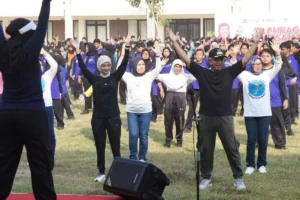
As Indonesia marks the 43rd anniversary of Haornas in 2026, the tone of the celebration is one of both introspection and forward-looking ambition. The day is marked by a wide range of activities: community fun runs, inter-generational sports competitions, and public awareness campaigns regarding fitness. For the average citizen, the day serves as a reminder that the body is a vehicle for national progress.
The legacy of the 1948 PON is thus kept alive not just in history books, but in the active lives of millions of Indonesians. By connecting the historical struggle for independence with the modern-day struggle for a healthier, more competitive nation, Haornas remains a vital pillar of the Indonesian calendar. It represents a continuous cycle: from the defiant spirit of 1948 to the modern push for professional excellence and public wellness, the date of September 9 continues to encapsulate the nation’s enduring relationship with the pursuit of physical and national strength.
In conclusion, the history of National Sports Day is a testament to the resilience of the Indonesian spirit. From the humble, makeshift beginnings in Solo to the modern, tech-driven approaches to training and tourism, the journey of sports in Indonesia is deeply intertwined with the country’s development. As the nation moves forward, the core mission of Haornas—to foster a culture where physical activity is a staple of everyday life—remains the key to ensuring that the next generation is not only capable of achieving athletic greatness but also possesses the discipline and unity required to drive the nation forward in all aspects of development. Through the lens of this national day, Indonesia reaffirms its commitment to the idea that a healthy nation is a strong nation, and that every citizen, through sport, contributes to the collective progress of the Republic.