WhatsApp Business Platform Announces Major Pricing Overhaul Effective October 1 2026 Impacting Global and Indonesian Enterprises

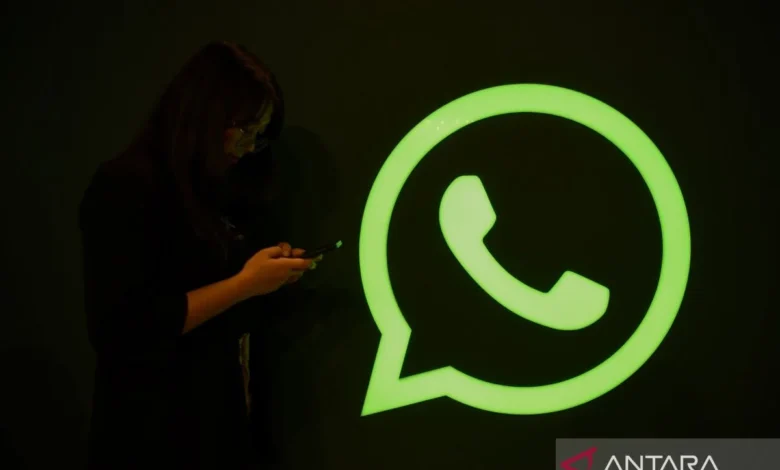
The digital landscape of corporate communication is set for a significant transformation as Meta implements a comprehensive restructuring of its pricing architecture for the WhatsApp Business Platform, slated to take effect globally and locally in Indonesia on October 1, 2026. This pivotal update alters the financial dynamics of customer service and operational interactions, particularly targeting messages exchanged within the standard 24-hour customer service window. While the fundamental application of WhatsApp remains a cornerstone for micro, small, and medium-sized enterprises (MSMEs) as well as multinational corporations, the commercial mechanics governing enterprise-grade messaging APIs are undergoing a stringent refinement. Business entities utilizing automated workflows, customer relationship management (CRM) integrations, and developer-centric cloud solutions must urgently re-evaluate their communication strategies to accommodate these regulatory and financial shifts.
Background and Context of the Meta Messaging Ecosystem
To fully comprehend the magnitude of the October 2026 pricing update, one must examine the evolution of WhatsApp as an indispensable commercial conduit. Over the past decade, WhatsApp has transitioned from a peer-to-peer messaging application into a formidable commercial ecosystem. Meta introduced the WhatsApp Business app for smaller enterprises to manage day-to-day operations manually via mobile devices, alongside the WhatsApp Business Platform—incorporating the WhatsApp Business API and Cloud API—designed for medium-to-large enterprises requiring high-volume, automated communications.
Historically, Meta monetized this ecosystem primarily through marketing templates and out-of-window utility messages, while keeping in-window conversational metrics relatively flexible to encourage platform adoption. However, as global digital commerce matured and automated customer engagement surged, the sheer volume of unstructured, conversational traffic placed immense infrastructural demands on Meta’s servers. The 2026 pricing revision reflects a strategic recalibration by Meta to monetize active, agent-driven service interactions and real-time utility notifications more granularly, aligning platform operational costs with enterprise utilization rates.
Detailed Breakdown of the October 2026 Tariff Restructuring
The upcoming structural adjustments introduce explicit charges to categories of communication that were previously exempt or subsidized within specific timeframes. Industry analysts and enterprise developers have spent the months leading up to this implementation dissecting the five core pillars governing the new rate card, particularly as applied to Indonesian phone numbers and international counterparts.
Service Messages Transition to a Fee-Based Model
The most notable alteration for customer support teams is the termination of free-form, non-template service messaging within the active 24-hour customer service window. Previously, once a customer initiated a conversation, businesses could reply with customized, non-template service answers indefinitely within that 24-hour block without incurring per-message fees from Meta.
Effective October 1, 2026, these service messages will attract a definitive tariff. For recipients utilizing Indonesian phone numbers, the baseline rate is established at Rp356.65 per message. This shift directly impacts support-heavy industries such as e-commerce, banking, and telecommunications, where customer service representatives resolve complex inquiries through continuous, free-form dialogue.
Implementation of the Monthly Service Quota
Recognizing the potential strain on smaller businesses transitioning to the new financial framework, Meta has instituted a transitional buffer. Every verified business phone number will receive a complimentary quota of 1,000 service messages per calendar month.
Financial charges will only apply to service messages sent after this 1,000-message threshold has been exhausted. System administrators must note that this quota operates on a strict monthly cycle and does not roll over; unused free messages expire at the end of each calendar month. Consequently, boutique enterprises and startups operating well within this volume limit will experience zero additional financial burden, while high-volume corporate contact centers will need to budget for the surplus usage.
Overhaul of Utility Messages Within the 24-Hour Window
Utility messages—encompassing transactional notifications such as order confirmations, shipping updates, account alerts, and billing statements—are also subjected to rigorous structural changes. Prior to the October 2026 mandate, utility messages dispatched within the 24-hour customer service window were exempt from platform fees.
Under the revised policy, utility messages sent within this 24-hour window will incur charges starting from the very first message. For Indonesian-registered recipient numbers, the rate card dictates a fee of Rp356.65 per utility message. While utility messages dispatched outside the 24-hour window were already subject to standard fees, this new rule effectively closes the window of exemption, making all transactional communication systematically billable regardless of recent customer interaction history.
Exemptions and Unaffected Communication Channels
Despite these broader commercializations, Meta has preserved several key exemptions to protect foundational engagement loops and advertising conversion funnels. Most importantly, messages initiated by end-users directed toward a business remain entirely free of charge.
Furthermore, conversations initiated through "Click-to-WhatsApp" advertisements maintain a specialized status. Any message transmitted within the expanded 72-hour free window—triggered when a user clicks an ad on Facebook or Instagram and initiates a chat with the enterprise—remains exempt from platform conversation charges. This structural continuity is designed to safeguard the efficacy of social commerce marketing pipelines, ensuring that customer acquisition costs through paid advertising are not immediately compounded by secondary messaging penalties.
Platform-Specific Enforcement: API vs. Mobile App Distinction
A critical area of clarification highlighted by tech analysts involves the precise operational boundary of these changes. The pricing overhaul applies exclusively to the WhatsApp Business Platform—which encompasses the WhatsApp Business API and Cloud API utilized by enterprise software stacks.
It does not affect the standard, standalone WhatsApp Business application downloaded by individual merchants from mobile app stores for direct, manual customer management on smartphones. Enterprises relying on omnichannel software providers, automated chatbots, and CRM-integrated communication systems are the sole demographic impacted by these regulatory adjustments.
Chronology of the Transition and Industry Preparation
The announcement of the October 1, 2026 tariff adjustments follows a multi-year trajectory of iterative pricing updates by Meta across various regional markets. Following initial rollouts in North America, Europe, and select Latin American territories, the integration of Southeast Asian markets into this comprehensive pricing structure marks a maturation of the region’s digital economy.
Throughout the interim period, software vendors, independent software vendors (ISVs), and Business Solution Providers (BSPs) have engaged in intensive system updates. Enterprises have been advised to audit their messaging scripts, transition routine customer inquiries into automated template flows where cost-effective, and deploy advanced analytics tools to track real-time consumption against the 1,000-message monthly threshold.
Implications and Strategic Analysis for Enterprises
The financial and operational implications of the October 2026 WhatsApp Business Platform restructuring are multifaceted, demanding a strategic pivot from enterprise communications managers.
Operational Cost Projections and Budgeting
For organizations handling tens of thousands of customer support interactions monthly, the introduction of the Rp356.65 fee per service message and in-window utility message represents a measurable escalation in operational overhead. Financial departments must recalibrate customer acquisition and retention budgets to account for recurring API expenditures. Companies that previously relied on protracted, unstructured back-and-forth messaging agents must now incentivize concise, resolution-oriented communication.
Adoption of Artificial Intelligence and Automation
To mitigate the financial impact of billable human-agent service messages, enterprises are increasingly turning to generative artificial intelligence and advanced conversational bots. By deploying sophisticated AI agents capable of resolving routine customer queries within the initial stages of interaction—or utilizing pre-approved message templates that operate under distinct pricing tiers—businesses can significantly reduce their reliance on billable free-form service messaging. Meta’s ongoing rollout of native AI business tools further supports this transition, enabling automated round-the-clock service without inflating manual operational headcounts or service-message overheads.
Refining Omnichannel Customer Journey Mapping
The complex interplay between free tiers, 24-hour service windows, 72-hour ad-click windows, and billable utility messages necessitates a meticulous redesign of omnichannel customer journeys. Marketing, sales, and support departments can no longer operate in isolated silos. CRM platforms must be configured to track the exact temporal status of every customer conversation, alerting system operators when a chat is approaching the threshold of billable service windows.
Conclusion
As the October 1, 2026 implementation date approaches, the WhatsApp Business Platform stands at a critical juncture of commercial evolution. While the adjustments introduce new financial considerations for high-volume enterprise users, the structural preservation of free customer-initiated chats, ad-driven conversational windows, and the monthly 1,000-message service quota ensures that foundational communication channels remain accessible. For businesses navigating this digital transformation, proactive auditing, strategic automation, and precise cost-management protocols will be paramount to sustaining profitable customer engagement on the world’s most ubiquitous messaging network.
Related posts: