Will the Australia Awards Scholarship Quota Be Increased in 2027? Here is the Statement from the Australian Assistant Minister for Foreign Affairs

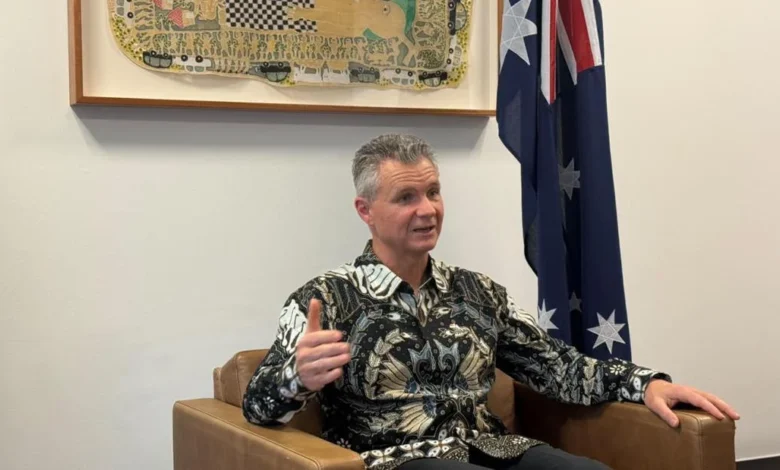
The Australia Awards program, a flagship scholarship initiative of the Australian Government, has reached a significant milestone, producing over 200,000 alumni since its inception in the 1950s. As the academic landscape evolves and bilateral ties between Canberra and Jakarta deepen, questions regarding the future of this program have come to the forefront. In an exclusive interview at the Australian Embassy in Jakarta on Wednesday, July 15, 2026, Matt Thistlethwaite, the Australian Assistant Minister for Foreign Affairs and Trade, provided clarity on the scholarship’s trajectory leading into 2027, the implementation of transnational education models, and critical updates regarding visa regulations for Indonesian nationals.
The diplomatic and educational relationship between Australia and Indonesia is currently at a high point, bolstered by decades of people-to-people exchange. Minister Thistlethwaite emphasized that education remains one of the primary pillars of the Comprehensive Strategic Partnership between the two nations. With approximately 25,000 Indonesian students currently enrolled in Australian institutions, the flow of knowledge and talent serves as a bridge for future economic and social collaboration. According to Thistlethwaite, these students are destined to become the next generation of business leaders and government officials in Indonesia, fostering lifelong connections with their Australian counterparts who will simultaneously rise to senior positions in the Australian public and private sectors.
The Legacy and Future of the Australia Awards
The Australia Awards represent more than just financial assistance; they are a tool of soft power and institutional building. Since the mid-20th century, the program has been instrumental in training Indonesian professionals. The impact of this investment is visible at the highest levels of the Indonesian government. Minister Thistlethwaite noted that 16 members of President Prabowo Subianto’s cabinet are Australian university alumni, with six of them being direct recipients of the Australia Awards. This statistic underscores the prestige and the high standard of education provided by the program, which has maintained its reputation for over 73 years.
Regarding the quota for 2027, Thistlethwaite clarified that while the government aims to maintain the current robust numbers, there is no immediate plan for a massive surge in the specific Australia Awards quota. However, he highlighted that Indonesia already enjoys one of the highest allocations globally. Every year, the program provides over 700 scholarships to Indonesians, including long-term post-graduate degrees and specialized short courses. The focus for 2027 will be on maintaining the quality of the outcomes and ensuring that the scholarship remains accessible to a diverse range of applicants across the Indonesian archipelago. The Australian government continues to encourage as many Indonesians as possible to apply, viewing the program as a vital pipeline for future leadership.
Transnational Education and the Role of TEQSA
A significant shift in Australia’s educational strategy involves the expansion of transnational education (TNE). Rather than requiring all students to travel to Australia, the government is facilitating the establishment of Australian university campuses within Indonesia. This "Invested" strategy, part of a broader economic blueprint for Southeast Asia, aims to bring world-class Australian education directly to Indonesian soil.
Institutions such as Monash University and Deakin University have already established a presence in Indonesia, offering courses that mirror those provided on their home campuses. To address concerns regarding the consistency of education quality, Minister Thistlethwaite pointed to the oversight of the Tertiary Education Quality and Standards Agency (TEQSA). TEQSA is Australia’s independent national quality assurance and regulatory agency for higher education.
The Minister assured that TEQSA’s standards are applied rigorously to all Australian degrees conferred abroad. Whether a student attends a dual-degree program, a joint-degree initiative, or a full course at an Australian branch campus in Jakarta or Surabaya, the curriculum, content, and rigorous assessment standards remain identical to those in Melbourne or Sydney. This ensures that Indonesian graduates of transnational programs possess the same qualifications and prestige as those who studied domestically in Australia, providing a more flexible and cost-effective route to gaining international expertise.
Clarification on Student Visa Fees for ASEAN
In recent months, rumors and reports regarding a sharp increase in Australian student visa fees have caused concern among prospective international students. Reports suggested that the fee would jump from AUD 2,000 to AUD 2,500 as of July 1, 2026. Minister Thistlethwaite utilized the interview to categorically deny these figures for the Indonesian and ASEAN markets.
He explained that while Australia has adjusted visa pricing in certain categories globally, a "special relationship" policy has been applied to Indonesia and other ASEAN member states. Instead of the rumored AUD 500 hike, Indonesian students will only see a minor adjustment aligned with the Consumer Price Index (CPI), a standard annual practice. The visa fee for Indonesian students will move from AUD 2,000 to approximately AUD 2,050. This decision reflects Canberra’s commitment to keeping Australia an attractive and competitive destination for Southeast Asian talent amidst rising global costs in the education sector.
Reforming the Working Holiday Visa (WHV) System
Beyond formal education, the Working Holiday Visa (WHV) program remains a popular avenue for cultural exchange and temporary employment. Currently, Indonesia has an annual quota of 5,000 places, matching the quota allocated to China. However, the application process has historically been hindered by bureaucratic hurdles, including the requirement for a Letter of Support (SDUWHV) from the Indonesian government.
Following recommendations from the Indonesian Directorate General of Immigration, the Australian government is moving toward the implementation of a lottery-based system for the WHV. This electronic "ballot" system is designed to enhance fairness and transparency, ensuring that all eligible applicants have an equal chance of selection without the need for additional government support letters.
Minister Thistlethwaite confirmed that Australia supports this transition to a lottery system, noting that it will remove barriers and streamline the process. While a specific execution date for the electronic lottery has not yet been finalized due to the technical requirements of building a fair digital infrastructure, the Minister promised that Indonesia would be informed as soon as the system is ready for launch. This reform is expected to significantly reduce the administrative burden on Indonesian applicants and eliminate potential bottlenecks in the visa issuance process.
Economic Integration and the Katalis 2.0 Program
The strengthening of educational ties is deeply intertwined with the Indonesia-Australia Comprehensive Economic Partnership Agreement (IA-CEPA). To further support the business-to-business (B2B) relations that often grow out of educational connections, the Australian government has launched the Katalis 2.0 program. This initiative is designed to maximize the benefits of IA-CEPA by providing commercial advice, market insights, and partnership support for enterprises in both countries.
Furthermore, Australia has introduced a new five-year business visa for Indonesian nationals. This visa is tailored for professionals who need to travel frequently to Australia for short-term business engagements, facilitating smoother trade and investment flows. These policy shifts indicate a move toward a more integrated regional economy where the movement of people—be they students, tourists, or business professionals—is treated as a strategic priority.
Broader Implications and Regional Strategy
The remarks by Minister Thistlethwaite reflect a broader Australian foreign policy shift known as "Invested: Australia’s Southeast Asia Economic Strategy to 2040." This strategy, authored by Special Envoy Nicholas Moore, identifies education as a "top-tier" priority for deepening Australia’s footprint in the region. By exempting Indonesia from steep visa fee hikes and investing in branch campuses, Australia is positioning itself as the partner of choice in a competitive global market where the United States, the United Kingdom, and Canada are also vying for Southeast Asian students.
From a diplomatic perspective, the high number of Australian-educated ministers in the Indonesian cabinet serves as a testament to the long-term ROI of educational diplomacy. These leaders often share a common language and cultural understanding with Australian officials, which simplifies negotiations on complex issues ranging from maritime security to climate change.
Conclusion and Outlook for 2027
As 2027 approaches, the Australia-Indonesia relationship appears set to enter a phase of increased institutionalization. The Australia Awards will remain a cornerstone of this bond, providing a steady stream of high-level training. Meanwhile, the democratization of Australian education through branch campuses in Indonesia will likely see the number of people holding Australian qualifications grow exponentially beyond the 200,000 alumni mark.
Minister Thistlethwaite’s visit and his subsequent clarifications serve to reassure the Indonesian public that Australia remains an open and welcoming neighbor. With the proposed reforms to the Working Holiday Visa and the maintenance of affordable student visa fees, the barriers to entry are being lowered even as the quality of the engagement is raised. For the thousands of Indonesians looking toward 2027 as the year to begin their international educational journey, the message from Canberra is clear: the door remains open, the standards remain high, and the partnership is stronger than ever.