Coordinating Minister for Food Zulkifli Hasan Outlines Employment Framework and Compensation Packages for Merah Putih Village Cooperative Managers

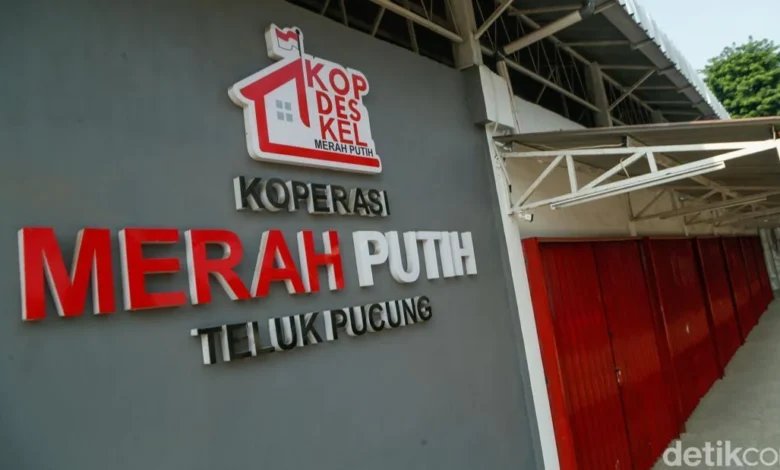
The Indonesian government has officially unveiled the operational framework for the management of the newly established Koperasi Desa/Kelurahan Merah Putih (KDKMP), a strategic initiative designed to revitalize rural agricultural economics. Coordinating Minister for Food Zulkifli Hasan, often referred to as Zulhas, confirmed during a press conference in Central Jakarta on Tuesday, September 29, 2026, that the frontline managers of these cooperatives will operate under a structured employment model. These personnel will be engaged via Fixed-Term Employment Agreements, known locally as Perjanjian Kerja Waktu Tertentu (PKWT), under the direct oversight of PT Agrinas Pangan Nusantara.
This administrative decision marks a significant step in the government’s broader mission to decentralize food distribution and improve the economic autonomy of village-level entities. By channeling these managers through a centralized corporate entity like PT Agrinas Pangan Nusantara, the government aims to standardize the quality of management and oversight across the nation’s diverse rural landscape.
Employment Terms and Contractual Structure
The employment tenure for the KDKMP managers is set for a firm duration of two years. Minister Zulhas emphasized that this timeframe is intended to provide stability for the cooperatives to establish their operational foundations while maintaining a level of institutional flexibility.
When questioned regarding the status of these employees—specifically whether they would be classified as state-owned enterprise (BUMN) personnel—Zulhas clarified the distinction. "They are employees under a fixed-term contract for two years. They fall under the umbrella of Agrinas Pangan," he stated. This structure allows the government to deploy human resources rapidly to rural areas without the immediate legal complexities associated with permanent civil service or full-time BUMN appointments.
The two-year contract cycle is expected to be a critical period for the KDKMP. During this window, managers are tasked with digitizing inventory tracking, streamlining local supply chains, and integrating village agricultural output with national market demand. The government views this contract duration as sufficient to evaluate the performance of both the individual managers and the cooperatives themselves.
Compensation Framework and Economic Considerations
One of the most anticipated details regarding the KDKMP rollout is the compensation package. Minister Zulhas revealed that the monthly take-home pay for managers will range between IDR 6.8 million and IDR 8.3 million. This range is designed to account for significant regional economic disparities, particularly the variance in the Upah Minimum Kabupaten/Kota (UMK)—the mandatory minimum wage set at the district or city level.
The compensation strategy utilizes a tiered system. Managers stationed in regions with higher costs of living and elevated UMK standards will qualify for the upper end of the salary bracket (IDR 8.3 million), while those in areas with lower economic benchmarks will receive the baseline figure (IDR 6.8 million).
"Because the responsibility of developing the village economy is substantial, we have tied the compensation to the UMK of the respective regions," Zulhas explained. "The range of IDR 6.8 million to IDR 8.3 million is a total figure; it represents the ‘take-home pay,’ meaning it already encompasses the base salary and all associated allowances."
By bundling the salary and benefits into a single figure, the government aims to simplify the payroll administration for PT Agrinas Pangan Nusantara, reducing the risk of bureaucratic friction in rural areas where payroll infrastructure may be limited.
The Role of PT Agrinas Pangan Nusantara
PT Agrinas Pangan Nusantara serves as the parent organization for this initiative. Its role is pivotal in the "Food Sovereignty" agenda promoted by the current administration. As the coordinating body, Agrinas is responsible for ensuring that KDKMP managers are not only proficient in basic administrative tasks but are also capable of implementing modern agricultural logistics.
The involvement of a corporate entity in village-level cooperatives signifies a shift toward professionalizing traditional rural cooperatives. Historically, village cooperatives (Koperasi Unit Desa/KUD) have struggled with limited capital and a lack of professional managerial oversight. By placing them under the management of a national entity, the government seeks to bridge the gap between smallholder farmers and the broader industrial food market.
Background and Context: Revitalizing the Rural Economy
The KDKMP initiative follows a series of policy adjustments aimed at curbing food inflation and improving the welfare of farmers. The Indonesian government has identified rural cooperatives as the "missing link" in the national food supply chain. Currently, rural agricultural production is often fragmented, with farmers having little leverage in price negotiations with middlemen.
By empowering KDKMP managers to act as professional intermediaries, the government intends to:
- Stabilize Prices: Ensure that agricultural products from villages reach urban markets more efficiently, reducing the profit margins captured by multi-layered middlemen.
- Standardize Quality: Implement uniform standards for produce packaging and storage at the village level.
- Data Collection: Utilize the managers to gather real-time data on crop yields, which can then be fed into national food policy planning.
This initiative is also timely, given the global push toward food security in the face of climate-induced supply chain disruptions. By localizing the storage and management of food resources, the government hopes to create a buffer against national food price volatility.
Analysis of Operational Implications
The decision to limit contracts to two years reflects a results-oriented approach. However, labor experts note that this structure presents both opportunities and challenges.
On the positive side, the fixed-term nature allows the government to rotate managers based on performance metrics. If a manager fails to meet the development targets of a specific village, the contract can be terminated or not renewed, allowing for a more agile deployment of human capital.
Conversely, the challenge lies in the "professionalization" of rural work. Attracting high-caliber talent to remote rural areas requires more than just a competitive salary. It necessitates adequate infrastructure, housing, and social integration. The IDR 6.8 million to IDR 8.3 million range is significantly higher than the average rural income in many Indonesian provinces, which is a deliberate incentive to attract university graduates and professionals who might otherwise seek employment in urban centers.
Furthermore, the administrative burden on PT Agrinas Pangan Nusantara will be immense. Managing hundreds, potentially thousands, of individual contracts across the vast Indonesian archipelago requires a robust digital human resources platform. Any delays in payroll or administrative support could lead to low morale among the managers, potentially stalling the progress of the cooperatives they are meant to lead.
Chronology and Future Outlook
The launch of the KDKMP is part of a multi-phase program initiated in the early months of 2026.
- Early 2026: Initial feasibility studies were conducted to assess the readiness of existing village cooperatives to integrate with the new Agrinas framework.
- Mid-2026: Selection criteria for KDKMP managers were established, focusing on agricultural management, community development, and basic accounting skills.
- September 2026: The official announcement of the PKWT contract structure and salary tiers, signaling the move toward full-scale deployment.
- Late 2026 and Beyond: The focus will shift to the on-the-ground implementation, where the first wave of managers will be deployed to pilot regions.
Looking ahead, the success of the KDKMP will likely be measured by the "Net Farm Income" (NFI) in the participating villages. If the managers are successful in increasing the value-add of local crops and securing better market access for farmers, the government is expected to scale the program further.
However, the transition from a government-led directive to a sustainable, self-funding cooperative model remains the ultimate hurdle. If the KDKMP remains dependent on government-linked payrolls indefinitely, the program may face budgetary sustainability concerns. Therefore, the long-term objective likely involves these cooperatives becoming profitable entities that can eventually self-fund their managerial staff, transitioning away from the current PKWT model toward a more independent commercial structure.
Concluding Remarks
The Indonesian government’s commitment to the KDKMP program represents a bold, top-down attempt to reshape rural economics. By clarifying the legal and financial terms for the managers, Minister Zulhas has provided the necessary framework to move the initiative from planning to execution. While the success of this program remains contingent on the effective coordination between PT Agrinas Pangan Nusantara and the village-level stakeholders, the clear communication regarding compensation and contract terms is a vital first step in mobilizing the human capital necessary to achieve Indonesia’s food security goals. The next two years will serve as a definitive litmus test for whether professionalized, centralized management can truly revitalize the heart of the nation’s agricultural sector.
Related posts: