Brigitte Bardot, Iconic French Actress and Tireless Animal Rights Activist, Dies at 91, Leaving Behind a Multifaceted Legacy.

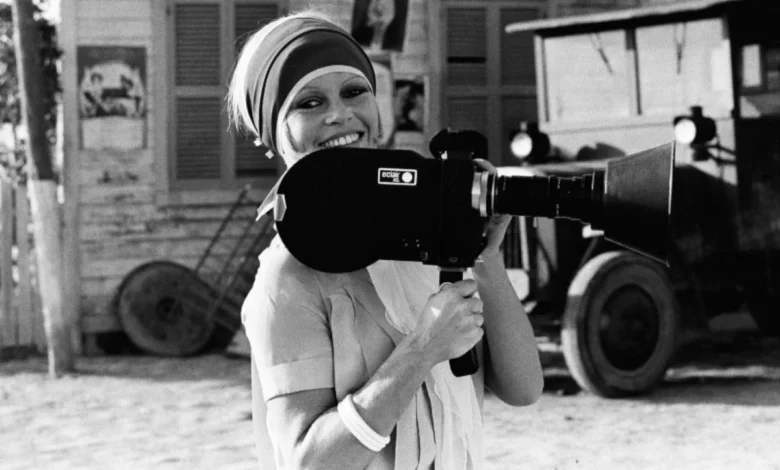
Brigitte Bardot, the legendary French actress and fervent animal rights advocate who epitomized sensuality and rebellion in the post-war era before dedicating her life to animal welfare, passed away on Sunday, December 28, at the age of 91. The news of her death, which occurred at her beloved home, La Madrague, in Saint-Tropez, on the sun-drenched southern coast of France, was met with widespread mourning across the globe. Bardot had reportedly been in declining health in recent months, with her public appearances becoming increasingly rare following a period of medical treatment at a hospital in Toulon, southern France.
Her passing was officially confirmed by the Brigitte Bardot Foundation, the animal welfare organization she founded and passionately led for decades. In a poignant statement released shortly after her death, the foundation expressed profound sorrow at the loss of its visionary founder and president. "The Brigitte Bardot Foundation, with deep sadness, announces the passing of our founder and president, Madame Brigitte Bardot. She was a world-renowned actress and singer who chose to abandon her brilliant career to dedicate her life and energy to the welfare of animals through her foundation," the statement read, underscoring the extraordinary trajectory of a woman who deliberately traded global superstardom for a cause close to her heart.
Bardot’s life was a narrative of stark contrasts and profound influence, transitioning from a global sex symbol and fashion icon to a fierce, sometimes controversial, champion for animal rights. Her impact spanned cinema, fashion, and social discourse, making her an enduring figure whose legacy continues to be debated and celebrated. This article delves into the remarkable journey of Brigitte Bardot, exploring her rise to fame, her pivotal role in cultural shifts, and her unwavering commitment to animal welfare.
A Star is Born: Early Life and Artistic Awakening
Born Brigitte Anne-Marie Bardot in Paris, France, on September 28, 1934, she hailed from a conservative, affluent bourgeois family. Her father, Louis Bardot, was an industrialist, and her mother, Anne-Marie Mucel, was a homemaker. From a young age, Bardot displayed an innate inclination towards the arts, particularly classical dance. Her parents, recognizing her talent, enrolled her in the prestigious Conservatoire de Paris, where she studied ballet for three years, laying the groundwork for the grace and expressive physicality that would later define her on screen. This early artistic discipline provided her with a foundation in movement and stage presence, even though her path would diverge from classical dance.
Her foray into the public eye began almost serendipitously. In 1949, at just 15 years old, her striking beauty caught the attention of the fashion world. She appeared on the cover of Elle magazine in 1950, a moment that marked the unwitting beginning of her meteoric rise. This exposure quickly opened doors to the burgeoning world of French cinema, where her unique blend of innocence and sensuality was immediately recognized as a powerful new force.
The Cinematic Era: From Debut to Global Icon
Bardot made her acting debut in 1952 in the film "Le Trou Normand" (English "Crazy for Love"). While her early roles were often lighthearted and charming, they offered glimpses of the magnetic screen presence that would soon captivate international audiences. Over the next few years, she steadily built her filmography, working with various French directors and honing her craft. However, it was her collaboration with a young, ambitious director, Roger Vadim, who would also become her first husband, that truly launched her into the stratosphere of global stardom.
The turning point arrived in 1956 with Vadim’s directorial debut, "And God Created Woman" (original "Et Dieu… créa la femme"). Shot in Saint-Tropez, the film cast Bardot as Juliete Hardy, an uninhibited orphan whose overt sexuality and free spirit scandalized conservative audiences while electrifying others. The film was a sensation, particularly in the United States, where it ignited a firestorm of controversy and quickly became a box office success despite initial moral condemnations. Bardot’s portrayal of a woman unbound by conventional societal expectations made her an instant international phenomenon, transforming her into a symbol of sexual liberation and female autonomy. The film’s raw depiction of sensuality was groundbreaking for its time, challenging prevailing norms and paving the way for a more open exploration of sexuality in cinema. The philosopher Simone de Beauvoir famously analyzed Bardot’s impact, positing her as a symbol of "absolute freedom" – a woman who lived entirely on her own terms, defying traditional roles and expectations.
Throughout the late 1950s and 1960s, Bardot solidified her status as a cinematic powerhouse, starring in an array of films across different genres. Her filmography includes a remarkable list of collaborations with some of the most esteemed directors of her era:
- "Love Is My Profession" (1958), directed by Claude Autant-Lara.
- "Babette Goes to War" (1959), where she portrayed a charming spy during WWII.
- "La Vérité" (The Truth) (1960), directed by Henri-Georges Clouzot, for which she earned critical acclaim for her dramatic performance as a young woman on trial for murder.
- "Contempt" (Le Mépris) (1963), directed by Jean-Luc Godard, an iconic New Wave film that further cemented her artistic credibility. In this film, Bardot played Camille Javal, a wife whose relationship unravels amidst the backdrop of a film production, showcasing her nuanced acting abilities alongside her undeniable physical presence.
- "Viva Maria!" (1965), a highly successful comedic adventure film co-starring Jeanne Moreau, showcasing her versatility.
- "Shalako" (1968), a Western alongside Sean Connery, demonstrating her appeal in international co-productions.
- "The Women" (Les Femmes) (1969), directed by Jean Aurel.
- "Les Novices" (The Novices) (1970).
Bardot’s films collectively grossed hundreds of millions of dollars globally, establishing her as one of the most bankable stars of her generation. Her image was meticulously crafted, yet effortlessly natural, embodying a new kind of femininity that was both alluring and fiercely independent.
Fashion Icon and Cultural Trendsetter
Beyond her acting prowess, Brigitte Bardot became an unparalleled global fashion icon, profoundly influencing trends and styles for decades. Her signature look—a tousled, voluminous blonde mane, often adorned with a ribbon; a preference for natural, minimal makeup; and a wardrobe that celebrated the female form with a relaxed, yet undeniably chic sensibility—became instantly recognizable and widely emulated. She popularized the bikini on European beaches, transforming it from a controversial item of swimwear into a mainstream fashion statement.
Perhaps her most enduring contribution to fashion was the "Bardot neckline"—a wide, open neckline that exposes both shoulders, often seen in off-the-shoulder tops and dresses. This style, which exudes a playful yet elegant allure, remains a timeless classic. Her preference for gingham prints, ballet flats, and a casual-yet-glamorous aesthetic defined an era, making her an arbiter of taste and a muse for designers worldwide. Her influence extended beyond clothing; her carefree, sun-kissed image became synonymous with the French Riviera lifestyle, drawing tourists and admirers to Saint-Tropez, transforming it into a global hotspot. Bardot’s persona represented a departure from the more rigid, elegant styles of the 1950s, ushering in an era of more relaxed, youthful, and sensual fashion that resonated with the burgeoning counter-culture movement.
The Unconventional Retirement and Animal Advocacy
In a move that shocked the entertainment world, Brigitte Bardot announced her retirement from acting in 1973, at the relatively young age of 39. At the peak of her fame and still a major box office draw, she chose to step away from the limelight, a decision almost unheard of for a star of her caliber. She publicly stated her disillusionment with the film industry and the pressures of celebrity, expressing a desire for a more authentic and purposeful life. "I gave my youth and my beauty to men. I am now giving my wisdom and my experience, the best of myself, to animals," she famously declared, articulating the profound shift in her life’s priorities.
Her retirement was not a retreat into obscurity but a redirection of her immense passion and energy towards a new, deeply personal mission: animal rights. In 1986, she founded the Brigitte Bardot Foundation for the Welfare and Protection of Animals, establishing a powerful platform for her activism. From her base in Saint-Tropez, Bardot became a relentless and vocal advocate for animal welfare, using her celebrity to draw attention to causes often overlooked.
Her activism spanned a wide array of issues, making her one of the most prominent figures in the global animal rights movement:
- Anti-Sealing Campaigns: Bardot became a fierce opponent of the annual seal hunt in Canada, famously traveling to the ice floes to protest the culling of seal pups. Her impassioned pleas and powerful imagery galvanized international opinion and brought global attention to the issue.
- Opposition to Bullfighting: A staunch critic of bullfighting, she tirelessly campaigned against the practice, viewing it as a barbaric spectacle of animal cruelty.
- Combating Fur Trade: She actively campaigned against the fur industry, advocating for the use of synthetic alternatives and boycotting brands that used animal fur.
- Animal Testing: Bardot was a vocal opponent of animal experimentation, urging for the development and use of cruelty-free research methods.
- Wildlife Protection: She championed the protection of endangered species and worked to raise awareness about habitat destruction and poaching.
- Support for Stray Animals: Her foundation has rescued and provided care for countless stray and abandoned animals, operating shelters and promoting adoption.
Her advocacy often involved direct confrontation, public letters to political leaders, and dramatic appeals to the media. She leveraged her iconic status to secure funding and support for her foundation, even auctioning off personal belongings and memorabilia to raise millions of francs for animal welfare. Her dedication was recognized by the French government when she was awarded the Legion of of Honour (Légion d’honneur), France’s highest order of merit, for her cultural contributions and later for her humanitarian efforts, although she reportedly refused to accept it as a protest against various government policies she disagreed with regarding animal welfare. This act further underscored her independent spirit and unwavering commitment to her cause.
Controversies and Complex Legacy
While her dedication to animal rights was widely admired, Bardot’s later years were not without controversy. Her outspoken nature, combined with increasingly conservative political views, led to accusations of racism, homophobia, and incitement to hatred. She faced several legal battles and was fined multiple times by French courts for comments targeting immigrants, Muslims, and the LGBTQ+ community. These controversies, often expressed in public letters and interviews, significantly tarnished her image for many who had once admired her as a symbol of liberation.
The stark contrast between her youthful image of freedom and her later, often inflammatory, pronouncements created a complex and sometimes contradictory legacy. For many, it became difficult to reconcile the trailblazing cultural icon with the figure who espoused divisive social views. However, even amidst these criticisms, her commitment to animal welfare remained unwavering, a cause she pursued with a singular focus that transcended political or social allegiances. Her critics acknowledged her pioneering work for animals, while condemning her social rhetoric.
Final Years and Enduring Impact
In her final decades, Brigitte Bardot retreated largely from public life, preferring the solace of her home in La Madrague, surrounded by her beloved animals. She continued to manage her foundation, albeit with less direct public engagement, ensuring her life’s work for animal welfare would persist. Her health, as reported, had been in decline, marking a quieter period for a woman whose life had been anything but.
The news of her death on December 28, 2025, at 91 years old, reverberated through France and beyond. Tributes poured in from various sectors. The French film industry mourned the loss of one of its most luminous stars, a figure who helped define French cinema on the global stage. Animal rights organizations lauded her as a fearless pioneer whose advocacy brought crucial attention and resources to animal welfare issues worldwide. Cultural commentators reflected on her dual legacy: the enduring image of a woman who challenged conventions and inspired generations, juxtaposed with the complexities of her later views.
Brigitte Bardot’s journey from a conservative Parisian upbringing to an international sex symbol, and then to a dedicated animal rights activist, is a testament to a life lived on her own terms. Her influence on fashion, cinema, and societal norms of female expression is undeniable. She played a pivotal role in the sexual revolution of the 20th century, embodying a new kind of liberated woman. Simultaneously, her fierce advocacy laid foundational groundwork for the mainstreaming of animal rights, demonstrating that celebrity could be a powerful tool for social change.
While her legacy is multifaceted and continues to spark debate, particularly regarding her later controversies, there is no denying the profound and lasting impact she had on the world. Brigitte Bardot remains an indelible figure in the annals of culture, a woman whose life was a dramatic saga of beauty, rebellion, passion, and an unwavering commitment to the creatures she so deeply loved. Her passing marks the end of an era, but her influence, both as a cultural icon and an animal welfare champion, will continue to resonate for generations to come.
Related posts: