President Prabowo Subianto’s Cabinet Reshuffle and the Emerging Profile of Puteri Komarudin as Potential Minister of Youth and Sports

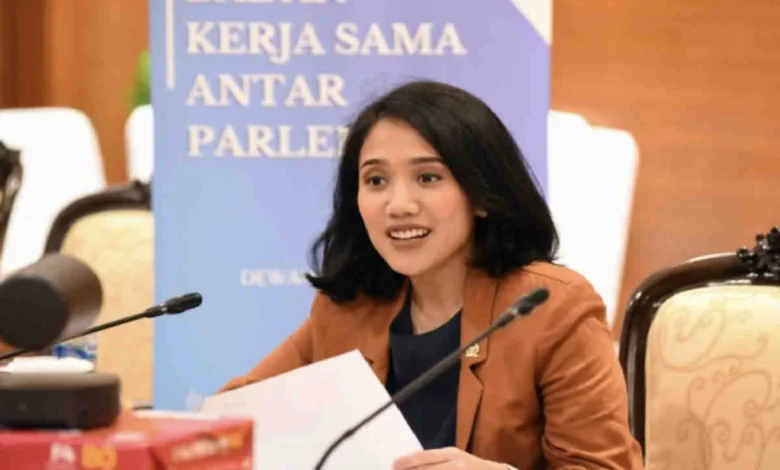
Jakarta, Indonesia – President Prabowo Subianto has initiated a significant cabinet reshuffle for his "Kabinet Merah Putih" (Red and White Cabinet), leading to the replacement of several ministers across five key ministries. Among the most closely watched changes is the position of Minister of Youth and Sports (Menpora), which currently remains vacant pending the official inauguration of a new appointee at the State Palace. Amidst this period of transition, the name of Puteri Komarudin has prominently emerged as a strong contender to succeed the outgoing Dito Ariotedjo, sparking considerable interest in her background and potential implications for the vital portfolio.
The Context of Presidential Reshuffles and the New Administration
Cabinet reshuffles are a common exercise of presidential prerogative in Indonesia, reflecting a head of state’s strategic vision, a need to address performance issues, or a desire to consolidate political support. President Prabowo Subianto, having recently assumed office following a decisive victory in the 2024 general election, is navigating the initial phase of his administration. Such early adjustments often aim to set the tone for the new government, ensuring key positions are filled by individuals who align with the president’s policy agenda and strategic objectives. The "Kabinet Merah Putih" moniker itself symbolizes national unity and sovereignty, themes central to President Prabowo’s political platform.
The Ministry of Youth and Sports is a crucial portfolio, tasked with fostering national pride through athletic achievement, promoting healthy lifestyles, and empowering Indonesia’s vast youth population, which constitutes a significant demographic dividend. The outgoing minister, Dito Ariotedjo, had a tenure marked by efforts to modernize sports governance and enhance youth participation, but like any minister, faced ongoing challenges related to funding, infrastructure, and the highly competitive international sporting arena. The delay in appointing his successor has fueled speculation and underscored the perceived importance of selecting the right individual for this demanding role.
The Vacancy and Official Statements
While other ministerial positions affected by the reshuffle have seen new incumbents sworn in, the Menpora role has remained conspicuously open. State Secretary Minister (Mensesneg) Pratikno confirmed that the delay in the Menpora appointment was due to the designated candidate being "out of town," indicating that a decision has likely been made but is awaiting logistical arrangements for the formal inauguration ceremony. This official clarification, while providing a reason for the delay, has simultaneously intensified public curiosity about the identity of the future minister.
The prolonged vacancy, even if temporary, highlights the intricate process of presidential appointments and the careful consideration given to each ministerial role. It also allows for a period of public discussion and media speculation, which often serves to introduce potential new figures to the national consciousness. Former Menpora Dito Ariotedjo, when asked about the rumors surrounding Puteri Komarudin, offered a diplomatic response, indicating his readiness to support whoever is chosen by the President, emphasizing the continuity of the ministry’s programs.
Puteri Anetta Komarudin: A Detailed Profile of a Rising Political Star
Puteri Anetta Komarudin, born in Bandung on August 21, 1993, has rapidly ascended the ranks of Indonesian politics, distinguishing herself as a young, highly educated, and accomplished legislator. Since 2019, she has represented the West Java VII electoral district as a member of the House of Representatives (DPR RI). Affiliated with the Golkar Party, one of Indonesia’s oldest and most influential political parties, Puteri serves on Commission XI, which oversees finance, banking, and national development planning. Her work in this commission involves critical responsibilities such as deliberating and approving the state budget (APBN), a role that demands a deep understanding of fiscal policy and economic management. In her previous parliamentary term, she also contributed to the Body for Inter-Parliamentary Cooperation (BKSAP), further broadening her exposure to international relations and diplomacy.
Her educational journey reflects a commitment to both national and international academic excellence. She began her schooling at SD Al Azhar Jakarta (1999-2005) and continued at SMP Negeri 19 Mayestik Jakarta (2005-2008). Demonstrating an early global outlook, Puteri pursued secondary education abroad at Chai Chee Secondary School in Singapore (2009-2010), followed by a Diploma in Trinity College Foundation Studies in 2011. Her academic prowess was further cemented when she earned a Bachelor of Commerce from the prestigious University of Melbourne in 2015, a feat made possible through the competitive Global B.Com scholarship.
The same year, Puteri enhanced her business acumen by completing the HBX CORe: Credential of Readiness program from Harvard Business School. This intensive program focused on critical areas such as Business Analytics, Economics for Managers, and Financial Accounting, equipping her with advanced analytical and strategic thinking skills essential for high-level public service. Her talent was recognized early, as she was also named among the Top 6 Graduates of the Young Leaders of Indonesia (YLI) Wave 7, an initiative by McKinsey Indonesia aimed at identifying and nurturing future leaders.
A Career Defined by Public Service and Financial Acumen
Before embarking on her legislative career, Puteri Komarudin garnered diverse professional experience in both the private and public sectors, particularly within the financial domain. In 2015, she undertook internships at Bank Mandiri as an International Banking Intern and later as a Micro Banking Intern, gaining practical insights into the operations of one of Indonesia’s largest state-owned banks. She also served as a Media Relation Intern at the Australia-Indonesia Centre in 2015, refining her communication and public engagement skills.
Her most significant pre-parliamentary role was as a Junior Bank Supervisor at the Financial Services Authority (OJK) from 2016 to 2018. The OJK is Indonesia’s independent government agency that regulates and supervises the financial services sector. This experience provided her with an intimate understanding of financial regulations, risk management, and the broader economic landscape – a background that is particularly relevant given the significant financial management responsibilities inherent in any ministerial position.
Recognized for Leadership and Advocacy
Puteri Komarudin’s contributions and leadership qualities have not gone unnoticed. In 2021, she was honored with the Hope of Democracy Award from the Teropong Democracy Award, an accolade recognizing her as an aspirational, communicative, and effective advocate for public interests. This award underscored her ability to connect with constituents and translate their needs into actionable policy discussions.
Her international engagement further showcases her leadership capabilities. Puteri was entrusted with leading the Indonesian delegation to the Youth 20 Summit 2021 in Italy, a crucial forum bringing together young leaders from G20 nations. During this summit, she successfully championed three key policy recommendations focusing on financial inclusion, educational equality, and political participation – areas that resonate strongly with the mandate of the Ministry of Youth and Sports. Her ability to navigate complex international discussions and advocate for specific policy outcomes demonstrates a sophisticated understanding of global issues and effective diplomacy.
In 2023, her dedication to financial literacy was once again recognized when she received the Legislator Peduli Literasi Keuangan dan Generasi Muda (Legislator Concerned with Financial Literacy and Youth Generation) award at the KWP Award. This award highlights her consistent efforts to empower young people through education and access to financial knowledge, a crucial component for fostering economic independence and national development.
Extensive Political and Organizational Engagements
Beyond her direct parliamentary duties, Puteri Komarudin has been deeply involved in various political and non-political organizations, showcasing her broad commitment to public service and community development. Within the Golkar Party, she has held several key positions, indicating her growing influence and strategic role:
- Ketua DPP Bidang Pemberdayaan Perempuan (Chairperson of the Central Executive Board for Women’s Empowerment): This role underscores her dedication to promoting gender equality and women’s leadership within the party and the broader political landscape.
- Ketua DPP Bidang Milenial (Chairperson of the Central Executive Board for Millennials): This position reflects Golkar’s strategy to engage with and empower the younger generation, a demographic crucial for Indonesia’s future.
- Wakil Sekretaris Jenderal DPP Partai Golkar (Deputy Secretary-General of the Golkar Party Central Executive Board): A high-ranking internal party position that demonstrates her administrative and strategic capabilities within the party’s leadership structure.
- Ketua Umum PP Angkatan Muda Partai Golkar (General Chairperson of the Central Board of the Golkar Party Youth Wing): Leading the party’s youth wing provides her with a direct platform to mobilize and mentor young cadres, shaping the next generation of political leaders.
Outside of her party affiliations, Puteri has also lent her expertise and leadership to a range of other organizations:
- Wakil Bendahara Umum PBSI (Deputy General Treasurer of the Indonesian Badminton Association): This role directly connects her to the sports sector, indicating an existing understanding of the challenges and opportunities within national sports federations, particularly in one of Indonesia’s most successful sports. Her financial background would be a significant asset in managing the finances of such a prominent sports body.
- Dewan Penasehat Komite Nasional Pemuda Indonesia (Advisory Board Member of the Indonesian National Youth Committee – KNPI): KNPI is a major umbrella organization for youth groups in Indonesia. Her advisory role here demonstrates her commitment to youth development across various sectors and her capacity to influence broad youth policies.
- Wakil Ketua Bidang Hubungan Internasional PP KOSGORO 1957 (Vice Chair of International Relations for the Central Board of KOSGORO 1957): KOSGORO is one of the founding organizations of Golkar, focusing on cooperative and economic activities. Her role in international relations suggests a continued interest in global cooperation and economic diplomacy.
- Dewan Penasehat BPP HIPMI (Advisory Board Member of the Central Executive Board of the Indonesian Young Entrepreneurs Association): HIPMI is a prominent organization for young entrepreneurs, fostering business growth and innovation. Her advisory capacity here aligns with her economic background and potential to champion youth entrepreneurship.
- Dewan Pembina Perkumpulan Komunitas Gerakan Milenial Indonesia (Advisory Board Member of the Indonesian Millennial Movement Community Association): This further solidifies her connection with and commitment to empowering the millennial generation in Indonesia.
Implications of Her Potential Appointment
The potential appointment of Puteri Komarudin as Minister of Youth and Sports carries several significant implications for the new administration and the sectors she would oversee.
- Youthful Energy and Perspective: At 31 years old, Puteri Komarudin would bring a youthful perspective to the cabinet, potentially energizing the Ministry of Youth and Sports with fresh ideas and approaches. Her age could resonate strongly with Indonesia’s predominantly young population, fostering greater engagement and trust between the government and youth. This aligns with a broader global trend of appointing younger leaders to connect with contemporary issues and evolving demographics.
- Gender Representation: Her appointment would also enhance gender representation in a cabinet that President Prabowo aims to be inclusive. Having a young, accomplished woman in a prominent ministerial role sends a powerful message about empowering women in leadership positions and could inspire countless young Indonesian women to pursue careers in public service, sports, or business.
- Financial Acumen for Strategic Management: Her extensive background in finance, banking, and economic policy (from OJK, Bank Mandiri, University of Melbourne, and Harvard Business School) is a unique asset. The Ministry of Youth and Sports often grapples with budget constraints, inefficient resource allocation, and the need for innovative funding mechanisms for sports development and youth programs. Komarudin’s expertise could prove invaluable in optimizing the ministry’s financial management, attracting private sector investment, and developing sustainable economic models for youth empowerment initiatives and sports infrastructure. This could lead to a more strategic approach to leveraging the national budget for maximum impact.
- Legislative Experience and Policy Development: As an experienced legislator, Puteri Komarudin possesses an in-depth understanding of policy-making processes, parliamentary dynamics, and the intricacies of government bureaucracy. This experience would enable her to navigate legislative challenges effectively, advocate for the ministry’s agenda, and foster better coordination with other government bodies and the DPR. Her track record of pushing for financial literacy and inclusion also suggests a potential focus on equipping young Indonesians with practical skills for economic independence.
- Challenges and Expectations: The new Menpora will face a multitude of challenges. These include improving Indonesia’s standing in international sports, fostering grassroots sports development, addressing issues like doping and governance in sports federations, and ensuring athlete welfare. On the youth front, the ministry is crucial for addressing youth unemployment, promoting entrepreneurship, preventing radicalism, fostering national identity, and ensuring access to quality education and skill development programs. Stakeholders within the sports community, from athletes to federation officials, will be eager for a leader who can deliver concrete improvements in infrastructure, training, and support systems. Similarly, youth organizations will look for programs that genuinely empower young people and provide platforms for their voices to be heard.
- Political Consolidation and Golkar’s Role: Her appointment would also signify President Prabowo’s strategic move to further consolidate political support, particularly from the Golkar Party, a key coalition partner. Elevating a prominent young figure from Golkar into a ministerial role strengthens the alliance and positions the party for continued influence within the new administration.
The anticipation surrounding the announcement of the new Minister of Youth and Sports is palpable. Should Puteri Komarudin be officially named, her background suggests a minister poised to bring a blend of youthful dynamism, robust financial expertise, and seasoned legislative experience to a portfolio critical for shaping Indonesia’s future generations and enhancing its global sporting presence. Her journey from a distinguished academic path to a rising political star underscores the potential for a transformative tenure at the helm of this vital ministry. The nation awaits the formal announcement, eager to see how the "Kabinet Merah Putih" will further define its vision for Indonesian youth and sports under its new leadership.
Related posts: