Andritany Ardhiyasa Extends Contract with Persija Jakarta, Solidifying Legacy and Leadership Role for the 2026/2027 Season

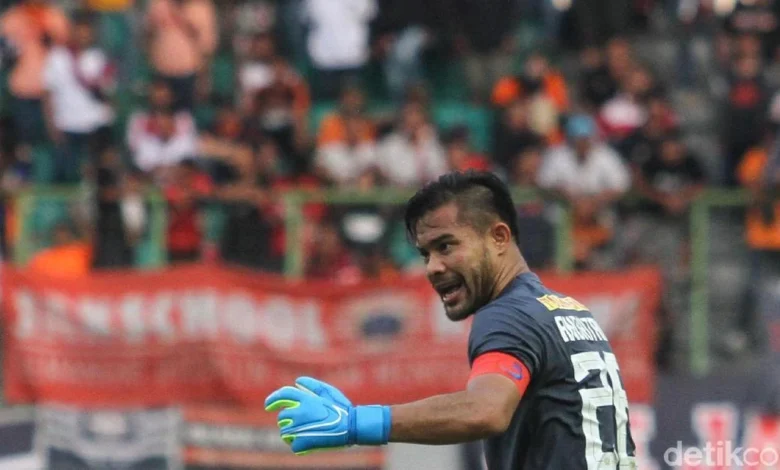
Jakarta, Indonesia – Persija Jakarta has officially announced the contract extension of its veteran goalkeeper and captain, Andritany Ardhiyasa, for an additional year, effectively quashing persistent rumors of his potential departure to another club. The new agreement ensures that Ardhiyasa will continue to don the iconic orange jersey through the 2026/2027 season, further cementing his status as one of the club’s most enduring and influential figures. This pivotal decision by the management underscores not only Ardhiyasa’s technical prowess between the posts but also his invaluable leadership and deep understanding of the club’s identity and aspirations.
The extension means Andritany Ardhiyasa, who first joined the senior team in 2010, will continue his remarkable journey with the "Macan Kemayoran" (Kemayoran Tigers) for well over a decade and a half. His longevity and consistent performance have made him an indispensable component of Persija’s fabric, a testament to his dedication and the club’s trust in his capabilities. The announcement, made on Tuesday, July 21, 2026, has been met with significant relief and approval from the club’s ardent supporters, Jakmania, who view Ardhiyasa as a living legend and a symbol of Persija’s resilience and ambition.
A Pillar of Stability: Contract Details and Immediate Impact
The one-year contract extension for Andritany Ardhiyasa ensures continuity in a crucial position for Persija Jakarta. In an era where player loyalty often takes a backseat to lucrative offers and transfers, Ardhiyasa’s continued commitment to Persija stands out. The duration of the contract, extending through the 2026/2027 season, provides the team with stability at the back, a fundamental requirement for any club aiming for top honors in a competitive league like Liga 1.
The immediate impact of this extension is multifaceted. Firstly, it provides reassurance to the coaching staff, allowing them to plan the defensive strategy with a known and highly reliable quantity. Secondly, it sends a clear message to the squad about the value of experience and long-term commitment. For a team that aims to blend seasoned veterans with promising young talents, having a figure like Ardhiyasa anchoring the defense is strategically invaluable. His presence negates the need to search for a new first-choice goalkeeper, a process that can be both time-consuming and financially demanding, often requiring a period of adaptation for any new arrival.
Andritany’s Enduring Legacy: A Chronicle of Loyalty and Achievement
Andritany Ardhiyasa’s career with Persija Jakarta is a compelling narrative of loyalty, perseverance, and consistent excellence. Born in Jakarta on December 26, 1991, Ardhiyasa’s connection to the capital city club runs deep. He rose through the ranks, making his senior team debut after being promoted in 2010. This marked the beginning of an extraordinary tenure that has seen him become one of the most recognizable faces in Indonesian football.
Over the years, Ardhiyasa has been central to many of Persija’s triumphs and challenging periods. His tenure has seen the club navigate through various phases of the Indonesian football landscape, including the tumultuous years of dual leagues and the eventual re-establishment of a unified Liga 1. A significant highlight of his career with Persija came in 2018 when he captained the team to a historic Liga 1 championship, ending a 17-year title drought. This achievement not only solidified his legend but also brought immense joy to the club’s vast fanbase. Beyond the league title, he has also been instrumental in other successes, including the President’s Cup and other pre-season tournaments, demonstrating his consistent ability to perform under pressure.
His journey from a promising young talent to the undisputed number one and club captain exemplifies dedication. He has been a constant presence, witnessing multiple managerial changes, player turnovers, and strategic shifts, yet always maintaining his high standards. This longevity is rare in modern football, making his story with Persija a unique one that resonates deeply with supporters who value players who embody the club’s spirit.
Presidential Endorsement: Mohamad Prapanca’s Strategic Vision
Persija Jakarta President, Mohamad Prapanca, articulated the strategic rationale behind retaining Andritany Ardhiyasa, emphasizing both technical considerations and the player’s broader role within the team. "The decision to retain Andritany was rooted in both technical evaluations and a profound appreciation for his integral role within our team structure," Prapanca stated in a club announcement on Tuesday, July 21, 2026. His remarks underscore that Ardhiyasa’s value extends far beyond his shot-stopping abilities.
Prapanca highlighted Ardhiyasa as a figure who embodies the very essence of Persija. "Andritany is a figure who profoundly understands the identity, core values, and the rigorous demands of playing for Persija," he added. This recognition speaks to Ardhiyasa’s deep understanding of the club’s culture, history, and the unique pressures associated with representing one of Indonesia’s biggest football institutions. This level of intrinsic understanding is something that cannot be easily replicated by a new signing, regardless of their talent.
The club president also stressed the importance of Ardhiyasa’s leadership, particularly in nurturing the next generation of players. "We anticipate Andritany will continue to deliver his utmost contributions, both on the pitch and within the dressing room," Prapanca affirmed. He further elaborated, "His extensive experience is indispensable for guiding and imparting crucial understanding to our younger players, as well as new additions to the squad. This mentorship is vital to ensure they can contribute effectively and help Persija strive towards our highest objectives this season." This emphasis on mentorship positions Ardhiyasa not just as a player, but as a key developmental asset, shaping the future of the club from within.
Andritany’s Deep Gratitude and Renewed Commitment
For Andritany Ardhiyasa himself, the contract extension carries profound personal and professional significance. Having dedicated the vast majority of his professional career to Persija since 2010, the opportunity to continue representing the "Macan Kemayoran" is perceived as both a privilege and a substantial responsibility. His statement reflected a deep emotional connection to the club and its loyal fanbase.
"This contract extension holds immense meaning for me. Persija has become an enormous part of my life’s journey and professional career. I am profoundly grateful to still be entrusted with the opportunity to continue this struggle alongside the club," Ardhiyasa expressed. His words resonate with the sentiment of a player who has truly found his home and identity within a single club. This kind of unwavering loyalty is increasingly rare in modern football, making his commitment all the more noteworthy.
Ardhiyasa also extended his heartfelt appreciation to the fervent Jakmania, acknowledging their unwavering support as a vital source of motivation. "My sincere thanks go to Jakmania, who consistently provide their unwavering support to me and the entire team. Your support forms an immense strength throughout my journey with Persija. I hope that this season, we can fight together and achieve something truly pride-worthy," he concluded. This direct address to the fans underscores the unique bond between Ardhiyasa and the supporters, a relationship built on years of shared triumphs and tribulations.
Statistical Overview: A Career of Consistent Excellence
Andritany Ardhiyasa’s career statistics paint a clear picture of his consistent excellence and durability as a top-tier goalkeeper. Throughout his time with Persija Jakarta, he has amassed approximately 278 appearances across all official competitions. This remarkable number of matches highlights his consistent selection and fitness over a prolonged period, a testament to his professionalism and dedication.
More impressively, Ardhiyasa has recorded an outstanding 94 clean sheets during his tenure. Achieving nearly 100 clean sheets is a significant milestone for any goalkeeper, reflecting not only his individual brilliance but also the defensive solidity he has often commanded from his backline. A clean sheet percentage of roughly 33.8% across nearly 300 games is a strong indicator of his impact on preventing goals.
In the most recent 2025/2026 season, Ardhiyasa continued to demonstrate his capabilities, featuring in 11 matches and securing five clean sheets. This performance, even as he approaches the latter stages of his career, underscores his sustained quality and his ability to still perform at the highest level. His presence in goal instills confidence in his defenders and provides a crucial last line of defense, often making critical saves that directly influence match outcomes. These statistics not only justify the club’s decision to extend his contract but also solidify his position as one of the most accomplished goalkeepers in Liga 1 history.
Role as a Mentor and Team Leader: Shaping Persija’s Future
Beyond his on-field contributions, Andritany Ardhiyasa’s role as a mentor and team leader is perhaps one of the most invaluable aspects of his continued presence at Persija Jakarta. As the captain, he bears the responsibility of guiding younger players and integrating new signings into the team’s philosophy. In an increasingly dynamic football environment, experienced leaders are crucial for maintaining squad cohesion and instilling professional discipline.
Ardhiyasa’s vast experience in the Indonesian football league, having played through various eras and against numerous opponents, provides an unparalleled resource for the squad. He can impart tactical knowledge, share insights on handling pressure, and demonstrate the dedication required to succeed at the highest level. Young goalkeepers, in particular, will benefit immensely from training alongside and learning directly from a seasoned professional of his caliber. His calm demeanor, both on and off the pitch, serves as a steadying influence, particularly during challenging periods of a season. This mentorship role is vital for Persija’s long-term sustainability, ensuring that the club’s values and standards are passed down effectively.
Strategic Implications for Persija Jakarta: Stability and Ambition
The contract extension for Andritany Ardhiyasa carries significant strategic implications for Persija Jakarta. Firstly, it signals the club’s commitment to maintaining a core of experienced, loyal players, which is often crucial for stability and continuity in competitive leagues. This stability allows the club to focus its transfer market efforts on other areas of the squad, knowing that a key position is secured.
Secondly, it reinforces Persija’s ambition to compete for top honors. A strong, reliable goalkeeper is the foundation of any successful team, and by retaining Ardhiyasa, Persija ensures they have one of the best available. This decision suggests a preference for proven quality and leadership over the risks associated with bringing in new talent, especially in such a vital position.
Furthermore, it sends a positive message to the entire league about Persija’s organizational strength and its ability to retain its key assets. In an environment where top players are frequently targeted by rivals, securing a legend like Ardhiyasa is a statement of intent. It also demonstrates a clear strategic vision from the club’s management to balance immediate competitive needs with long-term development through mentorship.
The Jakmania Factor: A Symbol of Enduring Connection
The relationship between Andritany Ardhiyasa and Jakmania, Persija’s passionate fanbase, is one of the most iconic in Indonesian football. The extension of his contract is undoubtedly a cause for celebration among the supporters. Jakmania views Ardhiyasa not just as a player, but as a symbol of the club’s identity, a "putra daerah" (local son) who has dedicated his career to his hometown club.
His loyalty, passion, and consistent performances have endeared him deeply to the fans. They have witnessed his growth, celebrated his triumphs, and supported him through challenging times. For Jakmania, Ardhiyasa embodies the spirit of Persija – resilient, proud, and ambitious. His continued presence provides a vital link between the club’s rich history and its future aspirations. The emotional connection ensures that his actions, both on and off the pitch, resonate profoundly with the fanbase, making his leadership even more impactful. The club’s decision to retain him is thus not just a technical one, but also a strategic move to maintain this crucial bond with its most ardent supporters.
Historical Context of Persija’s Goalkeepers
Persija Jakarta has a storied history of producing and retaining exceptional goalkeepers. From legendary figures in past decades to more recent stalwarts, the club has always valued solidity between the posts. The commitment to Andritany Ardhiyasa continues this proud tradition. His longevity now places him in an elite category alongside other long-serving club legends, whose careers spanned many years and brought multiple accolades.
This historical context adds another layer of significance to Ardhiyasa’s extension. He is not just a player; he is an inheritor of a legacy and a contributor to the ongoing narrative of Persija’s goalkeeping excellence. His ability to maintain a high level of performance for so long places him among the very best to have ever guarded the Persija net, further cementing his place in the club’s illustrious history.
The Future: Ambitions for the 2026/2027 Season
With Andritany Ardhiyasa secured for the 2026/2027 season, Persija Jakarta can now fully focus on its objectives for the upcoming campaign. The club’s stated goal of achieving the "highest objectives" implies a strong desire to contend for the Liga 1 title once again, and potentially other domestic cups. Ardhiyasa’s experience will be crucial in navigating the rigors of a long season, including managing pressure in crucial matches and maintaining defensive discipline.
His leadership will be particularly important in guiding the team through any challenging periods and ensuring that the squad remains united and focused on their collective goals. The stability provided by his presence in goal allows the rest of the team to play with greater freedom and confidence, knowing they have a reliable last line of defense. As Persija looks to build on past performances and push for silverware, Ardhiyasa’s continued dedication and unwavering commitment will be an indispensable asset in their pursuit of glory.
In conclusion, Andritany Ardhiyasa’s contract extension is far more than a routine administrative decision; it is a reaffirmation of loyalty, a strategic move for stability, and a testament to the enduring value of experience and leadership in modern football. As Persija Jakarta prepares for the 2026/2027 season, the continued presence of its iconic captain signals a clear intent to build on a foundation of proven quality and deep-rooted club identity, with the unwavering support of its passionate fanbase.
Related posts: