Regional Tensions Escalate as Iran Strikes Kuwaiti Infrastructure in Retaliation for United States Military Operations in Hormuzgan


The geopolitical landscape of the Middle East has entered a volatile new phase following a series of direct military exchanges involving the United States, Iran, and Kuwait. On Saturday, July 18, Iranian forces launched a multi-pronged attack targeting critical civilian and logistics infrastructure within Kuwaiti territory. The strikes, which focused on power generation facilities and water desalination plants, were characterized by Tehran as a direct response to a United States military operation conducted less than 24 hours earlier against Iranian assets in the Hormuzgan Province. This rapid escalation marks a significant departure from traditional proxy warfare, shifting toward direct state-on-state kinetic actions that threaten the stability of the global energy market and the humanitarian security of the Persian Gulf region.
The Kuwaiti Ministry of Electricity, Water, and Renewable Energy confirmed the gravity of the situation on Saturday, reporting that a significant fire broke out at a vital component of one of its primary power and desalination complexes. While the ministry did not immediately specify the exact location for security reasons, the impact was felt across the national grid. In an official statement, the ministry noted that the incident necessitated "preventative operational measures," which included the immediate shutdown of several generating units. These actions were taken to preserve the structural integrity of the plant, ensure the safety of technical staff, and prevent a total collapse of the national electricity network. Despite the damage, Kuwaiti authorities have activated comprehensive emergency protocols to maintain the supply of water and electricity to the population, utilizing strategic reserves and rerouting power through redundant nodes in the grid.
The Chronology of Escalation
The current crisis began late Friday, July 17, when United States military forces conducted a series of airstrikes in Iran’s southern Hormuzgan Province. According to reports from the Iranian capital, the American operation targeted what Washington likely perceived as military or dual-use infrastructure. However, the Iranian Ministry of Foreign Affairs presented a starkly different account. Esmaeil Baghaei, the spokesperson for the ministry, condemned the "illegal attacks," asserting that the U.S. had deliberately struck civilian areas.
The humanitarian toll in Hormuzgan was significant. Iranian officials reported that at least eight people were killed in the strikes, including two individuals with disabilities. The attacks also caused a total disruption of the potable water supply in the coastal region of Bunji, as the infrastructure supporting the local desalination process was destroyed. Baghaei used social media to broadcast Tehran’s indignation, accusing the United States of attempting to project power through the "destruction of civilian infrastructure and the killing of innocent civilians."
The retaliation was swift. By the early hours of Saturday, July 18, air defense sirens were heard across Kuwait City and surrounding industrial zones. The Kuwaiti military was placed on high alert as its air defense systems attempted to intercept a wave of incoming missiles and loitering munitions (drones) launched from Iranian territory. The intensity of the aerial assault led to the immediate and temporary suspension of all Kuwait Airways flights, grounding the nation’s civil aviation to prevent any accidental engagement or mid-air disasters.
Strategic Targeting and IRGC Claims
The Islamic Revolutionary Guard Corps (IRGC) took responsibility for the strikes in a formal communique, providing specific details regarding their targets. According to the IRGC, the operation was not a random act of aggression but a calculated strike against U.S. logistical and intelligence capabilities hosted on Kuwaiti soil. The IRGC claimed to have successfully struck a fuel support pier utilized by the U.S. Navy’s Fifth Fleet at the Port of Al Ahmadi. This port is one of Kuwait’s most critical economic hubs, serving as a primary terminal for oil exports and a vital node for regional maritime logistics.
Furthermore, the IRGC stated that it had "neutralized" a signal and telecommunications center used by American forces within Kuwait. Kuwait has long hosted a significant U.S. military presence, including thousands of troops stationed at Camp Arifjan and Ali Al Salem Air Base. By targeting infrastructure that supports these facilities, Tehran is signaling its ability to hold U.S. regional interests at risk while simultaneously punishing a neighboring state for its security cooperation with Washington.
The Critical Role of Desalination and Power in the Gulf
The targeting of desalination plants represents a severe escalation in the "infrastructure war" currently unfolding. For Kuwait, a nation with virtually no natural freshwater sources, desalination is not merely a utility but a lifeline. Approximately 90% of the country’s drinking water is derived from the desalination of seawater. Any prolonged disruption to these facilities could lead to a humanitarian crisis of immense proportions.
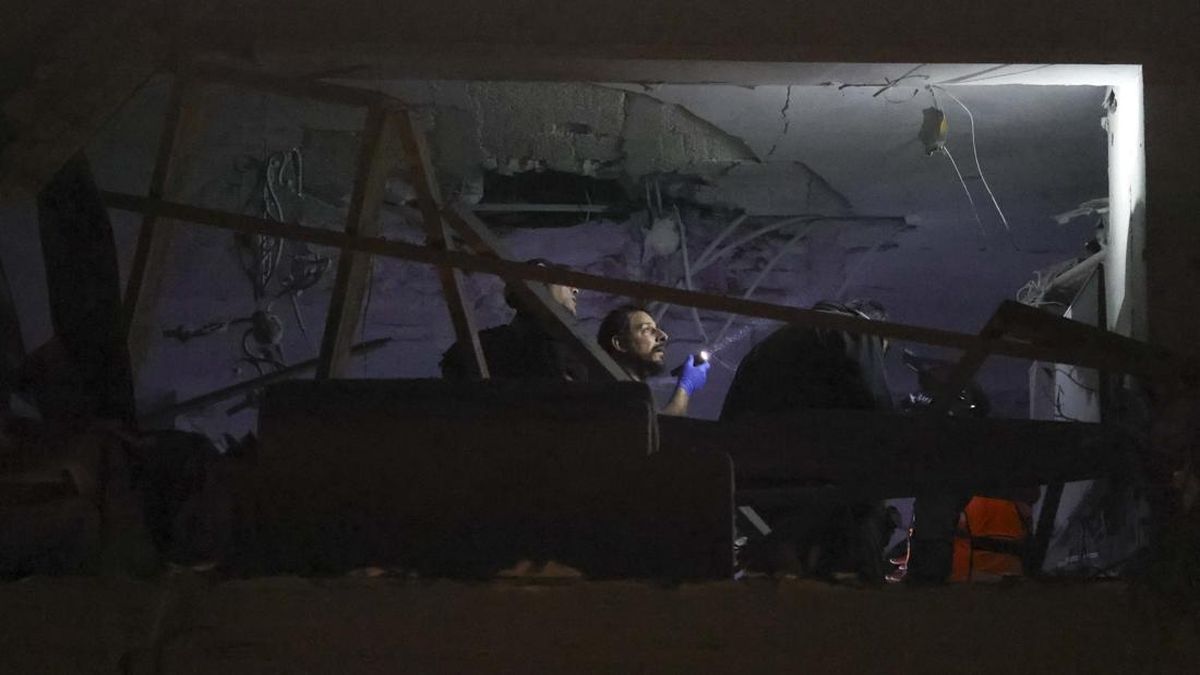
The technical complexity of these plants means that damage to "small components"—as described by the Kuwaiti ministry—can have cascading effects. Desalination requires immense amounts of thermal or electrical energy. When a power plant is struck, the desalination process often halts automatically. The decision by the Kuwaiti Ministry of Electricity and Water to shut down units was a strategic move to prevent "water hammer" effects or thermal imbalances that could permanently ruin the multi-billion dollar membranes and distillation units used in the process.
International Reactions and Diplomatic Fallout
The international community has watched the events of the last 48 hours with growing alarm. While the United States has yet to release a detailed breakdown of its initial Hormuzgan strike, the White House has historically maintained that its actions in the region are "defensive" and aimed at "deterring Iranian aggression." However, the reported civilian casualties in Bunji have provided Tehran with a diplomatic lever to frame the U.S. as the primary aggressor.
Regional neighbors, including Saudi Arabia and the United Arab Emirates, have expressed deep concern over the violation of Kuwaiti sovereignty. As members of the Gulf Cooperation Council (GCC), these nations view an attack on one member as a threat to the collective security of the bloc. Diplomats at the United Nations have called for an immediate de-escalation, fearing that a miscalculation could lead to a full-scale regional war that would close the Strait of Hormuz, through which 20% of the world’s oil supply passes.
Analytical Implications: A New Doctrine of Retaliation?
The exchange between the U.S., Iran, and Kuwait suggests a shift in Iranian military doctrine. Traditionally, Iran has relied on "strategic patience" or asymmetric responses via proxies in Lebanon, Iraq, or Yemen. The direct nature of the IRGC’s strike on Kuwaiti infrastructure, coupled with the immediate public acknowledgment of the act, indicates a more assertive—and dangerous—posture.
Tehran appears to be implementing a "tit-for-tat" strategy specifically targeting civilian infrastructure. If the U.S. strikes Iranian water supplies, Iran will strike the water supplies of U.S. allies. This "infrastructure for infrastructure" approach is designed to create domestic political pressure within allied nations, forcing them to reconsider the risks of hosting American military assets.
For Kuwait, the incident highlights the precariousness of its position. As a major non-NATO ally of the United States, Kuwait provides essential basing rights that allow the U.S. to project power across the Middle East. However, this partnership now carries a heavy price tag in the form of vulnerability to Iranian missiles. The effectiveness of Kuwait’s air defenses in intercepting some of the incoming threats suggests that previous investments in Patriot missile batteries and other Western technologies are functional, but no system is 100% effective against a saturated drone and missile attack.
Future Outlook and Economic Impact
As of late Saturday, the situation remains fluid. While Kuwaiti authorities insist that the power and water networks are stable, the psychological impact on the population and the markets is palpable. Global oil prices saw a sharp uptick in after-hours trading following the reports of the Al Ahmadi port strike, as traders factored in a higher "geopolitical risk premium."
The immediate priority for the Kuwaiti government is the repair of the damaged power components and the full restoration of Kuwait Airways operations. However, the broader challenge is diplomatic. Kuwait has historically attempted to play the role of a regional mediator, maintaining functional relations with Tehran while remaining a stalwart ally of Washington. This balancing act is now under its greatest strain since the 1990 Iraqi invasion.
If the United States chooses to retaliate for the strikes on Al Ahmadi and the telecom centers, the region could find itself in a cycle of violence that is difficult to break. Observers are looking to see if the U.N. Security Council will convene an emergency session or if behind-the-scenes channels, often facilitated by nations like Oman or Qatar, can successfully broker a temporary ceasefire. For now, the citizens of both Hormuzgan and Kuwait remain on edge, victims of a high-stakes military chess game where civilian infrastructure has become the preferred target.
Related posts: