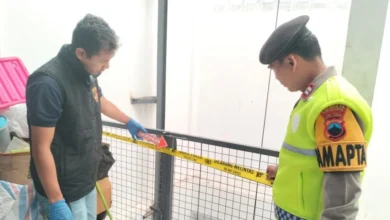
Police in Sragen Uncover Sophisticated Indoor Marijuana Cultivation Operation Utilizing Galon Containers in Sidoharjo District

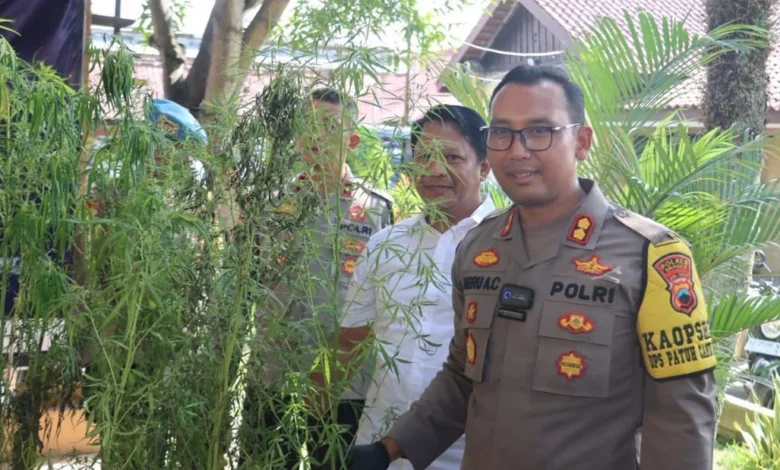
Law enforcement authorities in Central Java have dismantled an illicit narcotics operation following the arrest of a 47-year-old resident in Sidoharjo District, Sragen regency. The suspect, identified by the initials BW, was taken into custody after police discovered a clandestine cultivation site containing 26 marijuana plants ingeniously concealed within the narrow gap between residential properties. The operation, which investigators noted is the first of its kind involving live marijuana trees discovered within the broader Solo Raya region, highlights evolving tactics among domestic drug cultivators attempting to bypass traditional law enforcement detection methods.
The breakthrough occurred on Wednesday, November 4, 2026, following coordinated intelligence gathering and subsequent raids conducted by the Sragen Regional Police. According to official statements released during a press conference at the Sragen Police Headquarters, the operation marks a significant enforcement action against localized drug production networks operating within residential neighborhoods across Central Java.
Chronology of the Investigation and Discovery
The investigation into BW’s activities commenced weeks prior to the raid, triggered by persistent community complaints regarding suspicious behavior. Local residents in the Sidoharjo sub-district had observed indicators suggesting the suspect frequently consumed marijuana, commonly referred to locally as "nyimeng." Concerned citizens formally alerted local law enforcement, prompting a discreet surveillance and intelligence-gathering operation by the Sragen Police narcotics division.
Upon developing sufficient probable cause, investigators descended upon the suspect’s residence. Initially, a preliminary search of the main living areas yielded no immediate evidence of illegal narcotics or active cultivation. However, thorough investigators inspected the architectural layout of the property, specifically focusing on a constrained, blind alleyway situated between BW’s house and an adjacent neighbor’s residence.
This hidden zone was intentionally obstructed from external view by privacy screens and could exclusively be accessed through a single household window belonging to the suspect’s home. There were no exterior doors or pathways leading into the makeshift greenhouse corridor. Upon unlocking and opening the window, officers uncovered a hidden grove of 26 thriving marijuana plants arranged methodically along the narrow gap.
Cultivation Methods and Botanical Timeline
Forensic examination of the cultivation site revealed a calculated and methodical approach to small-scale agricultural drug production. According to police findings, BW initiated the illicit project between April and May 2026 after acquiring raw cannabis seeds from an external source.
The suspect reportedly obtained the seeds from an unidentified individual originally hailing from Aceh—a region historically recognized for domestic cannabis cultivation in Indonesia. The initial connection was made during a public entertainment event held in the Mangkunegaran area of Solo.
Upon securing the viable seeds, BW established a structured germination protocol:
- Initial Germination (April–May 2026): Seeds were initially sown inside a small household basin to encourage sprouting and early root development.
- Transplantation Phase: Once the seedlings reached a height of approximately 6 to 7 centimeters, they were carefully relocated to individual growing containers.
- Growing Medium: The suspect repurposed discarded mineral water gallons, cutting them down and filling them with nutrient-rich soil to serve as independent planters.
- Maintenance and Maturation: The modified gallon containers were arranged in the concealed gap between the two houses, where they received limited sunlight and high privacy. At the time of the police raid, the plants had reached heights of approximately 170 centimeters, boasting an age of four to five months. Investigators noted that the standard harvesting cycle for these specific plants typically spans six to seven months.
Commercial Distribution and Anticipated Usage
Interrogations following the arrest revealed that the scale of the operation extended beyond personal consumption. While BW reportedly maintained a daily habit of consuming the substance twice a day—during morning and evening hours—the sheer volume of the harvest suggested commercial intentions.
Out of the 26 mature plants cultivated in the repurposed containers, one had already been harvested prior to the police raid. Investigators confirmed that a portion of this initial yield had already been processed and sold to a buyer located in the nearby Ngrampal area of Sragen.
Furthermore, the suspect confessed that the remaining bulk harvest was specifically designated for distribution and consumption during the upcoming New Year holiday celebrations. Given the substantial quantity of plants under cultivation, authorities expressed strong suspicion that a significant portion of the final yield was intended for local black-market distribution rather than sole recreational use by the suspect.
Economic Valuations and Regional Significance
The financial implications of the Sidoharjo cultivation site are substantial. Law enforcement estimates indicate that upon full maturity and harvesting, the 26 plants would yield between 2 and 2.5 kilograms of raw or dried usable cannabis.
Based on prevailing illicit market pricing within Central Java, the street value of the total potential harvest is projected to reach approximately IDR 250 million, translating to tens of millions of rupiah per harvest cycle. This high profit margin continues to incentivize individuals to attempt domestic cultivation, bypassing the complexities and risks associated with interstate drug trafficking networks.
Speaking to reporters at the press headquarters, Sragen Police Chief AKBP Heru Antariksa emphasized the unprecedented nature of the case within the region.
"This is the first time we have uncovered an active cultivation site involving mature marijuana trees within the Solo Raya region," stated AKBP Heru Antariksa. "The modus operandi demonstrates a high degree of concealment, utilizing unconventional growing media such as discarded water gallons and exploiting architectural blind spots between residential properties to evade community scrutiny."
Broader Implications and Legal Framework
The dismantling of the Sragen cultivation ring underscores ongoing concerns among Indonesian law enforcement agencies regarding the decentralization of drug production. As border controls and supply chain interdictions tighten along major national transit routes, regional authorities are observing a shift toward localized, micro-scale indoor and urban agriculture. These low-profile operations present unique challenges for community policing, as perpetrators frequently exploit domestic privacy boundaries to mask illegal activities.
Legal analysts and public health advocates note that micro-cultivation poses severe regulatory and security challenges. Unlike bulk smuggling operations that rely on external couriers, localized growing sites can remain hidden for months, supplied entirely through digital communications and transient social contacts established at public events.
Following the collection of evidence—which included the mature plants, cultivation equipment, and residual botanical matter—the suspect was formally charged under stringent national narcotics legislation. BW faces prosecution under Pasal 114 Ayat (2) of Law Number 35 of 2009 on Narcotics, read in conjunction with Law Number 1 of 2023 concerning the Criminal Code (KUHP) and Law Number 1 of 2026 regarding Criminal Penalty Adjustments, alongside subsidiary charges under Pasal 111 Ayat (2) of the Narcotics Law.
Given the severity of the charges associated with the cultivation and distribution of Class I narcotics in quantities exceeding established statutory thresholds, the suspect faces the maximum possible penalties under Indonesian law. These statutory punishments include capital punishment, life imprisonment, or a fixed custodial sentence of up to 20 years.
The Sragen Regional Police have announced plans to expand their investigation to trace the origin of the initial seed supply originating from Aceh, aiming to identify potential accomplices or secondary distribution channels operating across the Solo Raya and surrounding administrative districts.