Honda Officially Unveils the Next-Generation CRF1150L Africa Twin at EICMA 2026, Expanding Its Flagship Adventure Lineup with Three Distinct Variants

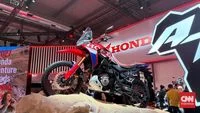
The global adventure motorcycle landscape has shifted once again as Japanese manufacturer Honda officially lifted the veil on the completely redesigned CRF1150L Africa Twin during its world debut at the EICMA 2026 motorcycle exhibition in Milan, Italy. Taking center stage on Tuesday, October 3, the heavy adventure motorcycle arrives with a larger displacement engine, advanced rider-assistance technologies, and a brand-new strategic framework that splits the flagship line into three distinct model variants tailored to diverse riding styles.
Serving as a full model change from its predecessor, the CRF1100L, the newly minted 2027 Africa Twin family is built around the core development philosophy of "Shaped by You. True Adventure for All." By recognizing that modern adventure riders possess vastly different expectations—ranging from trans-continental asphalt touring to aggressive, Dakar-inspired off-road rallying—Honda has engineered each variant to project a specialized character while retaining the robust platform architecture that has made the Africa Twin a market leader.
Comprehensive Evolution and Development Chronology
The journey toward the CRF1150L began years prior, following the market success and widespread acclaim of the CRF1100L platform introduced at the turn of the decade. As emission regulations tightened globally and consumer demand for greater onboard intelligence, active safety features, and specialized off-road performance intensified, Honda’s engineering division initiated a comprehensive overhaul.
Internal testing and prototype development spanned nearly three years, focusing heavily on improving power delivery, reducing overall vehicle weight, and centralizing mass. Engineers revisited every structural component, resulting in a newly designed main steel frame and aluminum swingarm that collectively shed 1.4 kilograms compared to the previous generation. Furthermore, strategic repositioning of key components—such as the integration of a secondary fuel reserve tank beneath the rider’s seat—drastically lowers the center of gravity, significantly enhancing low-speed maneuverability, technical trail handling, and parking-lot confidence.
A More Powerful Heart: The 1,131cc Inline-Twin Engine
At the mechanical core of all three new Africa Twin variants lies an updated, liquid-cooled, parallel-twin powerplant. Displacing 1,131 cc—an increase from the previous generation—the engine boasts a wider bore, optimized combustion chambers, and a raised compression ratio.
The technical refinement yields a peak power output of 87.5 kW (approximately 117 horsepower) delivered at 7,500 rpm, complemented by a substantial maximum torque figure of 119 Nm arriving lower in the rev range at 5,700 rpm. Honda engineers also revised the intake and exhaust flow dynamics, alongside a revised transmission gear ratio spread, ensuring that power delivery remains linear, responsive, and tractable whether navigating loose gravel passes or cruising smoothly on high-speed motorways.
To manage this heightened performance, the motorcycle introduces six comprehensive riding modes. Each preset program dynamically integrates and modulates engine braking, throttle response, traction control, anti-lock braking system (ABS) parameters, automated dual-clutch transmission (DCT) shift points where applicable, and electronic suspension damping across both tarmac and dirt surfaces.
Deconstructing the Three Variants: Standard, Adventure Sports, and Enduro Sports
Recognizing the multifaceted demands of the global adventure community, Honda has diversified the Africa Twin catalog into three unique iterations, each optimized for specific environments.
The Standard Africa Twin acts as the balanced middle ground, bridging long-distance touring capabilities with genuine off-road agility. It features updated chassis geometry, a completely redesigned rider interface, an electrically adjustable windscreen, and a proximity-based Honda Smart Key system. Both the Standard and Adventure Sports models utilize advanced Showa EERA (Electronically Equipped Ride Adjustment) suspension systems developed in partnership with Astemo, integrated seamlessly with Honda’s proprietary Skyhook control algorithms to continuously adapt damping rates in real time based on riding conditions.
Positioned squarely for transcontinental travel, the Adventure Sports variant features an enlarged 24-liter fuel tank and a 19-inch front wheel configuration optimized for stability and high-speed road manners. Crucially, the Adventure Sports serves as the exclusive launchpad for the innovative Honda Sensing Ride system—available strictly on DCT-equipped versions. Utilizing millimeter-wave radar sensors mounted on both the front and rear fascias, this cutting-edge suite introduces Adaptive Cruise Control (ACC) with Stop & Go functionality, Group Ride Assist to maintain safe spacing during club rides, forward collision warnings, blind-spot monitoring, and rear-end collision warnings.
Meanwhile, the newly introduced Enduro Sports variant addresses the fervent demands of purist off-road enthusiasts. Designed for unpaved tracks and demanding trails without sacrificing the foundational touring comfort of the Africa Twin lineage, the Enduro Sports is equipped with heavy-duty front suspension derived directly from the specifications of the CRF450 Rally campaigned in the gruelling Dakar Rally. Visually, it adopts a streamlined "CRF streamline" design language that flows seamlessly from the front fender all the way to the tail section.
Stylistic Evolution and Corporate Sustainability Initiatives
Visually, the standard Africa Twin retains its unmistakable lineage through a refined interpretation of the iconic "Twin Eyes" front lighting arrangement, now housed within a sharper, more compact dual-headlight assembly.
Beyond mechanical and aesthetic updates, the EICMA 2026 debut highlighted Honda’s aggressive push toward comprehensive environmental sustainability. In alignment with the corporation’s overarching goal of achieving 100 percent sustainable materials usage by the year 2050, the new Africa Twin incorporates significant volumes of recycled plastics and polymers. Chemically recycled nylon has been utilized for the upper covers and rear fender mounting areas, while the structural base of the rider’s seat is manufactured using leftover remnants harvested directly from industrial production lines. Furthermore, various body panels incorporate recycled polypropylene sourced from domestic and commercial plastic waste streams, proving that rugged adventure capability and ecological responsibility can coexist.
Broader Market Implications and Industry Outlook
The introduction of the CRF1150L family at EICMA 2026 underscores Honda’s aggressive strategy to fortify its dominance within the fiercely contested heavyweight adventure segment. By subdividing the lineup into distinct functional categories—Standard, Adventure Sports, and Enduro Sports—Honda successfully mitigates the "compromise" often associated with generalist adventure motorcycles.
Industry analysts project that the integration of automotive-grade radar safety systems via Honda Sensing Ride on the Adventure Sports model will set a new benchmark for touring safety, potentially accelerating the adoption of rider-assist technologies across the broader motorcycle industry. Concurrently, the Dakar-derived Enduro Sports directly targets the hardcore adventure racing demographic, ensuring the brand captures market share from specialized European competitors.
As the model year 2027 rollout approaches global dealership networks, the expanded Africa Twin lineup is expected to stimulate robust demand among both veteran globetrotters and weekend trail enthusiasts, cementing the nameplate’s enduring legacy in modern motorcycle history.