MR.DIY Indonesia Empowers Over 8,600 Children Nationwide with STEM Initiatives to Celebrate National Children’s Day 2026

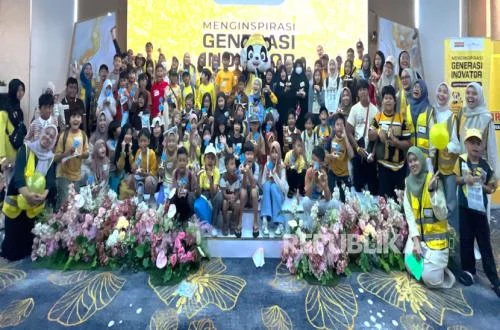
In a significant move to bolster the educational landscape and foster future-ready skills among the youth, retail giant MR.DIY Indonesia has launched its "Inspiring a Generation of Innovators" program, set to reach 8,600 children across the archipelago. The initiative, timed to coincide with National Children’s Day on July 23, 2026, represents a large-scale effort to integrate Science, Technology, Engineering, and Mathematics (STEM) learning into the lives of young Indonesians through an interactive and accessible roadshow. Spanning several major urban and rural hubs, including Jakarta, Bandung, Surabaya, and Banyumas, the program aims to bridge the gap between traditional classroom learning and practical, hands-on experimentation.
The "Inspiring a Generation of Innovators" campaign is designed to stimulate curiosity, creativity, and critical thinking—skills increasingly viewed as essential for the next generation of the global workforce. By deploying specialized STEM Kits, MR.DIY Indonesia provides children with the tools to explore scientific concepts in a fun and engaging environment. This roadshow is not merely a corporate social responsibility (CSR) exercise but a strategic investment in the nation’s human capital, targeting children aged 6 to 15 during a critical period of their cognitive and social development.
A Vision for Interactive Learning and Accessibility
Edwin Cheah, the President Director of MR.DIY Indonesia, emphasized that National Children’s Day serves as a vital momentum for the company to expand its commitment to the growth and development of Indonesian children. According to Cheah, the program is a direct response to the need for more interactive educational experiences that are easily accessible to families from all walks of life. By bringing STEM education directly to schools and public spaces, the company hopes to democratize access to high-quality learning resources.
"The ‘Inspiring a Generation of Innovators’ program is our effort to bring STEM learning closer to Indonesian families, allowing children to learn through direct experiences that are enjoyable, interactive, and easy to access," Cheah stated. He further noted that early exposure to STEM is a prerequisite for nurturing the talents that will lead Indonesia’s innovation in the future. The initiative reflects a belief that every child, regardless of their socioeconomic background, deserves the opportunity to explore their potential and develop the resilience needed to face future challenges.
The focus on STEM is particularly relevant given Indonesia’s current push toward digital transformation and the "Golden Indonesia 2045" vision. As the country seeks to move up the global value chain, the demand for professionals with strong analytical and technical foundations is expected to skyrocket. Programs like these serve as early-stage interventions to spark interest in fields that are often perceived as difficult or unapproachable.
Psychological Benefits: Building Resilience Through Play
The program’s methodology is backed by psychological insights into child development. Hertha Christabelle Hambalie, a Clinical Psychologist and Play Therapist, highlighted the profound impact that STEM-based play can have on a child’s psyche. According to Hambalie, the value of these activities extends far beyond academic knowledge; they are instrumental in building self-confidence and emotional intelligence.
"Playing is the way a child understands the world," Hambalie explained. "Learning-through-play activities using STEM practices provide rich stimulation to build consistency, a never-give-up attitude, and self-confidence." She noted that the design of the STEM Kits used in the roadshow is tailored to specific age groups, ensuring that the challenges are developmentally appropriate. This allows children to experience the "pride of creation"—the sense of accomplishment that comes from building or solving something through their own effort.
Furthermore, the psychologist pointed out that these activities provide a unique bonding opportunity for families. In an era dominated by digital screens, hands-on STEM projects encourage communication and cooperation between parents and children. This collaborative exploration helps strengthen emotional ties while fostering a shared love for learning. By involving parents in the process, the program ensures that the educational impact continues long after the roadshow has left a particular city.
Strategic Partnerships and Geographic Reach
To maximize the impact of the roadshow, MR.DIY Indonesia has entered into several strategic partnerships. In Jakarta, the company collaborated with the non-profit organization Indonesia Mengajar to host events in key public spaces. These venues included Taman Mini Indonesia Indah (TMII), the National Library (Perpustakaan Nasional), the Jakarta Library, and green open spaces such as Tebet Eco Park. In the capital city alone, the program successfully engaged approximately 500 children.
The reach of the "Inspiring a Generation of Innovators" program extends far beyond Jakarta:
- Bandung: The roadshow is set to reach approximately 5,800 children across 10 different schools.
- Banyumas: Around 1,000 children in three schools within the Banyumas Regency will participate in the STEM activities.
- Surabaya: The program will involve 300 children in three schools in East Java’s capital.
One of the most unique aspects of the 2026 campaign is the partnership with the Sriwijaya Air Group. To celebrate National Children’s Day on July 23, MR.DIY Indonesia will distribute 1,000 STEM Kits as special gifts to children traveling on Sriwijaya Air flights. This "learning in the air" initiative aims to turn travel time into an educational opportunity, surprising young passengers with kits that they can work on during their journey or upon arrival at their destination.
Chronology of the Initiative and Long-term Commitments
While the July roadshow marks the peak of the celebration, the "Inspiring a Generation of Innovators" initiative actually began earlier in the year. The program was first launched in April 2026 in Waingapu, East Sumba. Starting the initiative in a region like Sumba underscores the company’s commitment to educational equity, reaching children in areas that may have less access to modern educational tools compared to those in major metropolitan centers on Java.
In addition to the STEM Kit roadshow, MR.DIY Indonesia is engaged in deeper institutional support through its "Teaching Factory" program. This initiative focuses on vocational education by bridging the gap between classroom theory and industrial reality. Currently implemented at SMKN 1 Katapang in Bandung, the Teaching Factory program aims to enhance the competency of both students and teachers by providing them with real-world industrial experience. This dual approach—targeting both young children through STEM Kits and vocational students through industry alignment—demonstrates a comprehensive CSR strategy aimed at different stages of the educational pipeline.
Broader Impact and Educational Implications
The integration of STEM education into informal settings like parks, libraries, and even airplanes reflects a growing trend in global education known as "ubiquitous learning." By removing STEM from the confines of the laboratory or the classroom, MR.DIY is helping to demystify these subjects. This is particularly important in Indonesia, where PISA (Program for International Student Assessment) scores have historically indicated a need for improvement in mathematics and science literacy.
Analysts suggest that such corporate-led initiatives provide a necessary supplement to the formal education system. While the government’s "Merdeka Belajar" (Freedom to Learn) curriculum encourages more flexible and project-based learning, the private sector’s ability to provide high-quality physical resources—like the 8,600 STEM Kits—can significantly accelerate the adoption of these modern pedagogical methods.
Moreover, the emphasis on "soft skills" such as patience, exploration, and adaptation, as mentioned by Hertha Hambalie, aligns with the requirements of the 21st-century economy. In a world where technical knowledge can quickly become obsolete, the ability to learn how to learn and the resilience to fail and try again are the most valuable assets a student can possess.
Conclusion: A Blueprint for Future Innovations
As the "Inspiring a Generation of Innovators" roadshow continues its journey through July 2026, its success will likely be measured not just by the number of kits distributed, but by the long-term interest it sparks in the participants. By reaching 8,600 children in various settings, MR.DIY Indonesia is setting a precedent for how retail brands can play a pivotal role in national development.
The program serves as a blueprint for multi-stakeholder collaboration, bringing together corporate resources, psychological expertise, non-profit logistical support, and the aviation industry to serve a common goal: the empowerment of the Indonesian child. As National Children’s Day 2026 concludes, the hope remains that the seeds of innovation planted in Jakarta, Bandung, Surabaya, and beyond will grow into a robust forest of talent, driving Indonesia toward a brighter, more technologically advanced future. Through the simple act of building a STEM Kit, thousands of children are taking their first steps toward becoming the problem-solvers and leaders of tomorrow.