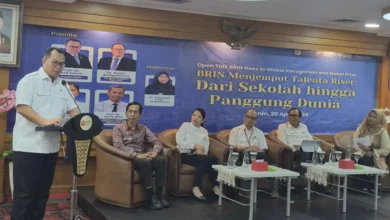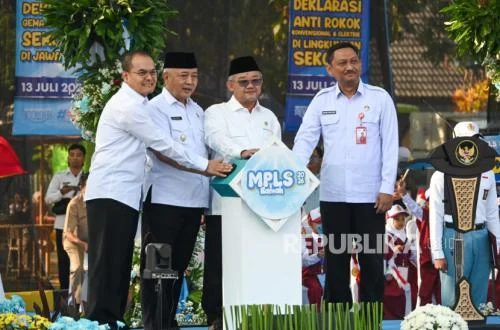
The Indonesian Minister of Primary and Secondary Education (Mendikdasmen), Abdul Mu’ti, has issued a definitive call to action for the nation’s educators, positioning school principals and teachers as the primary architects of a revitalized national education system. Speaking at a formal engagement in Jakarta, the Minister emphasized that the realization of the "Quality Education for All" (Pendidikan Bermutu untuk Semua) vision is fundamentally contingent upon the dedication and competence of those operating on the front lines of the classroom. According to Mu’ti, the quality of the Indonesian education system is not merely a product of policy or curriculum design but is essentially forged through the daily interactions between educators and their students.
This strategic emphasis marks a significant pillar of the current administration’s domestic policy. Minister Mu’ti articulated that education is a sacred constitutional mandate that requires a synchronized, collaborative effort across all levels of governance. From the central government’s policy-making corridors to the regional administration’s implementation and down to the individual school units, a unified approach is necessary to elevate the standard of Indonesian human capital. By placing teachers at the center of this transformation, the Ministry acknowledges that no technological or structural reform can succeed without the human element of inspiration and mentorship.
The Constitutional Mandate and Asta Cita Alignment
Minister Mu’ti’s vision is deeply rooted in the foundational legal framework of the Republic of Indonesia. During his address, he frequently referenced the 1945 Constitution (UUD 1945), specifically Article 31, which stipulates that every citizen has an inherent right to education. He reminded the audience that the very purpose of the Indonesian state, as envisioned by its founding fathers, is to "intellectualize the life of the nation" (mencerdaskan kehidupan bangsa). This historical and legal obligation serves as the guiding light for the Ministry’s current initiatives.
"To be an intelligent nation, the people must receive proper instruction and education," Mu’ti stated. He further explained that the "Quality Education for All" initiative is not an isolated program but a direct implementation of the "Asta Cita"—the eight priority goals established by President Prabowo Subianto and Vice President Gibran Rakabuming Raka. Asta Cita emphasizes the development of superior human resources as a prerequisite for Indonesia to achieve its "Golden Indonesia 2045" vision. By aligning educational goals with these national priorities, the Ministry aims to create a workforce that is not only academically proficient but also competitive on a global scale.
A Framework for Transformation: The Four Pillars
To systematically address the complexities of the Indonesian education system, the Ministry of Primary and Secondary Education has introduced a comprehensive transformation strategy built upon four essential infrastructures: physical, pedagogical, cultural, and legal. This multidimensional approach is designed to ensure that reform is holistic rather than piecemeal.
1. Physical Infrastructure and Digitalization
The government is committed to a massive revitalization of school facilities across the archipelago. This includes the renovation of dilapidated classrooms and the construction of New School Units (USB) in underserved regions to ensure geographical proximity does not remain a barrier to education. Parallel to physical construction is the digital transformation of the classroom. The Ministry is expanding the distribution of Interactive Flat Panels (IFP) and other digital tools to modernize the learning experience. The goal is to bridge the digital divide between urban centers and rural areas, ensuring that a student in a remote village has access to the same digital resources as a student in Jakarta.
2. Pedagogical Infrastructure: Teacher Excellence
Perhaps the most critical pillar is the pedagogical one. Minister Mu’ti highlighted that the government is intensifying efforts to improve teacher quality through scholarship programs, specialized competency training, and a renewed focus on teacher welfare. The Ministry recognizes that a motivated and well-compensated teacher is more likely to provide high-quality instruction. This includes streamlining the certification process and providing more opportunities for professional development, ensuring that teachers are equipped with the latest instructional methodologies.
3. Cultural Infrastructure: Character Education
Beyond academic excellence, the Ministry is prioritizing the "cultural" aspect of education—specifically character building. This is being implemented through innovative programs such as "7 Kebiasaan Anak Indonesia Hebat" (7 Habits of Great Indonesian Children) and "Pagi Ceria" (Cheerful Morning). These programs are designed to instill discipline, integrity, empathy, and a strong work ethic in students from an early age. By integrating these values into the daily school routine and extracurricular activities, the government hopes to produce citizens who are not only smart but also virtuous.
4. Legal Infrastructure: Regulatory Reform
To support these initiatives, the Ministry is working on refining and simplifying regulations. The objective is to create a legal environment that facilitates the equitable distribution of quality educational services. This involves evaluating existing laws to remove bureaucratic hurdles that often prevent schools from innovating or accessing necessary funding. A more robust legal framework will provide the stability needed for long-term educational planning.
Teachers as the Ujung Tombak (Spearhead)
In a poignant moment during his speech, Minister Mu’ti paid tribute to the immense responsibility carried by educators. He described them as the "spearhead" of the nation’s progress. "The role of the ladies and gentlemen here is greater than mine," he said, addressing the teachers and principals. "Because you are the ones present in the classroom. You are the ones who can truly inspire. You are the ones who will give birth to future ministers and leaders of this nation."
This sentiment reflects a shift in the Ministry’s communication strategy, moving toward a more teacher-centric narrative. Analysts suggest that this approach is intended to boost morale within a profession that has often felt undervalued. By empowering principals to be effective managers and teachers to be inspiring mentors, the Ministry hopes to trigger a grassroots revolution in learning outcomes.
Contextualizing the Challenges: Data and Background
The urgency of Minister Mu’ti’s reforms is underscored by Indonesia’s standing in international educational benchmarks. For years, Indonesia’s scores in the Programme for International Student Assessment (PISA) have remained in the lower tiers, particularly in reading, mathematics, and science. The 2022 PISA results indicated a decline in performance, exacerbated by the disruptions of the COVID-19 pandemic. This data serves as a stark reminder that while access to education has improved significantly over the last two decades, the quality of that education remains a critical challenge.
Furthermore, Indonesia faces a significant disparity in educational quality between different regions. While schools in Java often boast modern facilities and highly trained staff, schools in the "3T" regions (frontier, outermost, and disadvantaged) frequently struggle with teacher shortages and crumbling infrastructure. The Ministry’s focus on the four pillars is a direct response to these disparities, aiming to standardize the "minimum service standards" for education across the country.
Chronology of Recent Educational Policy Shifts
The current focus on "Quality Education for All" follows a series of significant policy shifts in the Indonesian education landscape. Under the previous administration’s "Merdeka Belajar" (Freedom to Learn) curriculum, the groundwork was laid for a more flexible and student-centered approach. Minister Mu’ti’s current agenda appears to be an evolution of these concepts, with an added emphasis on the foundational "Asta Cita" and a more structured approach to character education and teacher welfare.
Since taking office, Minister Mu’ti has conducted a series of "field listening" tours, meeting with education stakeholders, including the Indonesian Teachers Association (PGRI) and various educational foundations. These meetings have highlighted several recurring themes: the need for better teacher protection laws, the simplification of administrative burdens on teachers, and the necessity of a more stable curriculum that does not change with every change in leadership.
Reactions and Implications
The Minister’s statements have been met with a mixture of optimism and cautious expectation from the educational community. Unifah Rosyidi, the Chairperson of PGRI, has previously noted that while infrastructure and digitalization are important, the "human factor" remains paramount. Educational experts have pointed out that for the "7 Habits" and "Pagi Ceria" programs to be effective, they must be more than just symbolic gestures; they must be deeply integrated into the school culture.
The implications of this policy shift are profound. If successful, the focus on teacher quality and character education could lead to a significant improvement in Indonesia’s human capital index. In the long term, this would translate into a more competitive workforce, capable of driving the nation’s transition into a high-income economy. However, the scale of the task is enormous. With over 3 million teachers and more than 50 million students spread across thousands of islands, the logistical and financial requirements for this transformation are staggering.
The Ministry’s commitment to "Quality Education for All" also suggests a move toward more inclusive education. By focusing on "all," the government is signaling that students with disabilities, those in poverty, and those in remote areas must not be left behind. This inclusivity is essential for maintaining social cohesion and ensuring that the benefits of national development are shared by all citizens.
Looking Ahead: The Path to 2045
As the Ministry of Primary and Secondary Education moves forward with its four-pillar strategy, the eyes of the nation will be on the implementation phase. The success of the "Quality Education for All" vision will be measured not just by the number of tablets distributed or schools renovated, but by the measurable improvement in student learning outcomes and the professional satisfaction of the nation’s educators.
Minister Abdul Mu’ti’s message remains clear: the future of Indonesia is being written today in the classrooms of every village and city. By positioning teachers and principals as the central figures in this narrative, the government is betting on the transformative power of education to secure the nation’s destiny. The journey toward "Golden Indonesia 2045" is long, but with a renewed focus on quality, character, and the "spearheads" of education, the path forward is becoming increasingly defined.