Legal Framework and Criminal Code Provisions Regarding Sexual Orientation and LGBT Status in Indonesia Under the New National Penal Code

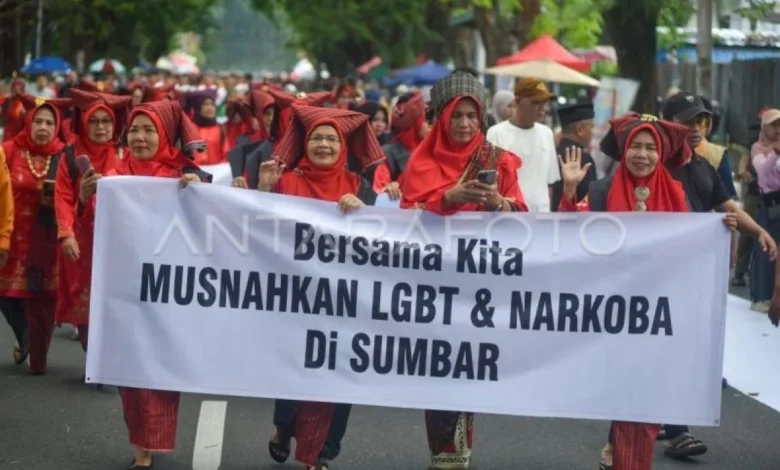
The legal status of lesbian, gay, bisexual, and transgender (LGBT) individuals in Indonesia has once again become a focal point of intense public discourse as the nation prepares for the full implementation of its new National Penal Code. Amidst a complex landscape of traditional values, religious interpretations, and modern legal reform, the Indonesian government has clarified the boundaries of its criminal justice system regarding sexual orientation. Under the current and forthcoming legislative framework, the fundamental principle remains that an individual’s sexual orientation or gender identity does not, in itself, constitute a criminal offense. However, the law maintains strict regulations regarding specific sexual conducts and public morality, which apply to all citizens regardless of their orientation.
To understand the nuances of this legal position, it is essential to examine Law Number 1 of 2023 concerning the Criminal Code (KUHP), which was officially enacted on January 2, 2023, and is slated to become fully effective on January 2, 2026. This comprehensive reform replaces the colonial-era Wetboek van Strafrecht, which had been in place since the Dutch era. A primary takeaway from this new legislation is the absence of any article that criminalizes the status of being LGBT. The Indonesian legal system operates on the principle of the act (daadstrafrecht) rather than the person’s identity. Consequently, a person cannot be prosecuted or imprisoned simply for identifying as a member of the LGBT community.
The Principle of Legality and the Scope of the New KUHP
The bedrock of Indonesia’s criminal justice system is the principle of legality, enshrined in Article 1, Paragraph (1) of Law Number 1 of 2023. This article dictates that no act can be punished unless there is a pre-existing legal provision that defines it as a criminal offense. Because the new KUHP does not explicitly list sexual orientation or LGBT identity as a crime, any attempt to prosecute an individual based solely on these traits would be a violation of the law.
Legal experts and government officials from the Ministry of Law and Human Rights have repeatedly emphasized that the focus of the new KUHP is on "actions" (actus reus) rather than "status." This means that while being gay or transgender is not a crime, specific behaviors that are deemed to violate public decency, the rights of others, or the sanctity of marriage are subject to legal sanctions. These sanctions are applied universally, meaning they do not target LGBT individuals specifically but rather any person who meets the criteria of the prohibited act.
Analysis of Decency Crimes: Adultery and Cohabitation
The public debate surrounding the "criminalization" of LGBT status often stems from a misunderstanding of the provisions regarding decency and morality. Two of the most discussed sections of the new KUHP are Article 411 and Article 412.
Article 411 addresses the crime of adultery. It stipulates that any person who engages in sexual intercourse with someone who is not their legal spouse can be sentenced to a maximum of one year in prison or a Category II fine. However, a critical safeguard is built into this law: it is an absolute complaint offense (delik aduan absolut). This means the police cannot initiate an investigation or prosecution unless a formal complaint is filed by a direct family member—specifically a spouse, a parent, or a child. If a person is unmarried, only their parents or children have the legal standing to report them.
Similarly, Article 412 regulates cohabitation, or "living together as husband and wife outside of marriage." This carries a maximum penalty of six months in prison. Like the adultery provision, this is also an absolute complaint offense. These articles were designed to strike a balance between the state’s interest in upholding moral values and the individual’s right to privacy. By making these crimes complaint-based, the law prevents the state or third-party "morality groups" from conducting raids or intrusive surveillance on private citizens.
While some critics argue that these laws could indirectly impact LGBT couples—since same-sex marriage is not legally recognized in Indonesia—the legal reality remains that the law applies to all unmarried couples, including heterosexual ones. The crime is defined by the lack of a legal marriage bond, not by the gender of the participants.
The Special Case of Aceh: Sharia Law and Regional Autonomy
It is vital to distinguish between national law and the specific regulations found in the Province of Aceh. Due to its status as a special autonomous region, Aceh has the authority to implement Sharia-based legislation, known as Qanun. Under Qanun Aceh Number 6 of 2014 concerning Jinayat (Islamic Criminal Law), the legal landscape is significantly different from the rest of Indonesia.
In Aceh, consensual same-sex relations (referred to as liwath for men and musahaqah for women) are classified as jarimah (crimes) and are punishable by public caning, fines, or imprisonment. This regional law applies to all Muslims in Aceh and, in some cases, non-Muslims who opt for Sharia law or commit acts not regulated by the national code in the region. However, it is a legal error to generalize Aceh’s local regulations as being representative of Indonesian national law. Outside the borders of Aceh, the national KUHP remains the supreme criminal authority, and it does not recognize same-sex relations between consenting adults as a crime.
The Role of the Sexual Violence Crime Law (TPKS)
In addition to the new KUHP, the legal landscape regarding sexual behavior is heavily influenced by Law Number 12 of 2022 concerning Sexual Violence Crimes (TPKS). This landmark legislation was passed to provide better protection for victims of sexual abuse and harassment. The TPKS Law is gender-neutral and orientation-neutral. It focuses on the protection of bodily autonomy and the prevention of non-consensual acts.
Under the TPKS Law, any form of sexual violence—whether committed against a man, a woman, or a member of the LGBT community—is a serious crime. Conversely, it also means that LGBT individuals who are victims of sexual violence have the same legal standing to seek justice as any other citizen. This law reinforces the idea that the Indonesian legal system is moving toward protecting individuals from harm while maintaining a distinction between private consensual behavior and criminal violence.
Chronology of the Legislative Reform
The journey toward the new KUHP was a decades-long process that reflected the shifting political and social climate of Indonesia.
- 1960s – 1980s: Early discussions began regarding the need to "decolonize" the Indonesian legal system.
- 2019: A draft of the RKUHP (Revised Penal Code) faced massive student-led protests across the country. Protesters were concerned about articles regarding "vagrancy," "insulting the president," and "morality laws" that they feared would lead to over-criminalization.
- 2020 – 2022: The government and the House of Representatives (DPR) conducted "meaningful participation" sessions, engaging with religious groups, human rights NGOs, and legal scholars to refine the draft.
- December 2022: The DPR officially passed the bill into law.
- January 2023: President Joko Widodo signed Law Number 1 of 2023.
- 2023 – 2026: A three-year transition period was established to socialize the law to law enforcement, the judiciary, and the general public before it takes full effect.
Responses from Government and Societal Stakeholders
The interpretation of LGBT status under the law has drawn various reactions. The Ministry of Religious Affairs (Kemenag) has focused on the educational and moral aspects, recently announcing the development of educational materials aimed at "preventing the spread of LGBTQ behavior" through a religious and family-values lens. This highlights a dual approach in Indonesia: while the legal system (via the Ministry of Law and Human Rights) maintains a stance of non-criminalization of status, other government branches continue to promote traditional social norms.
On the local government level, reactions have been more varied. In West Java, for instance, former Deputy Governor Uu Ruzhanul Ulum once made headlines by suggesting that civil servants (ASN) found to be involved in "LGBT networks" could face administrative sanctions, including dismissal. Such statements illustrate the tension between national legal protections and local administrative or social policies.
Human rights organizations, such as KontraS and various legal aid institutes (LBH), have expressed cautious optimism regarding the "complaint-based" nature of the new morality laws, which limits the potential for arbitrary arrests. However, they remain vigilant about how these laws might be used at the local level or how they might affect marginalized groups who are less likely to have access to legal defense.
Broader Implications and Fact-Based Analysis
The decision not to criminalize LGBT status in the national KUHP is a significant legal milestone for Indonesia. It preserves the constitutional right to equality before the law as stipulated in Article 27 of the 1945 Constitution. By focusing on "actions" rather than "identity," the Indonesian state avoids a direct conflict with international human rights standards while still acknowledging the conservative values of the majority of its population through the regulation of adultery and cohabitation.
However, the legal distinction between "status" and "action" remains a fine line. While a person cannot be arrested for being gay, the lack of legal recognition for same-sex partnerships means that many LGBT individuals live in a state of legal "limbo" where they are not criminals but are also not granted the same civil protections as married couples (such as inheritance rights or joint insurance).
Furthermore, the three-year transition period leading up to 2026 is critical. It serves as a window for the government to ensure that law enforcement agencies—including the police and prosecutors—fully understand that they cannot use the new KUHP to persecute individuals based on their sexual orientation. The success of this new legal framework will depend on its implementation and whether the "absolute complaint" requirement is strictly followed to prevent the "vigilante justice" that has occasionally occurred in the past.
In conclusion, the current legal standing in Indonesia is clear: there is no national law that criminalizes an individual for identifying as LGBT. The new Penal Code (Law 1/2023) upholds the principle of legality, ensuring that only specific, predefined acts can be punished. While the provincial laws in Aceh offer a starkly different reality due to regional autonomy, the national trajectory remains focused on a unified criminal code that prioritizes the regulation of conduct over the policing of identity. As the 2026 effective date approaches, the focus shifts from the text of the law to the training of those who will enforce it, ensuring that the private lives of all Indonesian citizens remain protected from undue state interference.