Harley-Davidson Sprint 440: A New Era of Accessible Performance and Global Strategic Expansion


Harley-Davidson has officially unveiled the Sprint 440, a motorcycle that signals a paradigm shift in the brand’s global strategy, targeting a younger, performance-oriented demographic while maintaining the legendary aesthetic that has defined the Milwaukee-based manufacturer for over a century. The introduction of this model, developed in strategic collaboration with Indian motorcycle giant Hero MotoCorp, marks a significant milestone in Harley-Davidson’s objective to penetrate emerging markets while offering a lightweight, agile, and competitively priced option for riders globally.
The unveiling, which took place in early November 2026, serves as a precursor to the motorcycle’s high-profile appearance at the EICMA Milan 2026 exhibition. By merging Harley-Davidson’s iconic design heritage with the manufacturing efficiency of Hero MotoCorp, the Sprint 440 stands as a testament to the brand’s pivot toward diversification.

Engineering and Performance Specifications
At the heart of the Sprint 440 lies a robust 440cc single-cylinder engine, meticulously engineered with an oil and air-cooling system to ensure thermal efficiency under diverse riding conditions. This power plant is tuned to deliver a maximum output of 27 horsepower at 6,000 rpm, paired with a substantial torque figure of 38 Nm at 4,000 rpm. These figures are specifically calibrated to provide a responsive mid-range punch, making the machine ideal for both congested urban environments and spirited highway cruising.
The power delivery is managed through a six-speed manual transmission, which incorporates an assist and slipper clutch. This integration is a critical feature, designed to mitigate rear-wheel lock-up during aggressive downshifting, thereby enhancing rider safety and comfort. This mechanical sophistication ensures that the Sprint 440 is not merely an entry-level offering, but a refined machine capable of delivering a high-quality riding experience.
Dimensions and Ergonomic Profile
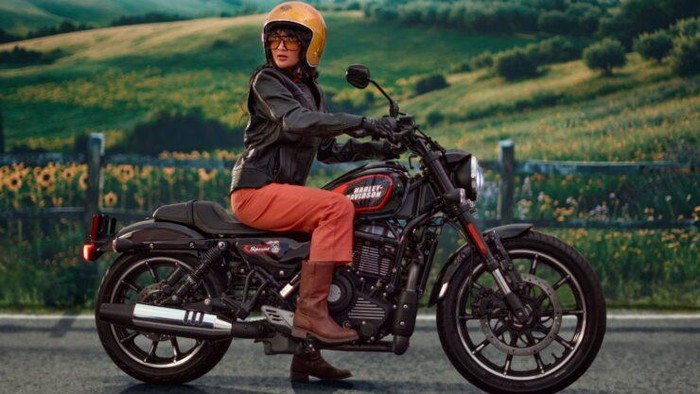
One of the most compelling aspects of the Sprint 440 is its accessibility. With a wet weight of only 187 kg, the motorcycle is remarkably light for its displacement class, providing an agile handling profile that contrasts with the traditional heavy-cruiser reputation of the Harley-Davidson brand.

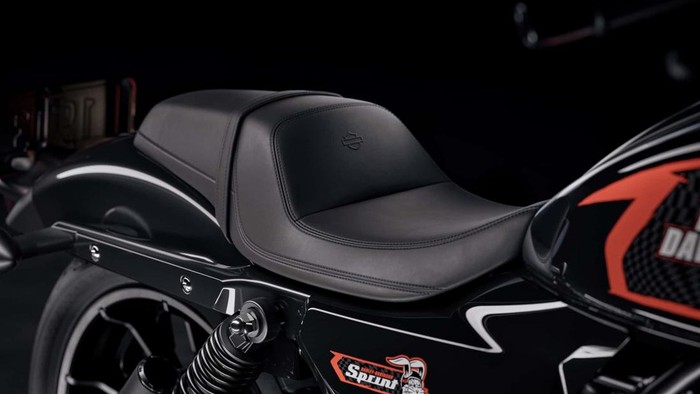
The ergonomic design is equally inclusive. A low seat height of 671 mm ensures that a wide range of riders—regardless of stature—can comfortably place both feet firmly on the ground, which is a major advantage for riders navigating dense city traffic or those new to the motorcycling hobby. The nine-liter fuel tank, while modest, is sufficient for the intended urban and short-touring utility of the bike, maintaining a slim profile that contributes to the motorcycle’s overall sleek, fastback-inspired aesthetic.
Advanced Chassis and Safety Systems
The structural integrity of the Sprint 440 is underpinned by a high-performance suspension setup. The front end is equipped with 43 mm upside-down forks offering 130 mm of travel, providing stability and precision during cornering. The rear features a dual-shock configuration with a seven-step adjustable preload system, allowing riders to tailor the damping characteristics to their specific weight or load requirements.
Safety is prioritized through a comprehensive braking system. The front wheel is slowed by a 320 mm disc gripped by a two-piston caliper, while the rear features a 240 mm disc with a single-piston caliper. Standard anti-lock braking system (ABS) technology is integrated, ensuring optimal stopping power and stability on various road surfaces. The motorcycle rolls on 10-spoke aluminum wheels, sized 19 inches at the front and 17 inches at the rear, striking a balance between classic cruiser aesthetics and modern performance geometry.
Aesthetic Design and Digital Integration
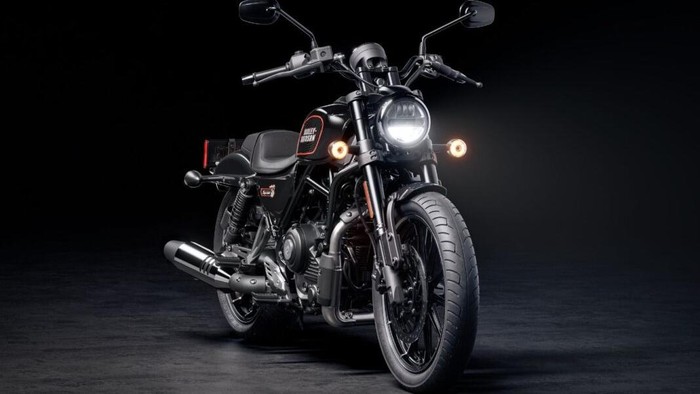
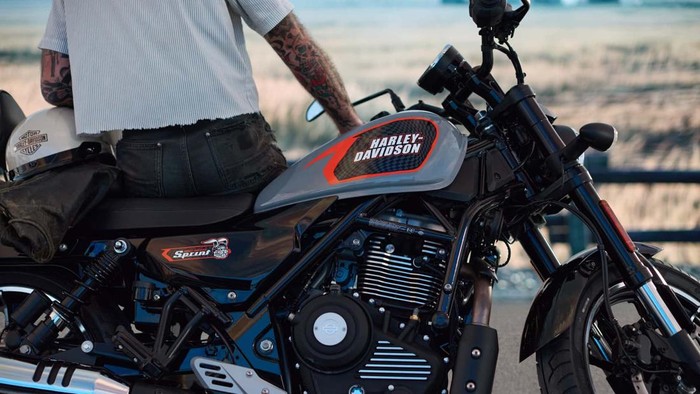
Visually, the Sprint 440 remains unmistakably a Harley-Davidson. It incorporates signature design elements such as a classic round headlight housing, a deeply sculpted fuel tank, and a short, sporty rear fender. The color palette offered at launch—Dark Billiard Gray, Vivid Black, and Teal Thunder—reflects the brand’s commitment to timeless, understated elegance.
Despite its classic silhouette, the Sprint 440 is equipped with contemporary technology. The lighting system is fully LED, providing superior visibility. The cockpit features a 3.5-inch color TFT display that serves as the command center, delivering essential telemetry including speed, rpm, odometer, and trip data. Furthermore, acknowledging the needs of the modern rider, the bike includes a USB-C charging port mounted near the headlight, facilitating the seamless use of navigation devices or smartphones during transit.
The Strategic Partnership with Hero MotoCorp
The development of the Sprint 440 is the direct result of a strategic partnership between Harley-Davidson and Hero MotoCorp. This alliance is part of a broader industrial trend where heritage brands partner with high-volume manufacturers to optimize production costs and reach new geographical markets.
By utilizing Hero’s manufacturing infrastructure in India, Harley-Davidson is able to achieve a price point that was previously unattainable for a brand with such high global brand equity. Industry analysts suggest that the pricing strategy for the Sprint 440, which is expected to be highly competitive—potentially around the equivalent of USD $2,500 to $3,000 (roughly IDR 40 million based on regional currency conversions)—could disrupt the middleweight motorcycle segment. This aggressive pricing is designed to capture market share from established Japanese and European competitors in the 300cc–500cc bracket.
Market Implications and Future Outlook
The launch of the Sprint 440 represents a pivot in the brand’s trajectory. For decades, Harley-Davidson was synonymous with large-displacement, heavy-weight touring machines. However, global market data indicates a growing consumer demand for motorcycles that are easier to handle, more fuel-efficient, and suitable for the rapidly urbanizing environments of Asia and South America.
The "Sprint" moniker itself implies a departure from the "laid-back" cruising culture, hinting at a more dynamic, active lifestyle. By introducing this model, Harley-Davidson is effectively lowering the barrier to entry for prospective owners. The implications for the brand are two-fold: it rejuvenates the demographic of the brand’s customer base by attracting younger riders, and it establishes a foothold in the high-growth motorcycle markets where brand loyalty is currently being forged.
Furthermore, the integration of high-spec components—such as the upside-down forks and TFT instrumentation—indicates that the company is not willing to compromise on quality even in its more affordable offerings. This strategy is likely to pay dividends in terms of brand perception, as the Sprint 440 will be viewed as a premium product within its specific price category.
Conclusion and Global Expectations
As the Sprint 440 prepares for its formal debut at EICMA Milan 2026, the global motorcycling community is watching with significant interest. The motorcycle serves as a barometer for whether a heritage brand can successfully expand its reach without diluting its core identity. With its blend of accessible ergonomics, reliable performance, and modern technology, the Sprint 440 is positioned to be a cornerstone of Harley-Davidson’s portfolio for the coming years.
While the primary focus is on the Indian market, where the motorcycle is anticipated to become the most affordable entry-point into the brand’s ecosystem, there is clear potential for expansion into Southeast Asian and Latin American markets. The successful execution of this model could serve as a blueprint for future collaborations, potentially leading to a broader range of mid-displacement machines that maintain the Harley-Davidson soul while meeting the pragmatic requirements of the global commuter.
As the industry moves toward a future defined by electrification and increasingly modular manufacturing processes, the Sprint 440 stands as a bridge—a machine that respects the past while embracing the logistical and economic realities of the present. Whether it succeeds in its mission to redefine the entry-level premium motorcycle segment will depend on its real-world performance and the continued ability of the partnership between Harley-Davidson and Hero MotoCorp to maintain high-quality production standards. For now, the Sprint 440 represents a bold, calculated, and highly anticipated step forward for one of the most storied names in automotive history.