Global Geopolitical Shifts: Israeli Coalition Dynamics, US-Iran Tensions, and G20 Economic Warnings Shape the International Landscape


International diplomacy, shifting legislative majorities, and escalating security warnings dominated global headlines over the weekend. From the complex political calculus unfolding in Israel following recent legislative outcomes to heightened rhetorical standoffs between Washington and Tehran, and critical economic security warnings delivered by Indonesia at the G20 Foreign Ministers’ Meeting, the global community faces a convergence of interconnected crises. These developments underscore the fragile state of international security, regional stability, and the global economic architecture as nations navigate overlapping conflicts and domestic political realignments.
Israeli Political Realignment: The Joint List Strategy and the Push to Oust Netanyahu
The aftermath of recent political movements in Israel has introduced a nuanced dynamic into the country’s legislative landscape. Gadi Eisenkot, a prominent figure in the ongoing efforts to form an alternative governing coalition, faces a complex path toward securing a parliamentary majority. Central to this political chess match is the stance adopted by the Joint List, an alliance of Arab-majority parties in the Knesset, which has officially announced its decision not to formally join Eisenkot’s prospective coalition.
Rather than seeking cabinet positions or direct integration into a governing bloc, the Joint List has opted for an external support strategy. This tactical maneuver is primarily designed to prevent Prime Minister Benjamin Netanyahu from retaining his position at the helm of the Israeli government. By operating outside the formal coalition agreement, the Arab-majority alliance aims to bypass the intense ideological friction and resistance often generated by far-right and conservative factions within the Israeli political spectrum regarding the inclusion of Arab parties in governance.
Ahmad Tibi, leader of the Joint List, elaborated on this calculated decision during an interview on Meet the Press. He emphasized that the alliance’s primary objective is to streamline the coalition-building process for Eisenkot rather than encumber it with the polarizing debates typically triggered by right-wing opposition to Arab political integration.
"We won’t be part of the government. We want the coalition process to be easier, not more difficult," Tibi stated, articulating a pragmatic approach aimed at achieving a leadership transition.
Political analysts note that this strategy reflects a pragmatic maturity within the Joint List leadership. By offering conditional, outside-the-tent backing, the alliance effectively lowers the political hurdles for center-left and moderate factions attempting to unify against Netanyahu. However, managing this unspoken alliance presents its own set of challenges for Eisenkot, who must carefully balance the demands of Zionist opposition parties with the tacit legislative reliance on Arab lawmakers to secure a parliamentary majority.
Escalating Rhetoric: Iran Warns of a Prolonged Conflict Amid Fresh US Threats
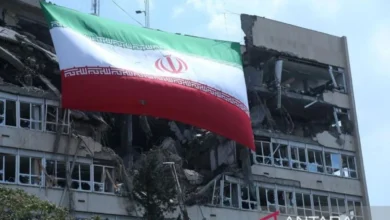
In the Middle East, geopolitical tensions have reached a critical juncture following renewed warnings from Tehran regarding the potential outbreak of a protracted military conflict with the United States. This heightened state of alert comes in direct response to statements made by U.S. President Donald Trump, who recently suggested that Washington still maintains a series of unresolved strategic targets concerning Iran’s regional posture and nuclear ambitions.
The exchange of warnings has heightened fears of a broader military confrontation that could destabilize an already volatile region. Responding to the American rhetoric, Iranian military officials delivered a stark caution regarding the nature and duration of any future hostilities.
Speaking through Iranian state television, military spokesperson Mohammad Akraminia asserted that any new war initiated against the Islamic Republic would not follow the predictable or limited trajectories of past engagements. Instead, Tehran warned that a renewed conflict would likely extend significantly over a prolonged period, challenging the strategic assumptions of Western planners.
"The war that may happen in the future could last much longer than previous conflicts. The President of the United States will not be in a position to determine the time or the conditions for the end of that war," Akraminia declared.
This assertive posture highlights Iran’s reliance on asymmetric deterrence strategies, designed to impose high costs on adversary nations through prolonged attrition rather than conventional battlefield dominance. Strategic defense analysts point out that Tehran’s leadership appears eager to signal that any military escalation would yield severe economic and strategic consequences for Washington and its regional allies, particularly given the vulnerability of vital maritime shipping lanes and energy infrastructure in the Persian Gulf.
The friction between Washington and Tehran continues to cast a long shadow over diplomatic efforts aimed at reviving nuclear negotiations or establishing regional de-escalation frameworks. With both sides entrenched in firm deterrence postures, the risk of miscalculation remains a primary concern for international observers and regional governments alike.
G20 Foreign Ministers’ Meeting: Indonesia Links Economic Prosperity to Global Peace
While Middle Eastern security dynamics and Israeli domestic politics dominated headlines in the West, economic security and multilateral diplomacy took center stage at the G20 Foreign Ministers’ Meeting (FMM) held in Atlanta, United States. Representing Indonesia, Foreign Minister Arrmanatha Nasir delivered a forceful address during the opening plenary session, emphasizing the inseparable link between geopolitical stability and sustainable global economic growth.
Amid a backdrop of fractured supply chains and persistent macroeconomic headwinds, Arrmanatha underscored that the international community cannot achieve meaningful economic development or financial resilience in an environment defined by conflict and strategic competition. His remarks served as a direct call to action for the world’s leading economies to prioritize diplomatic resolutions and international law.
"In the first plenary session of the G20 Foreign Ministers’ Meeting in Atlanta, I emphasized that there is no economic growth without peace and stability," Arrmanatha stated via social media channels following the session.
The Indonesian foreign minister specifically drew attention to critical maritime choke points that have become flashpoints for geopolitical rivalry and military friction, including the Strait of Hormuz, the Black Sea, and the Red Sea. He noted that ongoing disruptions in these vital commercial arteries have severely compromised global trade flows, threatening international energy security and exacerbating food insecurity across developing and developed nations alike.
Arrmanatha’s intervention resonates deeply within the broader context of contemporary international relations, where supply chain weaponization and economic coercion have increasingly complemented traditional military instruments. By highlighting the cascading effects of regional conflicts on ordinary citizens worldwide, Indonesia reiterated its traditional stance of active, independent diplomacy aimed at bridging divides between major global powers within multilateral forums like the G20.
Chronology of Events
The convergence of these events over a single weekend highlights the rapid pace of international developments:
- Friday, October 30: Preparations begin for the G20 Foreign Ministers’ Meeting in Atlanta, setting the stage for high-level multilateral discussions on global security and economic stability.
- Saturday, October 31:
- During the opening plenary of the G20 FMM, Indonesian Foreign Minister Arrmanatha Nasir delivers a keynote address linking economic prosperity directly to geopolitical stability, citing disruptions in the Red Sea, Black Sea, and Strait of Hormuz.
- Joint List leader Ahmad Tibi announces in a Meet the Press interview that his alliance will support Gadi Eisenkot’s coalition from the outside to ensure the removal of Benjamin Netanyahu, while avoiding formal cabinet integration.
- Sunday, November 1:
- Following remarks by U.S. President Donald Trump concerning outstanding strategic targets, Iranian military spokesperson Mohammad Akraminia issues a formal warning via state television that any future war with the United States will be protracted and entirely outside Washington’s control to conclude.
Broader Implications and Strategic Analysis
The simultaneous unfolding of these three geopolitical storylines illustrates the fragile interconnectedness of modern international relations. The political maneuvers in Israel reflect the exhaustion of traditional coalition frameworks, demonstrating how deeply polarized societies must employ unconventional legislative strategies—such as external parliamentary support across ethnic and ideological divides—to achieve fundamental changes in executive leadership.
Concurrently, the escalating war of words between Washington and Tehran demonstrates the persistent danger of unmanaged escalation in the Middle East. As rhetoric hardens, the margin for diplomatic error diminishes, raising the specter of a broader conflagration that could fundamentally disrupt global energy markets and security architectures.
Finally, Indonesia’s intervention at the G20 serves as a crucial reminder that localized military conflicts carry profound systemic costs for the global economy. As maritime trade routes face mounting threats, the international community is reminded that financial stability, food security, and energy access are ultimately contingent upon the maintenance of global peace and adherence to multilateral frameworks. Together, these events paint a complex picture of a world navigating a difficult transition toward new geopolitical and economic equilibria.