Iran Unveils Strategic Proposal to Reopen the Strait of Hormuz Following High-Level Coordination with Supreme Leader Mojtaba Khamenei

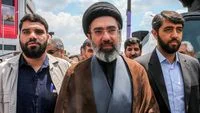
Jakarta, CNN Indonesia — In a significant diplomatic development that could reshape geopolitical dynamics in the Middle East, Iranian President Masoud Pezeshkian announced that Tehran has formulated a comprehensive new strategic plan aimed at reopening the critical Strait of Hormuz. Speaking in a high-profile interview with the United States-based television network CBS, President Pezeshkian emphasized that the initiative has received full endorsement and coordination from Iran’s Supreme Leader, Mojtaba Khamenei. The televised remarks, which were subsequently disseminated by the official Iranian state news agency IRNA, signal a potential turning point in maritime security and regional stability after months of escalating friction.
The Strait of Hormuz serves as an indispensable artery for international trade and global energy supplies, acting as the primary maritime bottleneck connecting the Persian Gulf with the Gulf of Oman and the Arabian Sea. For nearly seven months, the vital waterway has stood at the epicenter of acute diplomatic and military friction between Tehran and Washington. President Pezeshkian’s recent disclosures shed light on an internal restructuring of Iran’s foreign policy apparatus designed to address the crisis decisively. According to the Iranian leader, a specialized six-person negotiating task force has been established with sweeping mandates to navigate the complexities of reopening the strait. This multidisciplinary body comprises high-ranking representatives from diverse state institutions, incorporating vital stakeholders from the military establishment, the legislative parliament, and the executive government to ensure a unified national stance.
Strategic Context and Chronology of the Crisis
The origins of the current impasse trace back nearly seven months, marked by a steady deterioration of maritime security and a series of naval standoffs in and around the Persian Gulf. The tensions intensified following a breakdown in diplomatic communications and the tightening of unilateral economic measures imposed by Washington, which prompted reciprocal countermeasures from Tehran affecting commercial shipping lanes. Throughout this period, international energy markets have remained on high alert, reacting nervously to any rhetoric or military posture that threatened to choke off the transit of a substantial portion of the world’s liquefied natural gas and petroleum shipments.
The formation of the six-member task force represents a departure from traditional bureaucratic delays, empowering Iranian officials with direct decision-making authority. By securing the explicit blessing of Supreme Leader Mojtaba Khamenei, President Pezeshkian has effectively insulated the diplomatic initiative from internal hardliner pushback, ensuring that any tentative agreement reached with Western counterparts carries the highest level of state sanction. "Coordination with the leader of the revolution has been meticulously executed," Pezeshkian affirmed during the CBS interview. He further outlined the reciprocal nature of the proposal, stating that Iran stands fully prepared to honor its commitments provided that the United States demonstrates a corresponding willingness to fulfill its obligations. "If the United States accepts it and honors its obligations, we will act in kind, and there will be no remaining issues in this regard."
Core Demands and Structural Requirements of the Proposal
The newly unveiled Iranian proposal is not merely a localized maritime arrangement; it is tied to broader geopolitical and economic concessions across the Middle East. Iranian Foreign Minister Abbas Araghchi elaborated on the structural parameters of the plan, noting that its foundational requirements closely mirror the tenets of a provisional memorandum of understanding previously negotiated between Tehran and Washington in June.
Central to the Iranian proposal is a mandatory cessation of all active military and economic hostilities throughout the wider Middle East region. Furthermore, Tehran has outlined three critical financial and strategic demands that must be met before full implementation of the maritime accord can proceed:
- The immediate unfreezing of Iranian sovereign assets held in international accounts, estimated to be valued at no less than $12 billion.
- The complete lifting of comprehensive unilateral economic sanctions targeting Iran’s crucial petroleum and oil export sectors.
- The immediate cessation of the ongoing naval blockade and aggressive posture maintained by the United States Armed Forces against Iranian vessels in international waters.
Economic Significance of the Strait of Hormuz
To fully comprehend the gravity of President Pezeshkian’s announcement, one must examine the staggering economic importance of the Strait of Hormuz. Statistics from international energy agencies indicate that roughly one-fifth of the world’s petroleum consumption passes through this narrow passage daily, making it the world’s single most important oil transit chokepoint. At its narrowest point, the channel is merely 21 miles wide, with inbound and outbound shipping lanes each only two miles wide, separated by a two-mile buffer zone. Any disruption, restriction, or closure of this corridor invariably triggers immediate, severe spikes in global crude oil prices, rippling through supply chains and stoking inflationary pressures worldwide. Consequently, the prospect of reopening the strait through a formalized bilateral understanding between Washington and Tehran has immense implications for global economic stability.
International Reactions and the Response from Washington
Despite the optimism projected by Tehran regarding the feasibility of the new diplomatic track, the response from Washington remains opaque and complex. As of late Saturday, the official apparatus of the United States government has refrained from issuing a formal, public statement regarding the specifics of the proposal. However, diplomatic sources and intelligence reports leaking from Washington suggest that the administration of US President Donald Trump has exhibited considerable skepticism, with early indications pointing toward a rejection of the terms as currently drafted.
The reluctance of Washington to embrace the Iranian proposal stems largely from deep-seated political resistance to unfreezing significant financial assets and lifting stringent petroleum sanctions without receiving ironclad, verifiable concessions regarding Iran’s broader regional behavior and nuclear enrichment program. Critics of the plan within the US political establishment argue that granting sanctions relief and releasing $12 billion in blocked funds would provide Tehran with immediate economic resuscitation without dismantling its asymmetric deterrence capabilities in the region.
Analytical Implications for Regional Security
Geopolitical analysts monitoring the situation suggest that while the public unveiling of the proposal and the high-level backing of Supreme Leader Mojtaba Khamenei represent a notable diplomatic overture, the path to implementation remains fraught with hurdles. The inclusion of military representation within Iran’s negotiating team underscores that national security concerns remain paramount to Tehran’s calculus, ensuring that any reopening of the Strait of Hormuz will be strictly conditioned upon verifiable relief from economic strangulation.
Conversely, the reported hesitation from the Trump administration highlights the ongoing challenge of bridging the wide trust deficit that has defined US-Iran relations for decades. For the diplomatic track to transition from a rhetorical overture into a substantive treaty, both capitals will need to engage in rigorous back-channel negotiations to reconcile their fundamentally divergent interpretations of regional security, sovereignty, and economic compliance. Until a formal dialogue is officially established, global energy markets and international shipping corporations will continue to monitor developments in the Persian Gulf with cautious vigilance, acutely aware that the stability of global trade hangs in the balance.
Related posts: