Firefighters in Semarang Successfully Extinguish Blaze at Jatibarang Landfill Upper Zone Following Rapid Emergency Response

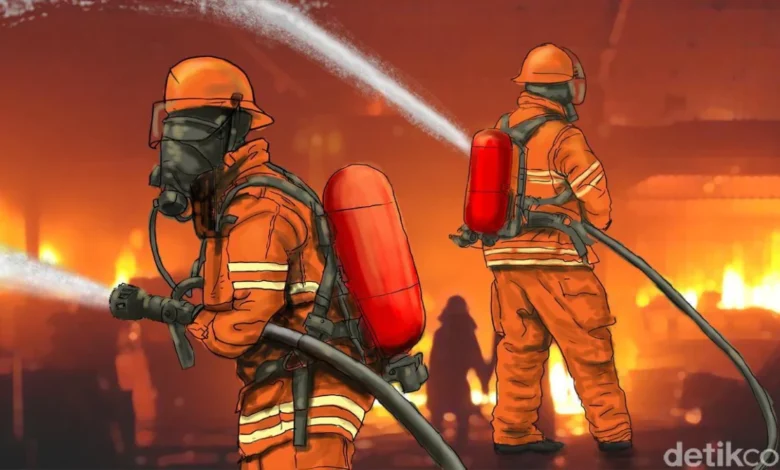
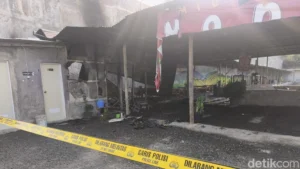
The upper zone of the Jatibarang Landfill, situated in the Mijen District of Semarang, Indonesia, was struck by a significant fire incident that prompted an immediate and coordinated emergency response from local municipal authorities. Disaster management and firefighting teams successfully brought the blaze under control and extinguished the active flames by late Friday evening. Currently, specialized municipal units are conducting intensive cooling operations to ensure that subsurface embers are completely neutralized, preventing any potential resurgence of the fire in the vast waste management facility.
The incident underscores the persistent environmental and operational vulnerabilities associated with large-scale municipal solid waste disposal sites, particularly during extended dry periods. While the prompt intervention of the local fire department successfully averted a catastrophic disaster, the event has reignited discussions regarding waste management safety protocols, environmental hazards, and the long-term sustainability of urban landfill infrastructure in rapidly expanding metropolitan regions across Southeast Asia.
Chronology of the Incident and Emergency Response
The emergency sequence began shortly after sunset on Friday, September 18, 2026. According to official operational logs from the Semarang City Fire Department, the initial alert regarding the outbreak of fire at the Jatibarang facility was received at approximately 19:10 Western Indonesia Time (WIB). The notification was transmitted directly by the head of the Jatibarang Landfill management office, who observed thick smoke and open flames emerging from the elevated sections of the dumping site, locally designated as the upper zone or the legacy waste area.
Upon receiving the emergency dispatch, the Semarang City Fire Department mobilized its resources under a high-priority response protocol. Tantri Pradono, Head of Operations and Rescue at the Semarang City Fire Department, coordinated the tactical deployment. By 20:31 WIB, exactly one hour and twenty-one minutes after the initial distress call, the primary firefighting units had successfully contained the perimeter of the fire and halted its progression.
"The condition is already extinguished. We are currently in the cooling process," Tantri stated in an official communication. He further elaborated that tactical firefighting measures were deployed strategically to encircle the burning sector. This maneuver successfully localized the thermal energy, ensuring that the flames did not migrate downward into the active operational zones of the landfill or threaten adjacent administrative structures and surrounding residential communities.
To achieve containment, the municipal fire service deployed a total of six heavy-duty firefighting trucks equipped with high-capacity water pumping systems. Fire personnel navigated the complex terrain of the landfill’s upper terraces to deliver water directly to the seat of the fire. Due to the nature of subsurface waste fires, which often burn deep beneath layers of compacted refuse, the operation transitioned rapidly from active suppression to extensive cooling procedures. This phase involves saturating the charred debris with water and turning over localized pockets of trash to extinguish hidden embers that could reignite under favorable wind and temperature conditions.
Origin and Scope of the Affected Area
Initial preliminary investigations conducted by municipal authorities indicate that the fire was confined exclusively to the older, inactive sections of the Jatibarang Landfill. The upper zone primarily contains legacy waste—refuse that has been deposited, compacted, and left to decompose over extended periods. Unlike active tipping areas where fresh municipal solid waste is continuously unloaded and processed, legacy waste zones consist of highly heterogeneous materials that have undergone various stages of anaerobic and aerobic decomposition.
Despite comprehensive initial inspections, the exact root cause of the fire remains undetermined. Officials from both the Semarang City Fire Department and the Jatibarang Landfill administration have confirmed that no definitive trigger has been identified. "Information from the Head of the Landfill indicates that the cause of the fire is still unknown," Tantri noted.
Waste management experts note that determining the origin of landfill fires is notoriously difficult. Unlike standard structural fires, which often leave behind clear electrical or chemical forensic evidence, landfill blazes frequently originate deep within the waste mass. Potential hypotheses for such incidents typically include spontaneous combustion resulting from exothermic microbial decomposition, subterranean chemical reactions, the illegal disposal of hazardous materials or volatile substances, or external ignition sources such as discarded cigarette butts or agricultural burning in adjacent areas. However, municipal authorities have emphasized that a formal forensic investigation will be required to ascertain the precise sequence of events leading up to the ignition.
Contextualizing Jatibarang Landfill and Urban Waste Challenges
The Jatibarang Landfill serves as the primary municipal solid waste disposal facility for the entire city of Semarang, accommodating thousands of tons of domestic, commercial, and industrial refuse daily. Established decades ago to manage the burgeoning waste output of a growing urban population, the facility has faced mounting operational pressures as the city’s demographic and economic footprint expands.
Landfills of this magnitude inherently present complex environmental management challenges. As organic waste decomposes within deep, compacted strata, it generates significant quantities of landfill gas, a mixture primarily composed of methane and carbon dioxide. Methane is a highly flammable gas that, under specific concentrations and temperature conditions, can create explosive environments within subsurface pockets of a landfill. Furthermore, the prolonged accumulation of combustible materials, combined with the porous nature of legacy waste layers, creates an environment where localized heat can accumulate undetected until it breaches the surface as an open flame.
The geographical and climatic profile of Semarang further exacerbates these risks. Extended dry seasons, characterized by high ambient temperatures, low humidity, and sporadic rainfall, dry out the surface layers of municipal waste, significantly lowering the ignition threshold. When dry windy conditions prevail, any minor spark or localized heat source can rapidly escalate into a widespread surface fire, threatening air quality and straining local emergency services.
Broader Implications for Public Safety and Environmental Health
The successful containment of the Jatibarang Landfill fire has averted an immediate humanitarian and environmental crisis, yet the incident highlights broader systemic vulnerabilities that demand sustained policy attention. Municipal waste facilities situated in proximity to major urban centers carry significant environmental externalities that require rigorous, round-the-clock monitoring and advanced infrastructural safeguards.
The immediate environmental implication of any large-scale landfill fire is the severe degradation of local air quality. The combustion of heterogeneous municipal solid waste releases a complex mixture of particulate matter, carbon monoxide, sulfur dioxide, nitrogen oxides, and toxic volatile organic compounds, including dioxins and furans arising from the burning of plastics and synthetic polymers. Inhaling these pollutants poses acute respiratory risks to nearby communities, particularly vulnerable populations such as children, the elderly, and individuals with pre-existing cardiopulmonary conditions.
In response to the Friday evening incident, local health and environmental agencies are expected to monitor air quality indices in the districts surrounding Mijen and the broader Semarang municipality. Although the swift intervention of the firefighting squads minimized the duration of smoke emission, the potential health impacts underscore the necessity of proactive fire prevention strategies rather than purely reactive emergency responses.
Furthermore, the incident raises critical questions regarding the long-term management of legacy waste zones in Indonesian municipal landfills. As cities generate increasing volumes of refuse, older landfill sections frequently reach maximum capacity, requiring comprehensive rehabilitation, capping, and post-closure monitoring. Ensuring the structural integrity of these legacy zones involves installing effective landfill gas extraction systems to capture methane for energy generation or safe flaring, thereby reducing internal pressure and minimizing the risk of spontaneous combustion.
Strategic Recommendations for Municipal Infrastructure Resilience
Experts in urban environmental management and disaster risk reduction suggest that municipal authorities in Semarang and comparable jurisdictions must accelerate investments in modern landfill management technologies. Key preventive measures include:
- Enhanced Subsurface Monitoring: Installing thermal imaging sensors and gas monitoring probes within legacy waste zones to detect localized temperature anomalies and elevated methane concentrations before they result in open combustion.
- Improved Cover Management: Applying daily and intermediate mineral soil covers over exposed waste layers to restrict oxygen infiltration, which serves as a primary catalyst for subsurface fires.
- Advanced Methane Extraction Networks: Expanding and maintaining active gas collection systems to systematically vent flammable gases away from the waste mass, mitigating explosion and fire hazards simultaneously.
- Emergency Water Infrastructure: Upgrading on-site water supply networks, retention ponds, and high-pressure hydrant systems directly within landfill facilities to ensure that emergency responders can deploy suppression tactics immediately without relying exclusively on mobile tanker fleets.
- Community Early Warning Protocols: Establishing robust communication channels between landfill operators, local disaster mitigation agencies, and surrounding residential communities to ensure rapid dissemination of safety advisories in the event of environmental emergencies.
Conclusion and Ongoing Operations
As the cooling operations at the Jatibarang Landfill proceed into their final stages, municipal authorities maintain a vigilant watch over the upper zone. The Semarang City Fire Department, in collaboration with the landfill management administration, will continue to monitor the perimeter and douse any remaining hotspots to guarantee total stabilization of the site.
While the immediate emergency has been successfully managed without reported casualties or structural damage to active operational infrastructure, the incident serves as a stark reminder of the complex challenges confronting municipal waste management systems. Comprehensive policy reviews, increased funding for preventative infrastructure, and rigorous enforcement of environmental safety standards will remain essential to safeguarding public health and urban environmental integrity in Semarang and across the region moving forward.
Related posts: