Mendagri Urges Regional Heads to Fortify Defenses Against Inflation and Global Crises, Emphasizing Food Security and Social Stability


Jakarta, CNN Indonesia – Minister of Home Affairs (Mendagri) Muhammad Tito Karnavian has issued a fervent call to all regional heads across Indonesia, urging them to significantly bolster their preparedness and vigilance in the face of escalating inflationary pressures and the multifaceted impacts of persistent global crises. This directive, delivered with a stark warning, underscores the potential for these economic headwinds to severely disrupt the livelihoods of communities, particularly the nation’s most vulnerable low-income households. The Minister’s address highlights a critical juncture where proactive regional governance is paramount to safeguarding national economic stability and social cohesion.
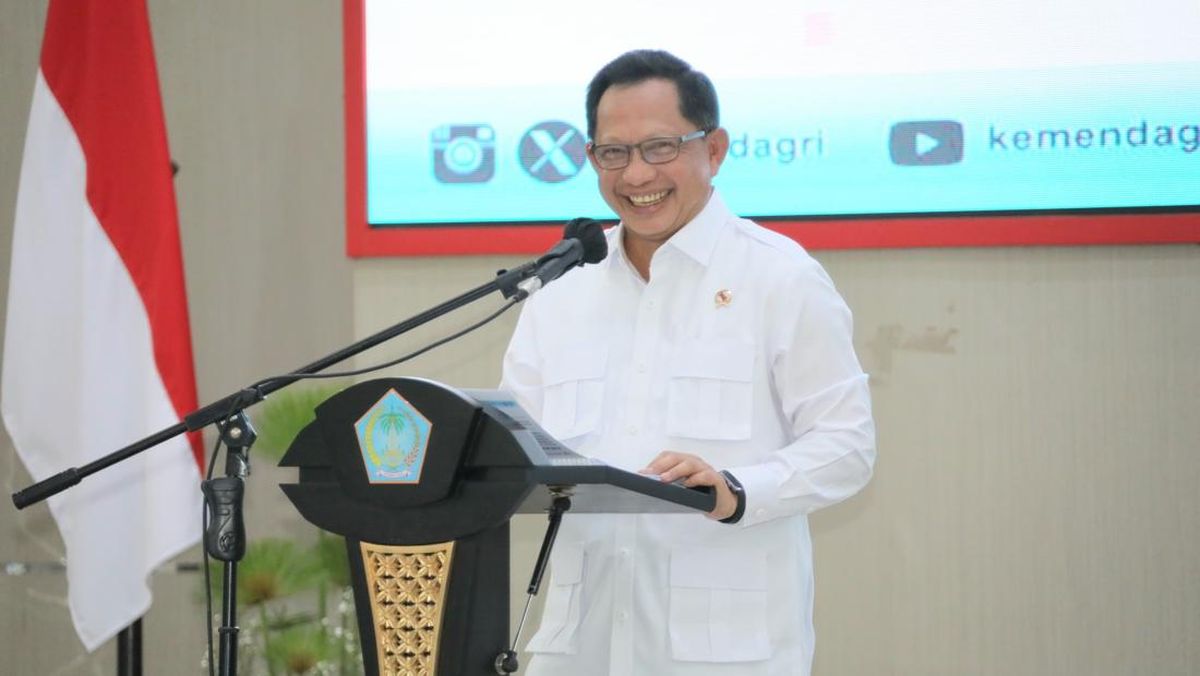
The Minister’s urgent appeal came during his keynote address at the Work Meeting of the Regional Commissariat (Komwil) I of the Association of Indonesian City Governments (APEKSI) in Banda Aceh, Aceh, on Monday, April 20, 2026. His remarks served as a powerful reminder that the cost of living has become the foremost concern for the majority of Indonesian citizens. "More than 60 percent of our society is deeply concerned about the cost of living, especially food. This is an issue that cannot be postponed," Minister Karnavian asserted, highlighting the immediate and tangible impact of economic fluctuations on daily life. He stressed that inflation is no longer a distant macroeconomic indicator discussed in policy forums; rather, it is a concrete, daily struggle felt directly by ordinary citizens, manifesting as higher prices for essential goods, energy, and logistical services. The Minister articulated a grim potential scenario if inflation were left unchecked, warning of its capacity to trigger extreme social unrest. "If it explodes, the cost is immense. It can escalate to riots, public facilities being damaged. It takes a long time to build, but only a short time to destroy," he cautioned, drawing a vivid picture of the socio-political fragility that unchecked economic hardship can precipitate.
Navigating a Volatile Global Economic Landscape
The current global economic environment remains fraught with challenges, a reality that Minister Karnavian meticulously outlined in his address. He pointed to the enduring conflict between Russia and Ukraine, which continues to exert significant pressure on global energy, food, and fertilizer markets. Beyond this, he highlighted renewed tensions in the Middle East, involving several major international powers, which have further exacerbated uncertainties in the global supply chain, particularly impacting crude oil prices and maritime shipping routes. These geopolitical dynamics, he explained, are not merely distant international affairs but have direct and profound implications for Indonesia’s domestic economy. The Minister elaborated that an increase in global oil prices inevitably triggers a cascading effect, leading to higher transportation costs, increased distribution expenses, and ultimately, elevated prices for a wide array of goods and services within the archipelago. This intricate web of global and local factors necessitates an active and responsive role from regional governments to maintain price stability. "Don’t operate on autopilot. Don’t wait until the problem explodes," he admonished, urging regional leaders to adopt a proactive and interventionist stance.
Strengthening Regional Inflation Control Mechanisms
A cornerstone of the Minister’s strategy involves the invigorated performance of the Regional Inflation Control Teams (TPID). He explicitly tasked these teams with continuously strengthening their operations, emphasizing the critical need for intensive coordination with the Central Statistics Agency (BPS) to enable real-time monitoring of price movements. This data-driven approach is vital for informed decision-making and timely interventions. Minister Karnavian underscored that effective inflation control hinges on two primary pillars: ensuring the adequacy of supply for essential goods and guaranteeing the smooth and efficient flow of distribution channels.
To illustrate the practical challenges, the Minister cited the recent sharp surge in chili prices observed in various parts of Aceh. He explained that such price volatility is often not solely attributable to production shortfalls but is frequently compounded by inefficiencies or bottlenecks within the distribution network. These issues can range from inadequate infrastructure and logistical challenges to speculative hoarding and information asymmetry. By meticulously tracking both supply-side dynamics and distribution efficiency, TPID can pinpoint specific vulnerabilities and implement targeted solutions, such as market operations, facilitating direct farmer-to-consumer sales, or optimizing transportation routes. The effectiveness of TPID, therefore, lies in its capacity for agile response and granular analysis of local market conditions, transcending generic national policies.
The Imperative of Local Food Security and Resilience
Minister Karnavian further articulated a critical distinction between regions with robust local food production bases and those that are heavily reliant on external supplies. He noted that regions boasting strong agricultural output tend to exhibit greater resilience in weathering economic shocks. Conversely, densely populated urban areas, which are often net consumers of food and depend on shipments from other regions or even imports, must proactively strengthen their food security strategies. This involves a multi-pronged approach encompassing diversified local production, efficient storage, and streamlined distribution networks.
Drawing parallels with the profound lessons learned during the COVID-19 pandemic, the Minister emphasized that enhancing local food resilience is not merely a desirable goal but a strategic imperative. The pandemic exposed the fragility of global supply chains and the vulnerability of communities heavily dependent on external sources for their sustenance. In response, various innovative initiatives such as urban farming, hydroponics, and the resourceful utilization of limited urban spaces have emerged as adaptive solutions. These practices not only contribute to local food supply but also offer significant opportunities for community empowerment, skill development, and fostering a sense of self-sufficiency. Local governments are encouraged to actively promote and support these initiatives through policy incentives, technical assistance, and facilitating access to resources, thereby transforming urban landscapes into more productive and resilient food ecosystems.
Broader Economic Context and Government Efforts
Indonesia’s economy, while demonstrating remarkable resilience in recent years, particularly in its post-pandemic recovery, remains susceptible to global volatilities. The nation’s annual inflation rate, which had largely been managed within the central bank’s target range of 2-4% in early 2026, still requires constant vigilance. However, specific commodity-driven inflation, especially in food and energy, often creates localized spikes that disproportionately affect low-income households. The government, through its various ministries and institutions, has historically implemented a range of measures to combat inflation, including fiscal policies (subsidies, tax incentives), monetary policies (interest rate adjustments by Bank Indonesia), and supply-side interventions (market operations, import policies).
The current directive from the Minister of Home Affairs underscores a shift towards strengthening the regional dimension of this national strategy. This acknowledges that while macroeconomic stability is managed at the national level, the actual impact and immediate response to inflation are felt and must be addressed at the local level. The APEKSI meeting, bringing together leaders from cities across Indonesia, serves as an ideal platform to disseminate these directives and foster a unified, concerted effort. The presence of regional leaders allows for direct communication regarding the specific challenges faced by urban populations, who often bear the brunt of rising costs due to their reliance on purchased goods rather than self-produced sustenance.
The Role of Inter-Agency Coordination and Data Precision
Effective inflation management, as highlighted by Minister Karnavian, is fundamentally an exercise in robust inter-agency coordination. The TPID, typically comprising representatives from regional governments, local police, military, central bank branches, and BPS, serves as the operational arm. However, their efficacy is directly tied to the quality and timeliness of data provided by BPS. BPS’s role extends beyond merely reporting inflation figures; it involves granular data collection on commodity prices across various markets, analysis of supply and demand dynamics, and forecasting potential price movements. This precision allows TPID to identify emerging hotspots and deploy interventions before problems escalate.
For instance, understanding the specific varieties of chili affected, the regions of production, the transportation routes, and the typical seasonal fluctuations is crucial. Is the price hike due to crop failure, poor storage, cartel behavior, or simply increased demand during a festive period? BPS data, combined with market intelligence gathered by local authorities, provides the answers necessary for targeted actions. Without this foundational data, regional responses risk being generalized, inefficient, or even counterproductive.
Implications for Regional Governance and Social Stability
The Minister’s call to action carries significant implications for regional governance. It demands a higher level of economic literacy and proactive management from regional heads, shifting their focus beyond traditional administrative duties to encompass immediate economic oversight. It also reinforces the principle of decentralization, empowering local authorities with the responsibility and tools to manage economic challenges unique to their jurisdictions.
From a social stability perspective, the warning about potential unrest is not to be taken lightly. Historical precedents, both in Indonesia and globally, demonstrate a strong correlation between persistent economic hardship, particularly food insecurity, and social upheaval. The "biaya hidup" (cost of living) is a deeply personal issue, directly impacting a family’s ability to put food on the table, access healthcare, and educate their children. When these basic needs are threatened, public dissatisfaction can quickly erode trust in government and lead to broader social unrest. Therefore, effective inflation control at the regional level is not just an economic imperative but a crucial component of maintaining social peace and political legitimacy.
Looking Ahead: A Resilient Indonesia
The path forward for Indonesia in navigating these complex economic challenges requires sustained commitment and innovative solutions. Beyond the immediate focus on supply and distribution, long-term strategies must encompass investment in agricultural technology, infrastructure development to improve connectivity and reduce logistics costs, and policies that support small and medium-sized enterprises (SMEs) which form the backbone of local economies. Furthermore, fostering financial literacy and social safety nets for vulnerable populations can provide critical buffers against economic shocks.
Minister Tito Karnavian’s address at the APEKSI Komwil I meeting serves as a powerful reminder that while the global economic landscape may be turbulent, Indonesia’s resilience will ultimately be determined by the collective and coordinated efforts of its national and regional leadership. By prioritizing food security, strengthening inflation control mechanisms, and fostering proactive governance, Indonesia can better shield its citizens from economic adversities and continue on its trajectory towards sustainable development and shared prosperity, ensuring that the burden of global crises does not disproportionately fall upon its most vulnerable. The Banda Aceh gathering therefore represented not just a meeting, but a renewed commitment to safeguarding the nation’s economic future at its grassroots.