Geely Galaxy Zhanjian 700 Smashes Pre-Order Records as the Chinese Automaker Enters the High-Performance Off-Road SUV Market

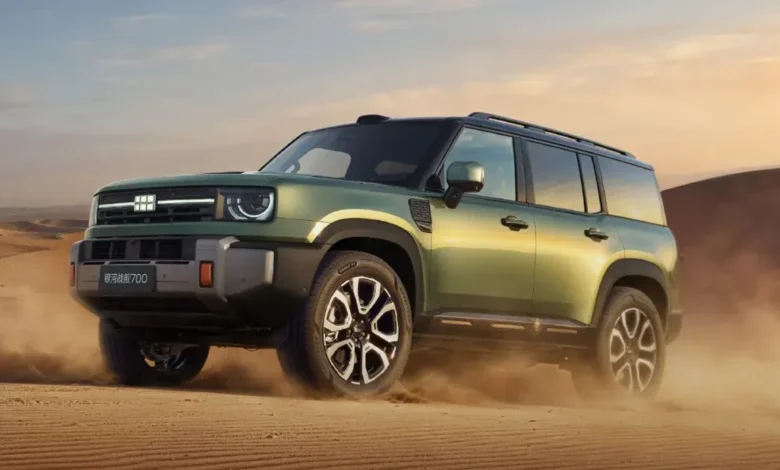
The automotive industry is witnessing a significant shift as Geely Galaxy, the premium electrified sub-brand of Chinese automotive giant Geely, officially opened pre-orders for its highly anticipated off-road SUV, the Zhanjian 700. The market reception has been nothing short of extraordinary, signaling a potential paradigm shift in the competitive landscape of hybrid-powered, all-terrain vehicles. Within the first nine minutes of the pre-order window, the company recorded an influx of 10,000 confirmed reservations, a figure that surged to over 43,900 refundable orders within the first hour of trading. Furthermore, the limited-run "Land Ark" edition, restricted to a production quota of only 700 units, sold out almost instantaneously, underscoring intense consumer appetite for the brand’s latest flagship.
Market Positioning and Pricing Strategy
The Zhanjian 700 enters the market with a sophisticated pricing structure designed to bridge the gap between mass-market utility and luxury off-road capability. The vehicle is available in six distinct variants, with pre-order prices ranging from 199,800 yuan to 389,800 yuan (approximately $28,000 to $54,800 USD, or roughly IDR 520 million to IDR 1.02 billion). This pricing strategy places the Zhanjian 700 in direct competition with established domestic heavyweights like the BYD Yangwang U8 and the Fang Cheng Bao Bao 5, as well as traditional internal combustion engine stalwarts from international manufacturers.
By offering a wide range of trims, Geely Galaxy is attempting to capture a broad demographic, from suburban adventurers seeking comfort and utility to off-road enthusiasts demanding advanced mechanical hardware. The rapid success of the pre-order campaign suggests that Geely’s strategy of balancing high-end technology with a competitive price point is effectively resonating with Chinese consumers.
Design Philosophy and Exterior Architecture
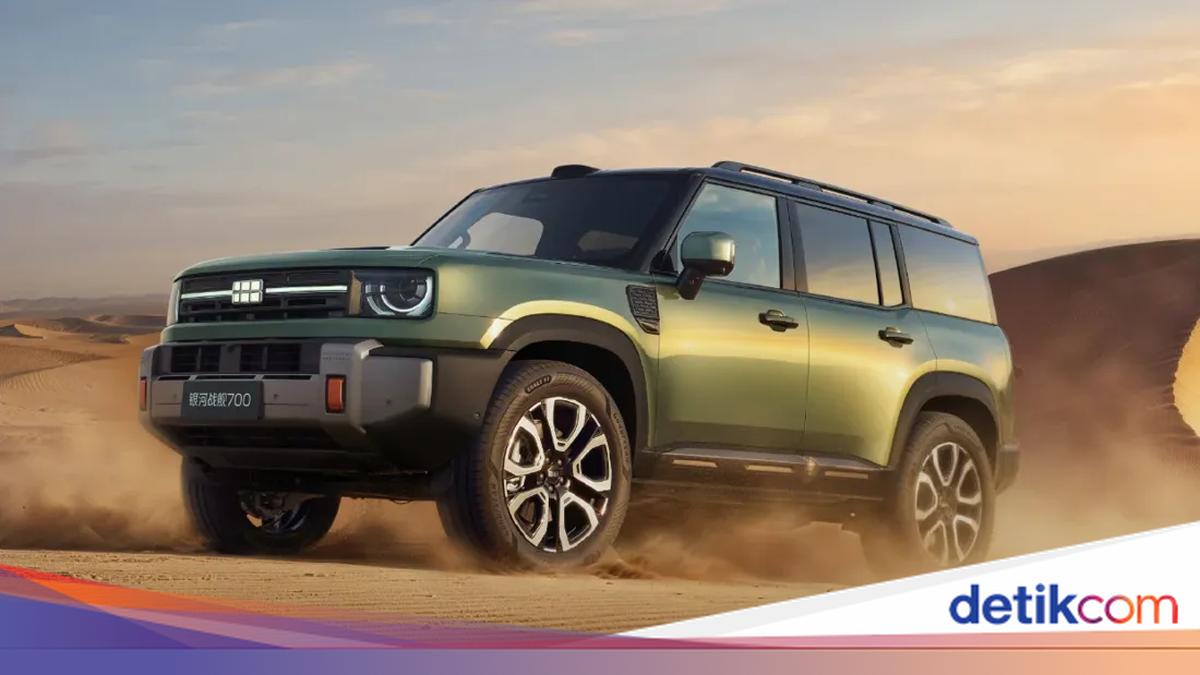
Geely has leaned heavily into a bold design language dubbed "Oriental Lion" for the Zhanjian 700. The aesthetic is characterized by a commanding stance, emphasized by the signature "Sky Eye" lighting cluster and an aggressive, full-width daytime running light (DRL) setup. The front fascia is anchored by an illuminated Geely badge, which serves as a focal point for the vehicle’s modern, tech-forward identity.
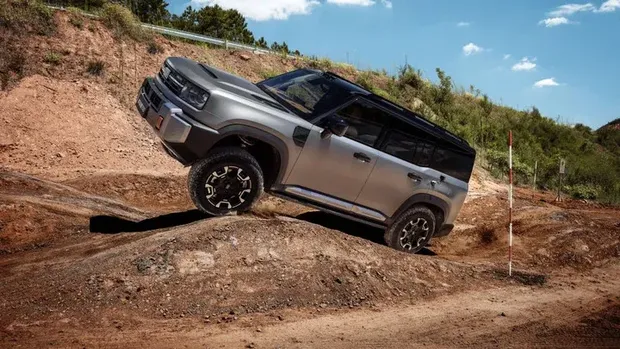
The physical dimensions of the SUV reflect its stature as a flagship model. Measuring 5,085 mm in length, 1,999 mm in width, and 1,985 mm in height, with a substantial 2,900 mm wheelbase, the Zhanjian 700 is designed to dominate the road. Its off-road geometry is equally impressive, featuring a 233 mm ground clearance, a 30-degree approach angle, and a 31-degree departure angle. Perhaps most notable for extreme terrain navigation is the vehicle’s capability to traverse water depths of up to 800 mm, a figure that places it among the top tier of production SUVs currently available in the global market.
Engineering Excellence: The Thor EM-T Hybrid System
At the core of the Zhanjian 700’s performance is the proprietary Thor EM-T AWD hybrid system. This powertrain architecture is engineered to provide both immense power and long-range efficiency. The vehicle offers two internal combustion engine options: a 1.5T engine delivering 120 kW and a more robust 2.0T engine providing 160 kW. These engines are seamlessly integrated with a tri-motor electric configuration.
The cumulative output of this system is staggering, with a total power delivery reaching 830 kW, or approximately 1,113 horsepower. The torque figures are equally formidable; the system generates an impressive 13,920 Nm of torque at the wheels, allowing the top-spec variant to sprint from 0 to 100 km/h in a mere 3.95 seconds. This acceleration is particularly noteworthy given the vehicle’s substantial size and weight, highlighting the efficiency of the electric torque vectoring system.
Energy storage is managed by a 47.14 kWh CATL LFP battery pack. This provides a pure electric range of 305 km under the CLTC (China Light-Duty Vehicle Test Cycle) standard. When the hybrid system is fully engaged, the combined range is claimed to exceed 1,200 km, with some specialized testing conditions reportedly pushing that figure toward 1,700 km. The vehicle also supports 800V fast-charging technology, ensuring that downtime is minimized for long-distance travel. Even when the battery is depleted, the fuel consumption remains efficient at approximately 5.95 liters per 100 km.
Advanced Off-Road Technology and Interior Amenities
Inside the cabin, the Zhanjian 700 departs from the utilitarian aesthetic typical of traditional off-roaders, instead opting for a tech-heavy, luxury-focused environment. The interior features a five-screen display system, an 18.5-liter refrigerator for long expeditions, and front seats equipped with 14-point massage functionality.
Technologically, the vehicle is managed by an AI-driven all-terrain digital chassis. This system allows the driver to toggle between 17 distinct driving modes, optimizing the vehicle’s response based on terrain—be it mud, sand, snow, or rock. Maneuverability is significantly enhanced by "Crab Walk" and "Waltz Turn" features, the latter of which allows the vehicle to pivot within a tight radius of only 3.36 meters.
For technical off-roading, the SUV is equipped with a mechanical rear differential lock capable of engaging in just 200 milliseconds, ensuring power is delivered where it is needed most. An "emergency floating mode" provides an added layer of safety, allowing the vehicle to remain buoyant and functional in water for up to 40 minutes under specific conditions, a feature intended for crossing flooded areas during extreme weather events.
Implications for the Competitive Landscape
The launch of the Zhanjian 700 is a significant milestone for Geely. By entering the high-performance off-road segment, the company is signaling its ambition to challenge established luxury brands that have long dominated this space. The massive volume of pre-orders suggests that the "hybrid revolution" is no longer confined to city commuters and passenger sedans; it is rapidly moving into the rugged, adventure-focused SUV segment.
Industry analysts suggest that the success of the Zhanjian 700 can be attributed to the "democratization" of off-road technology. By incorporating high-end features—such as 800V architecture, advanced AI chassis control, and extreme torque—into a vehicle that remains accessible at a sub-400,000 yuan price point, Geely is creating a new benchmark.
Furthermore, the vehicle’s performance specifications indicate that the gap between traditional combustion engines and electrified powertrains has effectively closed in the off-road sector. With nearly 1,200 km of total range, the "range anxiety" that has historically plagued electric and hybrid vehicles in remote areas is largely mitigated, making the Zhanjian 700 a viable alternative for cross-country expedition travelers.
Conclusion and Future Outlook
As Geely Galaxy prepares to scale production to meet the overwhelming demand generated by the pre-order campaign, the focus will shift to manufacturing consistency and delivery timelines. The rapid sell-out of the "Land Ark" edition confirms that there is a strong market for premium, limited-edition variants, suggesting that Geely may look to expand its high-end portfolio in the coming fiscal years.
The Zhanjian 700 represents more than just a new model; it is a manifestation of Geely’s technological maturity. By integrating cutting-edge battery technology from CATL with its proprietary Thor hybrid platform and AI-driven chassis, the automaker has delivered a vehicle that balances raw power with sophisticated digital control. As the company begins the phased delivery of these units, the global automotive industry will be watching closely to see if the Zhanjian 700 can maintain its momentum and cement its place as a leader in the new era of off-road exploration.