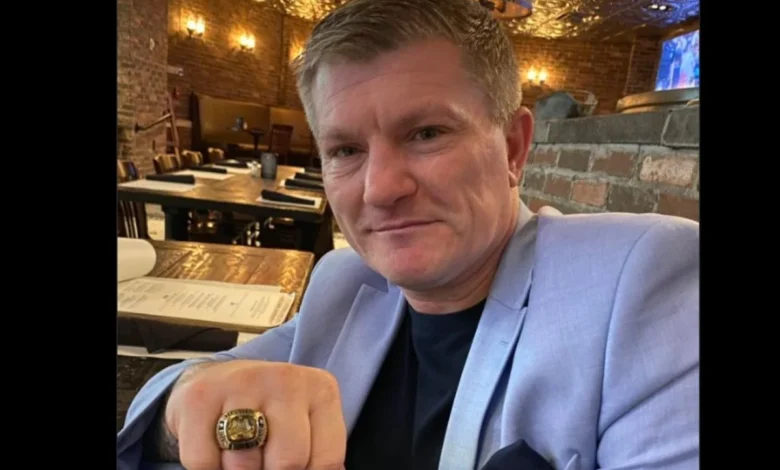
The global boxing community is in mourning following the tragic news of the passing of legendary former world champion, Ricky "The Hitman" Hatton. The revered British boxer, celebrated for his aggressive fighting style and charismatic personality, was found deceased at his residence in Hyde, Greater Manchester, on Sunday morning, September 14, 2024, at approximately 06:45 local time. The sudden death of a figure so deeply entrenched in the sport has sent shockwaves across the United Kingdom and beyond, prompting an outpouring of grief and tributes from fans, fellow athletes, and officials alike.
Authorities from Greater Manchester Police have officially confirmed the discovery of Hatton’s body. In a statement released to the press, law enforcement officials stated, "We can confirm that a body was discovered at an address on Bowlacre Road, Gee Cross, at 06:45 on Sunday, September 14. This death is not being treated as suspicious." This preliminary assessment by the police provides initial clarity regarding the circumstances, although the precise cause of death has yet to be publicly disclosed, pending further investigation and a coroner’s report. The non-suspicious classification, however, has helped to quell immediate concerns of foul play, allowing the focus to shift towards commemorating the life and indelible legacy of one of boxing’s most beloved figures.
A Look Back at "The Hitman’s" Illustrious Career
Ricky Hatton’s journey from a promising amateur to a two-weight world champion is a testament to his grit, determination, and an unwavering connection with his legion of fans, affectionately known as the "Blue Army." Born Richard John Hatton on October 6, 1978, in Stockport, Greater Manchester, he grew up immersed in a working-class environment that would profoundly shape his fighting spirit. His early life was marked by a passion for sport, initially excelling in football before dedicating himself fully to boxing.
Hatton’s amateur career provided the foundational training for his distinctive professional style. He represented England at various international tournaments, demonstrating an aggressive, relentless approach that would become his hallmark. His amateur pedigree included winning the ABA (Amateur Boxing Association) light-welterweight title in 1997, signaling his readiness for the professional ranks. This early success gave him the confidence and the platform to transition into professional boxing, where he would soon captivate audiences with his all-action performances.
The Rise of a Manchester Icon: Professional Debut and Early Dominance
Ricky Hatton made his professional debut on September 11, 1997, just shy of his 19th birthday, at the Kingsway Leisure Centre in Widnes. He immediately showcased the traits that would define his career: an aggressive, come-forward style, a relentless body attack, and an iron will. His debut was a victory, and it set the tone for an incredible undefeated streak that would span his first eight years in the sport. Hatton quickly built a formidable reputation in the domestic scene, accumulating regional titles such as the British Central Area light-welterweight title and the WBO Inter-Continental light-welterweight title.
His popularity soared in the United Kingdom, particularly in his native Manchester, where he became a local hero. His fights were always sell-outs, characterized by an electric atmosphere generated by his loyal supporters. Hatton’s ability to connect with the everyday fan, combined with his exciting, high-octane performances, made him a compelling figure in British sports. He wasn’t just a boxer; he was a working-class champion who embodied the fighting spirit of his city. By the early 2000s, Hatton had established himself as a top contender, boasting an impressive record and an ever-growing fan base eagerly awaiting his shot at world glory.
Climbing to the Summit: World Titles and Legendary Bouts
The pinnacle of Ricky Hatton’s career came in the mid-2000s when he ascended to the elite echelons of world boxing. His defining moment arrived on June 4, 2005, when he challenged the formidable IBF Light-Welterweight champion, Kostya Tszyu, at the MEN Arena in Manchester. Tszyu, an Australian-Russian legend, was considered one of the sport’s pound-for-pound best and had not been defeated in a decade. Hatton, despite being the underdog, delivered a career-defining performance, overwhelming Tszyu with his relentless pressure and body shots. The fight was a brutal, grueling affair, culminating in Tszyu’s corner throwing in the towel at the end of the 11th round, handing Hatton his first undisputed world title.
This victory not only solidified Hatton’s status as a world champion but also cemented his place as a global boxing superstar. The scenes of jubilation in Manchester were unprecedented, with thousands celebrating their hero’s triumph. The win against Tszyu opened doors to even bigger fights, and Hatton continued his dominant run. In 2006, he ventured into the welterweight division, capturing the WBA (Super) Welterweight title by defeating Luis Collazo in Boston, Massachusetts, further showcasing his versatility and ambition. He later unified the IBF and IBO light-welterweight titles by defeating Juan Urango in 2007.
Hatton’s career was also defined by two mega-fights against pound-for-pound greats, even though they resulted in losses. In December 2007, he faced Floyd Mayweather Jr. in Las Vegas for the WBC and Ring Magazine welterweight titles. The fight, billed as "Undefeated," was a colossal event, drawing immense global attention. Despite a valiant effort, Hatton suffered his first professional defeat, a tenth-round TKO. Two years later, in May 2009, he squared off against Manny Pacquiao, another boxing icon, for the IBO and Ring Magazine light-welterweight titles. Hatton was knocked out in the second round, a devastating loss that marked a turning point in his career. These fights, while painful, underscored his willingness to challenge the very best, solidifying his reputation as a fearless warrior.
The Unwavering "Blue Army" and Cultural Impact
Beyond his achievements in the ring, Ricky Hatton’s legacy is inextricably linked to his extraordinary fan base, famously known as the "Blue Army." These loyal supporters, often clad in blue and white, traveled in vast numbers to cheer him on, whether in Manchester, Las Vegas, or Boston. Their chants, songs, and unwavering enthusiasm created an unparalleled atmosphere at his fights, making every Hatton bout a unique spectacle. This symbiotic relationship between fighter and fans was a rarity in modern boxing, transforming each event into a communal celebration of working-class pride and sporting passion.
Hatton’s down-to-earth persona, coupled with his aggressive, crowd-pleasing style, resonated deeply with the public. He was seen as an everyman who achieved extraordinary feats, inspiring millions with his dedication and resilience. His cultural impact extended beyond boxing, making him a household name in the UK and a symbol of Manchester’s sporting prowess. The "Blue Army" was more than just a fan club; it was a movement, a testament to the profound connection Hatton forged with his supporters, a bond that transcended the sport itself.
Battles Outside the Ring: Retirement, Mental Health, and Comeback
Following his loss to Manny Pacquiao, Hatton announced his retirement from boxing in 2011, though he would make a brief comeback in 2012. However, the years following his initial retirement were fraught with significant personal challenges. Hatton openly battled severe depression, mental health issues, and substance abuse, struggles that he bravely shared with the public. His candor about these difficulties helped to destigmatize mental health problems in sports, shining a light on the pressures and vulnerabilities faced by athletes, even those at the pinnacle of their careers.
His struggles became as well-documented as his triumphs, offering a stark reminder of the human cost of elite sport. Yet, true to his fighting spirit, Hatton fought these demons with the same tenacity he displayed in the ring. He sought help, engaged in therapy, and gradually began to rebuild his life. His journey of recovery became another source of inspiration for many, demonstrating that even champions can falter but possess the strength to rise again.
In 2012, after a three-and-a-half-year hiatus, Hatton made an emotional return to the ring against Vyacheslav Senchenko in Manchester. Despite a passionate effort, he suffered a ninth-round knockout, prompting him to announce his definitive retirement from professional boxing shortly thereafter. Even after his competitive career concluded, Hatton remained deeply involved in the sport. He transitioned into coaching, mentoring a new generation of boxers, and became a successful boxing promoter through his company, Hatton Promotions. His contributions to British boxing continued, fostering talent and organizing events, ensuring his legacy endured beyond his own fighting days.
Just months prior to his untimely passing, Hatton had reportedly announced plans for an exhibition return to the ring in December, rumored to be held in Dubai. This brief foray back into training was evidenced by videos he shared on his personal Instagram account, @rickyhitmanhatton, showcasing his dedication and continued passion for the sport. These recent activities highlight his enduring connection to boxing and his continuous efforts to remain active and engaged, making his sudden death even more poignant.
Tributes and Enduring Legacy
The news of Ricky Hatton’s death has triggered an immediate outpouring of tributes from across the boxing world and beyond. Prominent figures, including fellow world champions, promoters, trainers, and sports commentators, have taken to social media and various platforms to express their shock and sorrow. It is expected that legendary figures like Oscar De La Hoya, Amir Khan, and numerous others who shared the ring or the stage with Hatton will offer their heartfelt condolences, reflecting on his indelible impact on the sport. Frank Warren and Eddie Hearn, two of Britain’s most influential boxing promoters, are anticipated to release statements acknowledging Hatton’s immense contribution to British boxing’s popularity and success.
His former opponents, including those who handed him his only professional losses, are also expected to recognize his warrior spirit and the respect he commanded. Beyond the boxing fraternity, politicians, celebrities, and countless fans have shared their memories and grief, underscoring his broad appeal and the affection in which he was held. Flags may be lowered in his hometown, and moments of silence observed at sporting events, as a nation mourns one of its most beloved sporting heroes.
Ricky Hatton’s legacy is multifaceted. He will be remembered not only as a two-weight world champion with a stunning record of 45 wins (32 by knockout) and just 3 losses, but also as a charismatic showman who brought unparalleled excitement to the sport. His aggressive style, coupled with his genuine personality, made him a rare breed of fighter who transcended the boxing ring. More profoundly, his courage in speaking openly about his mental health struggles offered solace and inspiration to countless individuals facing similar battles, cementing his status as an advocate for mental well-being. Through his coaching and promotional work, he ensured that his passion for boxing continued to shape the sport, leaving an enduring mark on the next generation of fighters.
As the boxing world grapples with the loss of "The Hitman," Ricky Hatton’s life serves as a powerful reminder of both the triumphs and tribulations that can define a champion. His passing at 46 years old leaves a void that will be deeply felt, but his memory will undoubtedly live on in the hearts of his fans and in the annals of boxing history, celebrated as a true icon who always gave his all, both inside and outside the ring.
Ricky Hatton’s Major World Title Achievements:
- IBF Light-Welterweight Champion (2005-2006): Achieved by defeating the legendary Kostya Tszyu on June 4, 2005.
- WBA (Super) Welterweight Champion (2006-2007): Won by defeating Luis Collazo on May 13, 2006.
- IBO Light-Welterweight Champion (2007-2009): Unified with his IBF title by defeating Juan Urango on January 20, 2007.
- The Ring Magazine Light-Welterweight Champion (2005-2009): A prestigious lineal championship earned through his victory over Tszyu.
Ricky Hatton’s career was a thrilling saga of ambition, skill, and an unbreakable bond with his supporters, leaving an indelible imprint on the sport he loved. He may be gone, but the legend of "The Hitman" will forever resonate in the hearts of boxing fans worldwide.
Related posts: