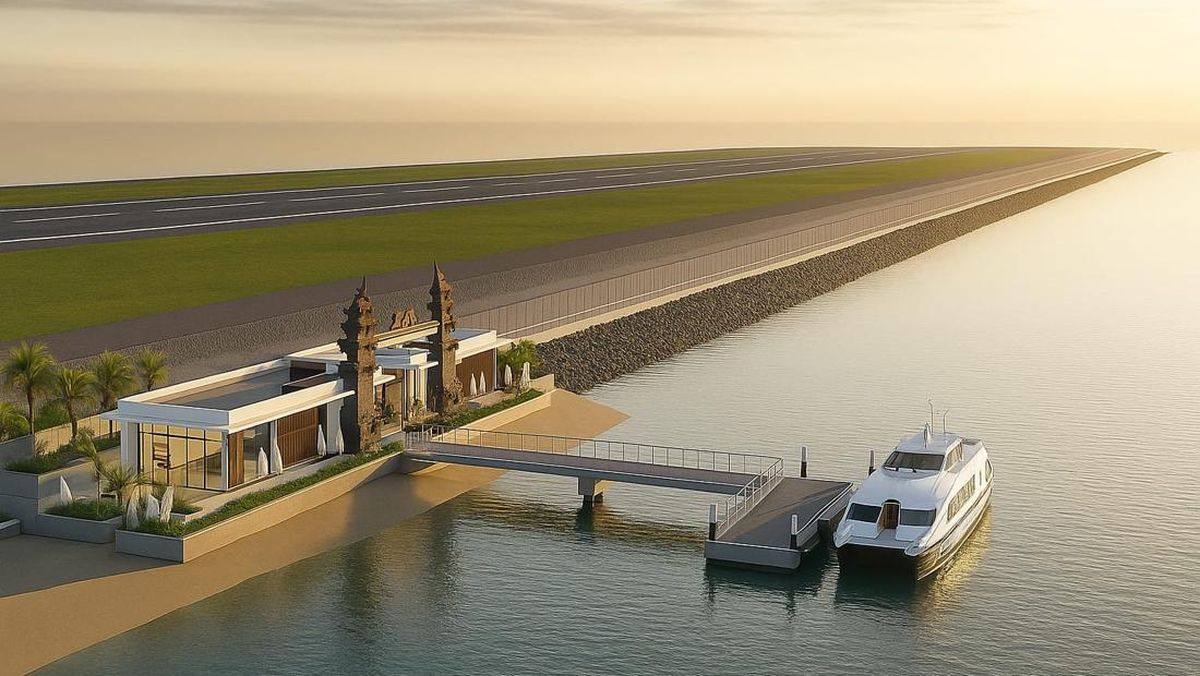
PT ASDP Indonesia Ferry (Persero), a state-owned ferry operator, has officially affirmed its commitment to support the Indonesian government’s ambitious initiative to develop a groundbreaking water taxi service in Bali. This innovative transportation solution is designed to forge a direct aquatic link between I Gusti Ngurah Rai International Airport and the bustling tourist enclave of Canggu, with the primary objective of alleviating the pervasive traffic congestion that has become a significant challenge amidst the island’s booming tourism sector. The project, currently in advanced stages of planning and design, aims to drastically cut travel times from the airport to Canggu, transforming a typically arduous one-to-two-hour road journey into an efficient maximum 30-minute aquatic commute. This strategic move underscores a broader governmental push to enhance Bali’s transportation infrastructure, ensuring sustainable growth and an improved experience for both residents and millions of annual visitors to the "Island of the Gods."
The Genesis of a Solution: Addressing Bali’s Traffic Woes
Bali, consistently lauded as one of the world’s premier tourist destinations, has experienced exponential growth in visitor numbers over the past two decades. Prior to the global pandemic, the island welcomed over six million international tourists annually, a figure that, combined with robust domestic tourism, placed immense pressure on its existing road infrastructure. Areas like Kuta, Seminyak, and increasingly Canggu, have become epicenters of activity, leading to chronic traffic gridlock, especially during peak tourist seasons and rush hours. The journey from Ngurah Rai International Airport, the sole international gateway, to popular northern and western coastal areas such as Canggu, can often be a frustrating and time-consuming ordeal, diminishing the initial positive impression for many arrivals.
Recognizing this critical impediment to the island’s appeal and sustainable development, the Indonesian government, through its various state-owned enterprises (SOEs), has actively sought innovative solutions. The concept of a water taxi service emerged as a viable and environmentally conscious alternative to further road expansion, which is often constrained by Bali’s dense population, unique cultural landscapes, and limited land availability. The initiative aligns with Indonesia’s broader national development agenda, which emphasizes integrated and multimodal transportation systems to improve connectivity and economic efficiency across the archipelago.
A Collaborative Feasibility and Design Phase
The development of this pivotal water taxi service is a testament to inter-agency collaboration, primarily spearheaded by PT ASDP Indonesia Ferry and PT Angkasa Pura Indonesia (formerly PT Angkasa Pura I), the state-owned airport operator responsible for Ngurah Rai International Airport. Corporate Secretary of ASDP, Windy Andale, elucidated that the comprehensive planning process involved an exhaustive feasibility study, which has now been successfully completed. This study, conducted jointly by both SOEs, meticulously evaluated various facets of the project, including market demand, technical viability, financial sustainability, operational logistics, and potential social and environmental impacts. The positive outcome of this study unequivocally signaled the project’s strong potential for successful implementation.
Andale further elaborated on the stringent criteria guiding the route selection and overall project design. "The establishment of the route was conducted through a thorough assessment, taking into account user needs, prevailing water conditions, aspects of navigation safety, infrastructure readiness, and connectivity to surrounding areas," she stated in an official release on Sunday, April 19. This rigorous approach ensures that the water taxi service will not only be efficient in terms of travel time but also uphold the highest standards of safety for passengers and marine operations. The designated priority route identified in the initial phase connects Sekeh, an area strategically located near the airport, to Canggu (specifically Berawa). This selection underscores the project’s focus on serving high-demand tourist corridors while optimizing logistical and operational efficiencies.
Currently, the project is progressing into its advanced stages, primarily focusing on the preparation of the Detailed Engineering Design (DED) and the fulfillment of all necessary permitting aspects. This crucial phase involves intricate planning, technical specifications, and regulatory compliance, ensuring that every detail, from jetty construction to vessel specifications and operational protocols, adheres to national and international standards. Both ASDP and Angkasa Pura Indonesia are working in tandem to finalize these critical components, with a targeted completion date for the DED and permitting processes set for 2026. This timeline suggests that while the service itself will not be operational immediately, significant groundwork is being laid to ensure a robust and well-planned rollout in the years following 2026.
Operational Advantages and Expected Impact
The most immediate and tangible benefit of the water taxi service is the dramatic reduction in travel time. As highlighted by ASDP, the typical road journey from Ngurah Rai Airport to Canggu can range from one to two hours, subject to traffic conditions. The water taxi service promises to slash this travel duration to a maximum of 30 minutes, representing a time saving of 50% to 75%. This efficiency gain is not merely a convenience; it fundamentally transforms the arrival experience for tourists, allowing them to reach their destinations quicker, fresher, and with less stress, thereby enhancing the overall perception of Bali as a premium travel destination.
Beyond time efficiency, the water taxi service is envisioned to bring a multitude of operational advantages:
- Reduced Road Congestion: By diverting a significant portion of airport-to-Canggu traffic onto the waterways, the project will contribute directly to easing congestion on Bali’s already overburdened road network, benefiting both tourists and local commuters.
- Enhanced Tourist Experience: Offering a unique, scenic, and swift mode of transport, the water taxi will provide a novel way for visitors to experience Bali’s coastal beauty from a different perspective, potentially becoming an attraction in itself.
- Safety and Reliability: As emphasized by ASDP, safety is paramount. The comprehensive kajian (assessment) ensures that all aspects of navigation, vessel design, and operational procedures adhere to strict maritime safety regulations, providing a reliable and secure travel option.
- Integration with Tourism Ecosystem: The service is designed to be seamlessly integrated with Bali’s existing tourism infrastructure. This includes considerations for last-mile connectivity from water taxi terminals to hotels and villas, as well as potential links to other tourist activities and attractions.
- Environmental Benefits: While not explicitly detailed, water-based transport, particularly if utilizing modern, fuel-efficient or even electric vessels, can offer a more environmentally friendly alternative to a high volume of individual cars and taxis, contributing to reduced carbon emissions and air pollution on land.
"Through this approach, the water taxi service is expected not only to be efficient but also safe and integrated with Bali’s tourism ecosystem," Andale reiterated, underscoring the holistic vision behind the project.
Broader Implications and Future Outlook
The introduction of a water taxi service in Bali carries significant broader implications across economic, social, and environmental dimensions.
Economic Impact:
The project is poised to inject new vitality into Bali’s tourism economy. Improved connectivity and reduced travel times can make Bali even more attractive to international travelers, potentially increasing tourist arrivals and length of stay. This translates into increased revenue for local businesses, including hotels, restaurants, tour operators, and ancillary services. Furthermore, the construction and subsequent operation of the water taxi service will generate direct and indirect employment opportunities, from construction workers and maritime personnel to service staff at the new terminals. The development of new jetties and associated infrastructure may also spur localized economic growth in the areas around the Sekeh and Canggu (Berawa) terminals. This diversification of transport options could also attract new investment in coastal areas, fostering further development.
Social Impact:
For Bali’s residents, the water taxi service promises a degree of relief from the daily grind of traffic congestion. While primarily targeting tourists, a reduction in overall road traffic benefits everyone, improving commute times for locals and facilitating smoother movement of goods and services. The project also represents an advancement in public transportation infrastructure, potentially setting a precedent for similar initiatives in other congested urban or tourist areas across Indonesia. An improved tourist experience can also foster more positive interactions between visitors and locals, contributing to a more harmonious environment.
Environmental Considerations:
ASDP’s commitment to "sustainable and inclusive maritime transportation systems" implies a strong focus on environmental stewardship. The DED phase will undoubtedly incorporate detailed environmental impact assessments. While water transport has its own set of environmental considerations (e.g., potential impact on marine ecosystems, noise from vessels, waste management at terminals), it generally offers a more sustainable option than continuous expansion of road networks in densely populated areas. The choice of vessel technology, such as low-emission engines or even electric propulsion, will be crucial in maximizing the environmental benefits. The shift from individual cars to shared water taxis could lead to a significant reduction in per-passenger carbon footprint for airport transfers.
Challenges and Mitigation:
Despite its promising outlook, the project is not without its challenges. Financing for such large-scale infrastructure projects, while supported by SOEs, still requires substantial investment. Regulatory approvals, especially those pertaining to maritime operations and environmental protection, can be complex and time-consuming. Public acceptance and adoption will also be critical; effective marketing and seamless integration into the existing transport network will be essential to encourage usage. Furthermore, the development of robust and resilient infrastructure that can withstand Bali’s specific marine conditions, including currents and tides, is paramount. The "last-mile" connectivity from the water taxi terminals to final destinations will also need careful planning to ensure a truly integrated travel experience.
As Windy Andale concluded, "This commitment is part of an effort to present an inclusive and sustainable maritime transportation system that provides tangible benefits for the community and supports the strengthening of the national transportation ecosystem." The water taxi service represents a forward-thinking approach to managing the pressures of tourism growth in Bali, leveraging the island’s natural waterways to create a more efficient, enjoyable, and sustainable future for its transportation landscape. The target completion of the DED and permitting in 2026 marks a crucial milestone in this transformative journey, bringing Bali closer to realizing a more integrated and dynamic connectivity network for generations to come. The success of this project could serve as a blueprint for similar initiatives in other archipelagic regions facing similar challenges, reinforcing Indonesia’s commitment to innovative and sustainable infrastructure development.
Related posts: