Samsung Unveils Next-Generation Foldables and AI-Powered Wearables at Galaxy Unpacked 2026 in London

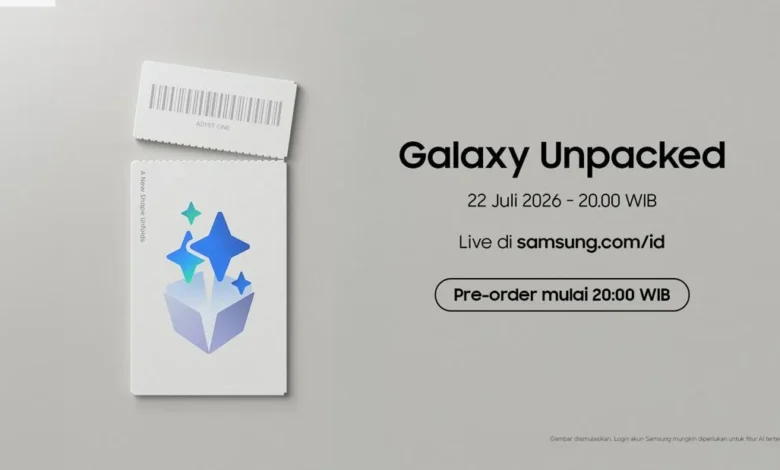
Samsung Electronics is set to redefine the mobile experience with the highly anticipated Galaxy Unpacked 2026 event, taking place tonight, Wednesday, July 22, 2026, in the vibrant city of London, England. This global showcase, eagerly awaited by tech enthusiasts and industry observers alike, promises to unveil groundbreaking advancements in smartphone and wearable technology, with a particular emphasis on innovative form factors and deeply integrated artificial intelligence. For audiences in Indonesia, the live broadcast will commence at 8:00 PM Western Indonesia Time (WIB), offering a direct window into Samsung’s latest innovations.
The spotlight of this year’s Unpacked event is widely expected to fall on the introduction of the next generation of Samsung’s popular foldable smartphones: the Galaxy Z Fold8, the ultra-premium Galaxy Z Fold8 Ultra, and the stylish Galaxy Z Flip8. Beyond the realm of foldables, Samsung has also strategically hinted at the unveiling of its newest iteration of the Galaxy Watch series, signaling a significant evolution in its wearable technology ecosystem. The overarching theme, "A New Shape Unfolds," underscores Samsung’s unwavering commitment to pushing the boundaries of device design while delivering a more personalized and intelligent user experience through its enhanced Galaxy AI capabilities. This event is not merely a product launch; it is a strategic declaration of Samsung’s vision for the future of mobile computing, blending cutting-edge hardware with sophisticated software intelligence.
The Genesis of Innovation: A Legacy of Galaxy Unpacked
Samsung’s Galaxy Unpacked events have historically served as pivotal platforms for the company to introduce its flagship devices, setting industry trends and shaping consumer expectations. Dating back to 2009 with the launch of the original Samsung Omnia, these events have evolved from smaller, focused presentations to elaborate global spectacles that captivate millions. The tradition truly solidified with the debut of the Galaxy S series in 2010, establishing Unpacked as the go-to event for Samsung’s most significant announcements. Over the years, Unpacked has witnessed the birth of iconic devices, from the groundbreaking Galaxy S and Note series to the revolutionary introduction of the first commercial foldable smartphones. Each event builds upon a legacy of innovation, showcasing Samsung’s technological prowess and its ambition to lead the mobile industry. The decision to host Unpacked 2026 in London, a global hub for technology and innovation, further emphasizes the international significance of these forthcoming announcements and Samsung’s strategic focus on key global markets. This particular event is poised to be one of the most impactful in recent memory, given the confluence of new form factors, advanced AI integration, and the expanding wearable ecosystem.
Global Access: How to Witness Galaxy Unpacked 2026
For those eager to be among the first to witness Samsung’s latest innovations, Galaxy Unpacked 2026 offers multiple accessible viewing options. The event is scheduled to kick off in London at 2:00 PM local time on Wednesday, July 22, 2026. This translates to a prime-time viewing experience for many across the globe. In Indonesia, the live broadcast will commence at 8:00 PM Western Indonesia Time (WIB). Audiences in the Central Indonesia Time (WITA) zone can tune in starting at 9:00 PM, while those in Eastern Indonesia Time (WIT) will begin watching at 10:00 PM.
Samsung has ensured broad accessibility for this landmark event. Viewers can seamlessly stream the live broadcast across a multitude of devices, including smartphones, tablets, laptops, desktop computers, and smart TVs, provided they have an internet connection. Official viewing channels include Samsung’s global website (Samsung.com), its dedicated newsroom portal (Samsung Newsroom), and its official YouTube channel. These platforms will provide high-definition streams, often with multi-language subtitle options, ensuring a comprehensive viewing experience for a global audience. Additionally, major tech news outlets, including Detikcom in Indonesia, will provide real-time updates, live blogs, and comprehensive post-event analysis, ensuring that even those unable to watch the live stream remain fully informed of every announcement. This multi-platform approach underscores Samsung’s commitment to maximizing reach and engagement for its flagship product reveal.
Anticipated Unveilings: A New Era of Foldables and AI
While Samsung maintains a veil of secrecy around the official names and full specifications of its upcoming devices, industry leaks, analyst predictions, and subtle hints from Samsung itself have painted a clear picture of what to expect. The consensus points towards a trio of new foldable smartphones: the standard Galaxy Z Fold8, a potentially game-changing Galaxy Z Fold8 Ultra, and the refreshed Galaxy Z Flip8. Furthermore, the company’s explicit mention of an "evolution" for the Galaxy Watch strongly suggests the arrival of the Galaxy Watch9 and the highly anticipated Galaxy Watch Ultra 2.
The Redesigned Powerhouse: Galaxy Z Fold8 and Z Fold8 Ultra
The Galaxy Z Fold8 is rumored to herald a significant design overhaul for Samsung’s flagship foldable. Previous iterations of the Z Fold series have been praised for their innovative dual-screen concept but have often faced critiques regarding their somewhat narrow external display and hefty form factor. The Z Fold8 is expected to address these points directly, reportedly adopting a new, more "passport-like" design that is both shorter and wider. This re-engineered form factor could dramatically enhance the usability of the cover screen, making it more akin to a conventional smartphone for quick tasks, typing, and media consumption without needing to unfold the device. When unfolded, the main internal display is anticipated to feature an aspect ratio closer to 4:3, a notable shift from previous models. This wider, more tablet-like aspect ratio would be a boon for productivity, multitasking, content creation, and immersive media viewing, offering a truly miniature tablet experience in a pocketable device. Such a change would not only improve the user interface but also optimize app compatibility, as many tablet applications are designed for wider screens.
Beneath the hood, the Galaxy Z Fold8 is expected to be powered by the latest flagship mobile processor, likely the "Snapdragon 8 Elite Gen 5 for Galaxy." This custom-tuned chipset, a result of Samsung’s continued strategic partnership with Qualcomm, would offer substantial improvements in raw processing power, graphical rendering capabilities, and, crucially, AI performance. The "for Galaxy" moniker signifies specific optimizations designed to maximize the unique hardware and software features of Samsung’s devices, particularly the enhanced Galaxy AI suite. This would translate into smoother app performance, more efficient multitasking, and advanced on-device AI capabilities that run faster and more securely. Memory configurations are projected to start at 12GB or 16GB of LPDDR5X RAM, paired with UFS 4.0 storage options ranging from 256GB to 1TB, ensuring lightning-fast data access and seamless operation even under heavy loads.
The camera system on the Z Fold8 is also set for an upgrade. While specific sensor details are under wraps, expectations include advancements in low-light photography, improved zoom capabilities, and enhanced computational photography features leveraging the new AI chipset. Battery capacity is rumored to see a slight increase, potentially around 4,600 mAh, combined with improved power efficiency from the new processor to deliver better all-day endurance.
However, the most intriguing addition to the lineup is the rumored Galaxy Z Fold8 Ultra. Positioned as the pinnacle of Samsung’s foldable technology, this "Ultra" variant is speculated to feature an even more expansive 8-inch main display, pushing the boundaries of what a pocketable device can offer. This larger canvas would further blur the lines between smartphone and tablet, catering to power users who demand maximum screen real estate. The Z Fold8 Ultra is also rumored to sport a groundbreaking 200-megapixel primary camera sensor, a technology previously seen in Samsung’s S series Ultra phones. This high-resolution sensor, often employing pixel-binning technology, can capture incredibly detailed images, offer superior low-light performance by combining pixels, and provide greater flexibility for cropping and digital zoom. Paired with a robust 5,000 mAh battery, the Z Fold8 Ultra would aim to deliver unparalleled endurance, essential for a device with such demanding specifications. The inclusion of the Snapdragon 8 Elite Gen 5 for Galaxy would be a given, further enhancing its premium positioning. The Z Fold8 Ultra would likely target a niche segment of early adopters and professionals seeking the ultimate blend of innovation, performance, and screen size, potentially setting a new benchmark for ultra-premium foldable devices.
The Stylish Evolution: Galaxy Z Flip8
The Galaxy Z Flip8 is anticipated to continue the series’ tradition as a fashion-forward, compact clamshell foldable, appealing to users who prioritize style and portability without compromising on modern smartphone capabilities. While retaining its iconic form factor, Samsung is expected to refine the design further, making the device noticeably thinner and lighter. This refinement would enhance its pocketability and ergonomic feel, addressing feedback from previous generations.
A key area of improvement for the Z Flip8 is expected to be the external cover screen. While previous Flip models have steadily increased the utility of this secondary display, the Z Flip8 is rumored to offer even greater functionality. This could include more comprehensive widget support, enhanced quick reply options, improved notification management, and potentially new ways to interact with apps without opening the main screen. This focus on the cover screen aims to make the Flip an even more convenient device for quick interactions, reducing the need to constantly unfold it.
Crucially, the Galaxy Z Flip8 will also heavily integrate the advancements of Galaxy AI. This means personalized features that adapt to user habits, improved camera capabilities through AI processing, and potentially new AI-driven creative tools that leverage the unique form factor of the Flip. Imagine AI-assisted hands-free photography, dynamic wallpaper generation, or intelligent content suggestions tailored to your usage patterns. The Z Flip8 aims to be more than just a stylish accessory; it’s a smart companion that understands and anticipates user needs. Powering these features will be a high-end Snapdragon processor, ensuring smooth performance across all tasks. The Flip series has consistently demonstrated strong market appeal, particularly among younger demographics and those seeking a blend of nostalgia and cutting-edge technology, and the Z Flip8 is poised to continue this success story with its refined design and enhanced intelligence.
Beyond Smartphones: The Next-Generation Galaxy Watch Series
True to its hints, Samsung is also expected to unveil the latest evolution of its Galaxy Watch series. This likely includes the standard Galaxy Watch9 and the more robust Galaxy Watch Ultra 2. The smartwatch market has seen significant growth, driven by increasing consumer interest in health and fitness monitoring, and Samsung has been a key player in this segment.
The Galaxy Watch9 is expected to build upon the strong foundation of its predecessors, offering refinements in design, improved battery life, and enhanced performance. Key updates will likely focus on more accurate health sensors for heart rate, ECG, blood oxygen, and potentially new metrics. The integration of advanced AI capabilities will be a hallmark of these new watches. This means more personalized health insights, proactive wellness recommendations based on collected data, and potentially advanced sleep tracking analysis that provides actionable advice. The operating system, Wear OS Powered by Samsung, will likely see further optimizations, offering a smoother user interface and better integration with Samsung’s ecosystem.
The Galaxy Watch Ultra 2, on the other hand, is poised to target the premium and outdoor enthusiast market. Following the success of the first Watch Ultra, this second iteration is expected to feature an even more durable build, potentially with enhanced water and dust resistance, and a larger, brighter display designed for readability in challenging conditions. Battery life will be a major focus, aiming to provide multi-day usage even with extensive GPS tracking and health monitoring. Advanced GPS capabilities, specialized fitness modes for extreme sports, and robust mapping features are also anticipated. The AI integration in the Ultra 2 would likely extend to more sophisticated performance metrics for athletes, recovery tracking, and potentially even real-time coaching feedback. These new wearables underscore Samsung’s holistic approach to personal technology, aiming to connect users seamlessly across their devices and provide continuous, intelligent support for their health and well-being.
Market Context and Strategic Implications
The Galaxy Unpacked 2026 event holds significant strategic importance for Samsung within the intensely competitive global smartphone and wearable markets. Samsung has consistently held a dominant position in the foldable segment, largely due to its early entry and continuous innovation. The introduction of the Z Fold8, Z Fold8 Ultra, and Z Flip8 is crucial for maintaining and expanding this lead against growing competition. Companies like Google, Xiaomi, Huawei, and OnePlus have all entered or expanded their presence in the foldable market, offering compelling alternatives. Furthermore, rumors of Apple’s eventual entry into the foldable space loom large, making Samsung’s sustained innovation vital.
The "Ultra" variant for the Z Fold series signifies Samsung’s strategy to capture the ultra-premium market segment, similar to how it has leveraged the "Ultra" moniker in its S series. This move aims to showcase Samsung’s absolute best in terms of technology and design, attracting discerning customers and reinforcing its image as an innovation leader. The enhanced AI capabilities across all new devices, particularly Galaxy AI, represent a pivotal shift. As generative AI becomes increasingly prevalent, integrating on-device AI that offers personalized, secure, and context-aware experiences will be a key differentiator. This could translate into more intuitive camera features, smarter device management, enhanced privacy controls, and a more seamless overall user experience.
Analysts predict that a successful launch, particularly with compelling innovations in design and AI, could further solidify Samsung’s market share in the foldable sector, which is projected to grow significantly in the coming years. According to recent market reports, the foldable smartphone market is expected to reach tens of millions of units shipped annually by the late 2020s, with a compound annual growth rate exceeding 20%. Samsung’s current dominance gives it a strong advantage, but continuous innovation is essential to capitalize on this growth.
The advancements in the Galaxy Watch series are equally important. The wearable market, particularly smartwatches, continues its upward trajectory, driven by increasing health consciousness and the desire for seamless connectivity. By integrating advanced AI-powered health monitoring and more personalized insights, Samsung aims to differentiate its offerings from competitors like Apple Watch, Google Pixel Watch, and various fitness trackers. These devices are becoming central to users’ digital health ecosystems, and Samsung’s focus on "personal AI" for wellness could be a significant draw.
Ultimately, Galaxy Unpacked 2026 is more than just a product launch; it’s a statement about Samsung’s strategic direction. It emphasizes the company’s commitment to hardware innovation, its leadership in emerging form factors, and its ambition to be at the forefront of the AI revolution in mobile and wearable technology. The success of these new devices will not only impact Samsung’s financial performance but also influence the broader technological landscape, driving further innovation across the industry. The specifications, precise pricing, and global availability details for all the new devices will be officially revealed during the Galaxy Unpacked 2026 event tonight, setting the stage for the next chapter in mobile and wearable technology.
Related posts: