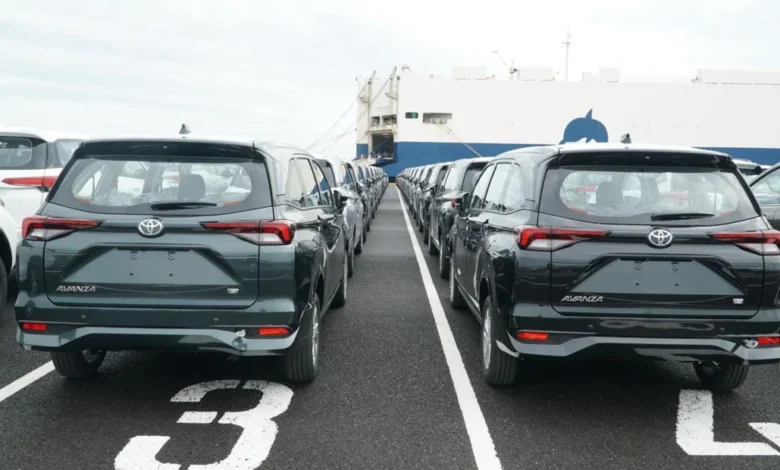
For over two decades, the Toyota Avanza has stood as a cornerstone of the Indonesian automotive landscape, consistently ranking among the best-selling vehicles in the nation. While its dominance on local roads is widely recognized, the reach of this multi-purpose vehicle (MPV) extends far beyond the archipelago. Recent data from the Association of Indonesia Automotive Industries (Gaikindo) reveals that the Avanza, manufactured domestically, serves as a significant export commodity, reaching consumers in diverse international markets across the globe. As of August 2026, the Avanza continues to solidify Indonesia’s position as a vital hub in Toyota’s global supply chain, with six nations currently importing the model in completely built-up (CBU) form.
The Evolution of the Avanza: A Two-Decade Legacy
To understand the global success of the Avanza, one must look at its origins. Introduced in late 2003, the Avanza was developed as an affordable, reliable, and versatile vehicle tailored specifically to the needs of the Southeast Asian market. Its rear-wheel-drive configuration, high ground clearance, and three-row seating capacity made it an instant hit for families and small business owners alike.
Over the past 20 years, the Avanza has undergone several major transformations. From its early iterations to the current modern platform featuring front-wheel-drive configurations and advanced safety features, the vehicle has managed to stay relevant despite shifting consumer preferences. This adaptability has not only sustained its popularity in Indonesia but has also made it an attractive proposition for emerging markets that mirror Indonesia’s topographical and demographic characteristics.
Export Statistics: A Breakdown of Global Demand
The export performance of the Avanza is a testament to the manufacturing prowess of Indonesian automotive workers. According to the latest figures released by Gaikindo for the period of January through August 2026, the cumulative export volume highlights a strategic reliance on the Philippine market, which stands as the largest importer of the Indonesian-made model.
The current export landscape for the Avanza is distributed across six key nations: the Philippines, Peru, Mexico, Qatar, Myanmar, and Bangladesh.
The Philippines leads the pack with a staggering 15,168 units imported within the first eight months of 2026. This reflects a deep-seated demand for reliable family transporters in the Philippine archipelago, where the Avanza is marketed in various configurations, including 1.3L and 1.5L engines. The pricing in the Philippines, ranging from approximately 844,000 pesos (equivalent to IDR 239 million) to 1.071 million pesos (IDR 303 million), positions it as a competitive offering in the entry-level MPV segment.
Peru holds the second position, importing 3,190 units, followed by Mexico, which has imported 2,289 units during the same period. The remaining markets, while smaller in volume, represent important footholds for Indonesian-made vehicles in the Middle East and South Asia:
- Qatar: 249 units
- Myanmar: 128 units
- Bangladesh: 19 units
Chronology of Export Expansion
The journey of the Avanza from a local favorite to a global export product did not happen overnight. In the mid-2000s, Toyota Indonesia began identifying opportunities to leverage its manufacturing capacity to support regional needs. By 2010, the company had established a robust export network, consistently sending thousands of units abroad annually.
- 2003–2005: Initial launch and focus on capturing the Indonesian domestic market.
- 2006–2010: Expansion into neighboring Southeast Asian markets and the beginning of trial exports to other developing economies.
- 2011–2015: Scaling of production facilities in Karawang, West Java, to meet both local and international demand.
- 2016–2020: Diversification of export destinations, including South America and the Middle East, as global demand for affordable MPVs grew.
- 2021–2026: Integration of newer, more fuel-efficient platforms that met global emission standards, further fueling the export surge observed in the current year.
The Strategic Importance of the Philippine Market
The prominence of the Philippines in the export data is not coincidental. Both Indonesia and the Philippines share similar economic profiles, where the need for versatile vehicles that can handle varied road conditions—ranging from dense urban centers to rural provinces—is paramount. Toyota’s strategy in the Philippines has been to offer a tiered model lineup, allowing consumers to choose between the efficiency of a 1.3L engine or the increased power of a 1.5L unit. The inclusion of Continuously Variable Transmission (CVT) options in the latest models has further aligned the product with global consumer expectations for smoother driving experiences and better fuel economy.
Economic Implications for Indonesia
The sustained export of the Avanza carries significant weight for the Indonesian economy. Beyond the direct revenue generated by the automotive sector, these exports represent a broader validation of the country’s industrial infrastructure.
- Foreign Exchange Earnings: Automotive exports contribute significantly to the national trade balance. By exporting high-value goods like CBU vehicles, Indonesia reduces its reliance on raw commodity exports.
- Manufacturing Ecosystem: The demand for exported Avanzas sustains a massive supply chain involving hundreds of domestic component manufacturers. This creates a ripple effect, providing jobs for thousands of workers involved in the production of parts ranging from tires and batteries to electronics and body panels.
- Global Quality Standards: To export to countries like Mexico or Peru, vehicles must meet stringent international safety and environmental regulations. The fact that the Avanza continues to meet these standards serves as a benchmark for the quality of Indonesian automotive manufacturing.
Industry Perspectives and Future Outlook
While industry analysts acknowledge the success of the Avanza, they also emphasize the need for continued innovation. The global automotive industry is rapidly pivoting toward electrification and hybrid technologies. For Indonesia to remain a dominant player in the export of vehicles like the Avanza, future iterations will likely need to incorporate hybrid or electric powertrain options to meet the evolving regulatory landscapes in countries like Mexico and other global importers.
Furthermore, competition is increasing. Other manufacturers are also eyeing the emerging market segment in the Philippines and South America. However, Toyota’s long-standing reputation for durability—the "Toyota Way"—provides a significant competitive advantage. As one industry observer noted, "The Avanza is not just a car; it is a proven platform that has demonstrated its ability to survive and perform in the most demanding conditions globally."
Conclusion
The data for 2026 underscores a remarkable trajectory for the Toyota Avanza. What began as a domestic project aimed at addressing the mobility needs of the Indonesian populace has evolved into an international success story. By serving six diverse markets across three continents, the Indonesian-made Avanza serves as a bridge between Indonesian manufacturing capability and global consumer demand.
As the industry moves toward 2027 and beyond, the challenge will be to maintain this momentum. The continued investment in the Karawang production facilities, coupled with the ongoing adaptation of the vehicle to meet international standards, suggests that the Avanza will remain a staple on global roads for the foreseeable future. For Indonesia, the success of this model is a clear indicator that its industrial sector is not only capable of supporting local needs but is also a competitive and essential participant in the global automotive supply chain. The export figures, while just numbers on a page, represent the resilience and expertise of a nation that has successfully transitioned from a regional player to a global contributor in the automotive arena.