Essential Duas and Spiritual Traditions Following the Islamic Marriage Ceremony to Foster a Blessed Household

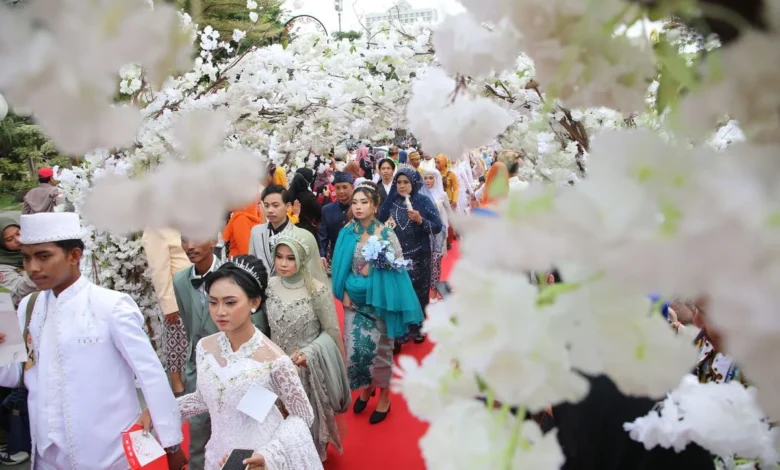
The completion of the akad nikah, or the solemnization of the marriage contract, marks a profound transition in the life of a Muslim, signaling the beginning of a sacred bond recognized by both divine law and social structure. In Islamic tradition, this transition is not merely a legal or social formality but a spiritual milestone that is immediately sanctified through specific supplications known as duas. These prayers, deeply rooted in the Prophetic tradition (Sunnah), serve as a formal request to the Creator for the new household to be enveloped in divine blessing, enduring affection, and comprehensive goodness. By invoking these prayers, the community of family, friends, and witnesses participates in the spiritual fortification of the union, transitioning the focus from the legalities of the contract to the long-term sustainability of the marriage.
The Prophetic Mandate for Post-Ceremony Supplications
Islam emphasizes that the moments following the conclusion of the marriage contract are among the most opportune times for the acceptance of prayer. The Prophet Muhammad (peace be upon him) established a clear protocol for offering congratulations to the newlywed couple, moving away from the cultural practices of the pre-Islamic era (Jahiliyyah) and replacing them with words of substance and spiritual weight. The most prominent and widely recognized prayer for the couple, as recorded in several authentic collections of Hadith, is a concise yet comprehensive invocation for barakah (divine blessing).
The prayer, as narrated by Abu Hurairah (may Allah be pleased with him), is: Barakallahu laka wa baraka ‘alaika wa jama’a bainakuma fii khair. Translated into English, it means: "May Allah grant you blessing, and send His blessing upon you, and bring you together in goodness." This supplication was the standard greeting used by the Prophet Muhammad (SAW) whenever he congratulated someone who had recently married, as documented in the records of Abu Dawud (No. 2130), At-Tirmidzi (No. 1091), and Ibnu Majah (No. 1905). Imam At-Tirmidzi categorized this Hadith as Hasan Sahih (good and authentic), cementing its status as the preferred method for well-wishers to address a new couple.
Theological Analysis of the Congratulatory Prayer
The linguistic structure of the prayer Barakallahu laka wa baraka ‘alaika wa jama’a bainakuma fii khair offers a deep insight into the Islamic philosophy of marriage. Scholars of Islamic jurisprudence and linguistics have long analyzed the nuances of this specific phrasing. The repetition of the word "baraka" (blessing) in two different prepositional forms—"laka" (for you) and "’alaika" (upon you)—is significant.
The term "laka" implies the blessings found in moments of ease, prosperity, and happiness. It is a request for Allah to make the pleasant aspects of marriage a source of spiritual growth. Conversely, "’alaika" refers to the blessings that descend during times of hardship, challenge, and trial. By using both terms, the prayer acknowledges that marriage will inevitably face fluctuating circumstances. It asks that even in difficulty, the couple finds divine grace and a path toward resilience.
Furthermore, the final phrase, "wa jama’a bainakuma fii khair" (and bring you together in goodness), acts as a safeguard for the relationship’s ultimate purpose. It recognizes that while a couple may be physically together, true unity is only beneficial when it is centered on "khair" (goodness). This includes mutual encouragement toward righteousness, the fulfillment of shared responsibilities, and the nurturing of a family environment that adheres to ethical and spiritual values.
The Private Sunnah: The Husband’s Prayer for the Wife
In addition to the public prayers offered by guests, Islamic tradition prescribes a specific private act for the husband upon his first meeting with his wife after the ceremony. This practice is intended to establish a foundation of gentleness, leadership, and mutual respect. The Sunnah encourages the husband to place his hand gently upon the forehead (the forelock) of his wife and recite a specific supplication.
The prayer is: Allahumma inni as’aluka min khairiha wa khairi ma jabaltaha ‘alaihi, wa a’udzu bika min syarriha wa syarri ma jabaltaha ‘alaihi. This translates to: "O Allah, I ask You for her goodness and the goodness of the nature upon which You have created her. And I seek refuge in You from her evil and the evil of the nature upon which You have created her."
This prayer, sourced from the narrations of Abu Dawud, is often misunderstood in a modern context. However, classical scholars explain that "evil" in this context refers to human imperfections, temperamental flaws, or potential conflicts that can arise in any human relationship. By reciting this, the husband acknowledges his own vulnerability and his wife’s humanity, placing the entire future of their interpersonal dynamics in the hands of the Creator. It is a gesture of humility that reminds the husband that his wife is a trust (amanah) from Allah, requiring care, patience, and divine guidance to navigate.
Chronology of the Marriage Process and Spiritual Milestones
The integration of these prayers follows a specific chronological sequence within the broader Islamic wedding framework. In the Indonesian context, where the Ministry of Religious Affairs (Kemenag) oversees the Office of Religious Affairs (KUA), this sequence is often facilitated by the penghulu (marriage official).
- The Pre-Marriage Phase (Bimwin): Before the ceremony, couples often undergo marriage counseling (Bimbingan Perkawinan), where they are taught the meanings and importance of these prayers.
- The Ijab and Qabul: The legal contract is signed and witnessed.
- The Sigat Taklik: In some cultures, including Indonesia, the husband recites a set of conditions and promises regarding the protection of his wife’s rights.
- The Public Supplication: Immediately after the contract is finalized, the penghulu or a designated religious elder leads the congregation in the Barakallahu laka prayer.
- The Private Meeting: Following the public ceremony, the couple meets privately or in a smaller family setting, where the husband performs the Sunnah of the hand on the forehead.
The Institutional Role in Preserving Traditions
The Indonesian Ministry of Religious Affairs has recently emphasized that the role of the penghulu must evolve beyond mere administrative tasks. According to statements from Kemenag officials, there is a concerted effort to train marriage officials to act as spiritual guides who can explain the depth of these rituals to the couple and their families. This initiative aims to ensure that the akad nikah is not perceived as a bureaucratic requirement but as a transformative spiritual event.
Data from the Central Bureau of Statistics (BPS) indicates that while marriage rates remain high in Indonesia, the complexity of modern life has led to an increase in domestic challenges. Consequently, Kemenag has positioned the KUA as a "node of family resilience." By emphasizing the spiritual foundations—such as the meaning of the post-akad prayers—the government hopes to provide couples with a psychological and spiritual "anchor" that helps prevent divorce and promotes the concepts of sakinah (tranquility), mawaddah (love), and rahmah (mercy).
Broader Implications and Social Impact
The practice of offering these specific prayers has significant social and psychological implications. In a society where weddings can often become extravagant displays of wealth and status, the focus on Sunnah-based prayers serves as a grounding mechanism. It reminds the couple and the attendees that the true success of a marriage is not measured by the grandeur of the walimah (feast) but by the presence of divine blessing.
Furthermore, these traditions provide a template for healthy communication. The husband’s prayer for the wife, characterized by a gentle touch on the forehead, sets a precedent for physical and emotional tenderness. It establishes a "sanctuary of prayer" within the home, where challenges are met with supplication rather than immediate conflict.
The transition from the pre-Islamic "congratulations on wealth and children" to the Islamic "congratulations on blessing and goodness" represents a fundamental shift in values. While wealth and children are seen as blessings, they are not the ultimate goals. The Islamic prayers focus on the quality of the relationship and the virtue of the individuals within it, ensuring that the union contributes positively to the broader community.
Conclusion: A Holistic Approach to Marriage
The enrichment of the marriage ceremony through these specific prayers reflects the holistic nature of Islam, which seeks to sanctify every aspect of human life. From the moment the qabul (acceptance) is uttered, the faith provides a framework of words and actions designed to protect the couple from the volatility of human emotion and external pressures.
By maintaining the practice of these duas, the Muslim community preserves a direct link to the teachings of the Prophet Muhammad (SAW). These prayers act as a reminder that a successful marriage is a collaborative effort between the husband, the wife, and the Creator. As couples embark on their journey toward building a family, these timeless supplications provide the spiritual roadmap necessary to achieve a life of harmony, resilience, and enduring peace. Through the efforts of institutions like Kemenag and the continued adherence of the faithful, these spiritual traditions remain a cornerstone of the Islamic social fabric, fostering households that are not only legally recognized but divinely blessed.