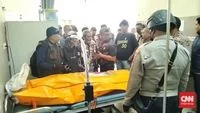
Five Members of a Family Brutally Murdered in Remote Central Kalimantan Region, Sparking Intensive Manhunt and Deep Community Concern


A horrific act of violence has sent shockwaves through the remote region bordering Central and East Kalimantan, as five members of a single family were brutally murdered within the concession area of PT Timber Dana, an industrial forest plantation (HPH) company, in Desa Benangin II, Kecamatan Teweh Timur, Kabupaten Barito Utara. The tragic incident, which occurred on Sunday, April 19, around 4:30 PM Western Indonesian Time (WIB), left five individuals dead and one critically injured, highlighting the fragile security landscape in Indonesia’s vast and often isolated resource-rich territories. Authorities have launched an intensive manhunt for three identified suspects, as the community grapples with profound grief and heightened fears for their safety.
A Brutal Attack Unfolds
The quiet Sunday afternoon in Desa Benangin II was shattered by an unthinkable act of brutality. According to reports from Antara, a family comprising six individuals was targeted in a premeditated assault. The victims, identified as residents of Desa Benangin II, were Cuah (55), Hasna (40), Tasya Haulina (17), David (3), and Ono (50), all of whom succumbed to their injuries. The sole survivor, 40-year-old Alfian, sustained critical wounds and is currently undergoing intensive medical treatment at RSUD Muara Teweh, fighting for his life. This heinous crime has not only devastated a family but also cast a long shadow of fear and uncertainty over the entire community, prompting urgent calls for justice and enhanced security measures in the region.
The Horrific Timeline of Events
The chronology of the attack, pieced together from the harrowing account of the critically injured survivor, Alfian, paints a chilling picture of premeditated violence. The events unfolded rapidly, leaving little time for the victims to react or escape.
Sunday, April 19, 2020:
- Approximately 4:30 PM WIB: The tranquility of the HPH PT Timber Dana concession area, where the victims were present, was abruptly shattered. Three suspected perpetrators, whose identities have since been revealed, arrived at the location in a Kijang-type vehicle. The choice of vehicle and the apparent coordination suggest a planned assault rather than a spontaneous act.
- Initial Confrontation and Interrogation: Upon arrival, the assailants, reportedly armed with both sharp weapons and homemade firearms, immediately confronted the victims. Their first action was to demand identification from the family members. This initial interaction suggests an intent to verify the identities of their targets, further supporting the theory of a planned attack.
- Brutal Assault: Following the brief interrogation, the suspects launched a savage attack using their sharp weapons. The brutality of the assault was indiscriminate, targeting multiple family members. The use of sharp weapons indicates a close-quarters, visceral attack, designed to inflict maximum harm.
- Search for More Victims: After the initial attack, the perpetrators did not immediately flee. Instead, they actively searched the surrounding area for any other potential victims, extending their reign of terror. This indicates a thorough and determined effort to eliminate all individuals present at the scene. They reportedly found and attacked additional family members, ensuring widespread casualties.
- Arson and Escape: With their victims lying incapacitated, the perpetrators allegedly set fire to the victims’ living quarters, described as a pondok or warung (a small hut or stall). This act of arson not only destroyed evidence but also added another layer of terror and destruction to the crime scene, potentially to cover their tracks or inflict further psychological damage.
- Approximately 5:30 PM WIB: An hour after their arrival, the perpetrators fled the scene, leaving behind a trail of death and destruction. Their swift departure suggests a well-rehearsed plan, aiming to evade immediate capture.
Immediate Aftermath:
- Discovery and Initial Response: Soon after the perpetrators’ departure, local residents, alerted by the smoke and commotion, discovered the horrific scene. Their immediate priority was to provide aid to any survivors. Alfian, found critically wounded, was quickly rushed to RSUD Muara Teweh by concerned villagers using their private vehicles, a testament to the community’s spontaneous and brave response.
- Monday, April 20, 2020:
- Evacuation of Deceased: The challenging task of evacuating the five deceased victims began. Due to the remote location and the need for proper handling, a medical team was dispatched, utilizing five ambulances. This operation underscored the logistical difficulties in managing such a crisis in isolated areas.
- Approximately 11:00 AM WIB: All five bodies arrived at RSUD Muara Teweh, where they were immediately transferred to the morgue for forensic examination and identification procedures. The arrival of the ambulances carrying the deceased marked a somber moment for the community, solidifying the tragic reality of the mass murder.
Victims Identified, One Fights for Life
The deceased victims have been identified as Cuah (55), Hasna (40), Tasya Haulina (17), David (3), and Ono (50). The presence of young children and teenagers among the victims highlights the indiscriminate nature of the violence and deepens the sense of tragedy. The loss of multiple generations from a single family has left an irreplaceable void within Desa Benangin II.
Alfian, the 40-year-old survivor, remains in critical condition at RSUD Muara Teweh. His survival is a small miracle amidst the devastation, but his injuries are severe, and his recovery journey is expected to be long and arduous. As the sole witness to the brutal attack, his testimony, once he is stable enough to provide it, will be crucial for the ongoing investigation and for understanding the full scope of the perpetrators’ actions and potential motives. His struggle for life is a poignant reminder of the extreme violence inflicted upon his family.
A Remote Frontier: The Setting of the Tragedy
The site of the murders, Desa Benangin II in Kecamatan Teweh Timur, Kabupaten Barito Utara, Central Kalimantan, is situated in a geographically challenging and remote area, bordering the province of East Kalimantan. This region is characterized by dense forests, limited infrastructure, and scattered communities, making it a difficult terrain for law enforcement operations and emergency services. The presence of PT Timber Dana, an HPH company, indicates that the area is part of an industrial forest concession, often leading to a mix of company employees, migrant workers, and indigenous communities coexisting within or near these operational zones.
Remote areas like Benangin II frequently face unique challenges, including a scarcity of public services, limited access to education and healthcare, and a heightened reliance on natural resources for livelihoods. The isolation can also contribute to a slower response time for emergency services and a more complex environment for maintaining law and order. The proximity to the East Kalimantan border further complicates matters, as perpetrators could potentially cross provincial lines to evade capture, posing an additional jurisdictional challenge for police. The very nature of this frontier region, with its vast, unmonitored expanses, can unfortunately make it a haven for various illicit activities or a difficult place to pursue criminals effectively.
Intensive Manhunt and Investigation Launched
Immediately following the discovery of the crime, local law enforcement agencies initiated a comprehensive investigation and launched an intensive manhunt for the perpetrators. The identity of three suspected perpetrators has been quickly established: L (55), P (50), and M (52), all of whom are reportedly residents of Desa Benangin I, a neighboring village within the same Kecamatan Teweh Timur. This detail suggests a potential pre-existing connection or conflict between the victims and the suspects, or at least a familiarity with the local geography and community dynamics.

Police spokespersons, while cautious not to release too many details during an active investigation, have assured the public that all available resources are being mobilized. "We are working tirelessly to apprehend these individuals and bring them to justice," a police official, likely from the Barito Utara Resort Police (Polres Barito Utara) or the Central Kalimantan Regional Police (Polda Kalimantan Tengah), would likely state. "Our teams, including personnel from various units, are currently conducting extensive searches across the region. We urge anyone with information, no matter how small, to come forward and assist us."
The pursuit of the suspects in such a remote and forested environment presents significant challenges. Tracking down individuals across vast stretches of dense jungle requires specialized skills, local knowledge, and potentially K9 units. Forensic teams would have meticulously processed the crime scene, collecting evidence such as fingerprints, DNA samples, and ballistic evidence from the homemade firearms, if any projectiles were recovered. The focus of the investigation is not only on apprehending the suspects but also on uncovering the exact motive behind this horrific act, which remains the central question baffling both the authorities and the local community.
Grief and Fear Grip the Community
The mass murder has plunged Desa Benangin II and the wider Teweh Timur sub-district into a state of profound mourning and palpable fear. The term "duka mendalam" (deep sorrow) barely captures the emotional devastation experienced by the residents. Funerals for the victims would have been somber affairs, attended by a community struggling to comprehend such an act of extreme violence.
Beyond the immediate grief, there is a pervasive sense of insecurity. Residents, particularly those living in remote outposts or within HPH concession areas, are now questioning their safety. The fact that the perpetrators were seemingly able to carry out such a brutal attack and escape undetected for a period has amplified these fears. Concerns have been raised about the adequacy of security presence in these remote locales and the potential for similar incidents to occur. Some residents might even consider relocating if they feel their lives are at risk, leading to potential social and economic disruption in an already vulnerable area. Community leaders are likely working to console their constituents and are undoubtedly pressing authorities for swift action and long-term security solutions to restore peace of mind. The incident has undoubtedly strained relations between Desa Benangin I and Desa Benangin II, given the suspects’ origins.
Unraveling Potential Motives: Land, Resources, or Personal Feuds?
While the official motive remains under investigation, several plausible theories, often observed in similar incidents within Indonesia’s resource-rich regions, are likely being explored by authorities. Given the location within an HPH concession, conflicts related to land and natural resources are a primary consideration.
- Land Disputes: Indonesia, particularly Kalimantan, has a long history of land disputes, often escalating into violence. These can involve conflicts between local communities and large corporations (like HPH companies), or between different community groups over traditional land rights, boundaries, or access to resources. The victims might have been perceived as encroaching on land claimed by the suspects, or vice-versa, or perhaps they were witnesses to illegal activities related to land or logging.
- Resource Conflicts: Beyond land, disputes over access to specific resources like timber, agricultural land, or even mining concessions are common. The HPH area could be a site for illegal logging, poaching, or other illicit resource extraction activities. The victims might have uncovered such operations or refused to cooperate, making them targets.
- Personal or Family Feuds: The fact that the suspects are from a neighboring village (Desa Benangin I) opens the possibility of a long-standing personal vendetta or inter-family feud. Such conflicts, particularly in close-knit rural communities, can simmer for years before erupting into extreme violence, sometimes over seemingly minor issues that accumulate over time.
- Criminal Gang Activity: The use of both sharp weapons and homemade firearms suggests a degree of organized intent. While less common for such targeted family attacks, it’s possible the perpetrators are part of a local criminal element involved in extortion, intimidation, or protection rackets, and the victims may have resisted their demands.
- Witness Elimination: If the victims had witnessed another crime or were privy to information that could incriminate the perpetrators in an unrelated matter, their elimination would be a brutal tactic to silence them.
Investigators will meticulously examine the backgrounds of both the victims and the suspects, looking for any history of disputes, grievances, or past interactions that could shed light on the motive. Financial motives, though less explicitly indicated, could also be a factor if there were valuable assets or resources involved.
Challenges of Justice in Remote Regions
The pursuit of justice in remote areas like Teweh Timur presents unique challenges. The vastness of the terrain, coupled with limited communication and transportation infrastructure, can significantly impede law enforcement operations. Suspects can easily disappear into dense forests or cross jurisdictional boundaries, prolonging the manhunt.
Furthermore, forensic investigations can be complicated by the time elapsed before authorities reach the scene and the potential for environmental factors to degrade evidence. The reliance on local informants and community cooperation becomes paramount, but fear can often deter individuals from coming forward with crucial information. The presence of homemade firearms also highlights a concerning issue of illegal weapon proliferation in some remote parts of Indonesia, adding another layer of danger for both communities and law enforcement. The judicial process itself, from apprehension to trial, can be lengthy and resource-intensive, requiring sustained commitment from various levels of government and law enforcement.
Moving Forward: Addressing Root Causes and Ensuring Security
The tragic events in Desa Benangin II underscore the urgent need for a multifaceted approach to address security challenges in Indonesia’s remote regions. Beyond the immediate apprehension of the perpetrators, long-term strategies are crucial. These include:
- Enhanced Security Presence: Increasing the visible presence of law enforcement and establishing community policing initiatives can deter crime and build trust between authorities and residents.
- Conflict Resolution Mechanisms: Implementing effective and impartial mechanisms for resolving land disputes and inter-community conflicts can prevent grievances from escalating into violence. This might involve local customary leaders, government mediators, and legal aid.
- Socio-Economic Development: Addressing root causes such as poverty, lack of opportunities, and limited access to education can reduce the allure of illegal activities and foster more stable communities.
- Stricter Control on Illicit Arms: Efforts to crack down on the manufacture and trafficking of homemade firearms are essential to prevent future acts of extreme violence.
- Inter-Agency Cooperation: Improved coordination between local police, regional police, and other relevant government agencies, including those managing HPH concessions, is vital for comprehensive security and rapid response.
The incident serves as a grim reminder that while economic development in resource-rich areas is pursued, the safety and well-being of the local communities must remain a top priority. The entire nation awaits swift justice for the victims of this horrific massacre and hopes that measures will be put in place to prevent such tragedies from recurring in Indonesia’s vulnerable frontier zones.