The Spiritual Foundation of Islamic Marriage Essential Prayers and Rituals Following the Akad Nikah Ceremony

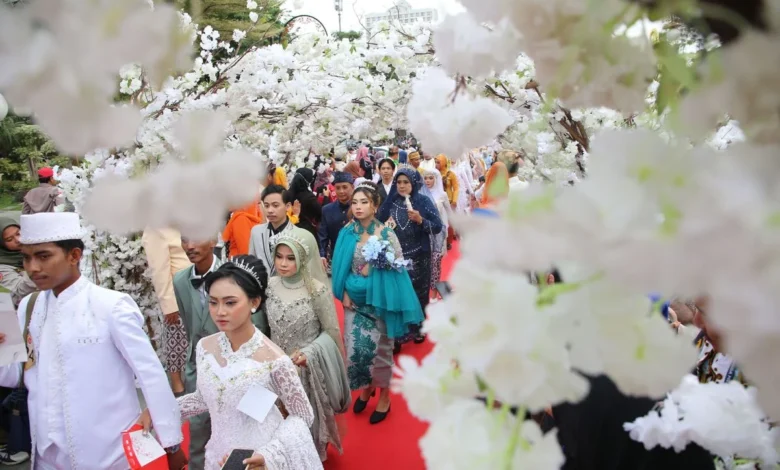
The completion of the akad nikah, or the formal Islamic marriage contract, marks a profound transition in the lives of a Muslim couple, shifting their status from individuals to a unified household recognized under both religious and civil law. In Islamic tradition, this pivotal moment is not merely a legal formality but a spiritual milestone that necessitates the seeking of divine blessings through specific supplications known as du’a. Following the conclusion of the marriage contract, Islam encourages the congregation, family members, and the couple themselves to offer prayers that invoke barakah (blessings), mercy, and enduring love. These prayers serve as a foundational spiritual shield, intended to protect the new union from discord and to align the couple’s future with the principles of a sakinah, mawaddah, and rahmah (tranquil, loving, and merciful) household.
According to various prophetic traditions, the act of praying for the newlyweds is a sunnah—a practice of Prophet Muhammad SAW—that transforms a social celebration into an act of worship. Religious scholars emphasize that the period immediately following the akad nikah is a "mustajab" time, a window where prayers are more likely to be accepted by the Almighty. Consequently, the presence of guests and family members is viewed not just as a social obligation but as a collective spiritual effort to usher the couple into their new life with the best possible intentions and divine intercession.
The Prophetic Supplication for the Newlyweds
The most prominent prayer recited by the community for a new couple is rooted in a hadith narrated by Abu Hurairah RA. It is recorded that whenever the Prophet Muhammad SAW offered his congratulations to a newly married person, he would recite a specific formula that encompasses all aspects of a prosperous life. The prayer is: "Barakallahu laka wa baraka ‘alaika wa jama’a bainakuma fii khair." This translates to: "May Allah bestow blessings upon you, send His blessings upon you, and join the two of you in goodness."
This particular supplication is highly regarded for its comprehensive nature. Islamic jurists and linguists note that the phrase "Barakallahu laka" refers to the blessings found in times of ease and prosperity, while "wa baraka ‘alaika" refers to the blessings and steadfastness granted during times of hardship and challenge. By reciting this, the community asks that the couple remains under divine grace regardless of the fluctuating circumstances of life. Furthermore, the concluding phrase, "wa jama’a bainakuma fii khair," is a plea for the couple to be united not just in physical proximity, but in a shared pursuit of righteousness and virtue. This prayer is authenticated in the collections of Abu Dawud (No. 2130), At-Tirmidzi (No. 1091), and Ibnu Majah (No. 1905), with Imam At-Tirmidzi classifying the narration as hasan sahih (good and authentic).
The Groom’s First Act of Spiritual Leadership
Beyond the communal prayers, Islam provides specific guidance for the husband as he assumes his role as the head of the household. Immediately following the akad nikah, when the husband first interacts with his wife in a private or semi-private setting, it is recommended for him to place his hand gently upon her forehead (the forelock) and recite a personal supplication. This ritual is designed to establish a relationship based on humility and reliance on God rather than ego or dominance.
The prayer taught by the Prophet Muhammad SAW for this occasion is: "Allahumma inni as’aluka min khairiha wa khairi ma jabaltaha ‘alaihi, wa a’udzu bika min syarriha wa syarri ma jabaltaha ‘alaihi." In English, this means: "O Allah, I ask You for the goodness within her and the goodness of the nature upon which You have created her. And I seek refuge in You from the evil within her and the evil of the nature upon which You have created her." This prayer acknowledges that every human being possesses both strengths and weaknesses. By reciting this, the husband seeks to nurture the positive traits of his spouse while asking for divine protection against the frictions and misunderstandings that naturally occur in any human relationship. This practice, narrated by Abu Dawud, serves as a reminder that the marriage is a partnership governed by divine oversight.
The Evolution of Marriage Traditions and Family Resilience in Indonesia
In the Indonesian context, the Ministry of Religious Affairs (Kemenag) has increasingly emphasized the importance of these spiritual rituals as part of a broader strategy to enhance "Ketahanan Keluarga" or family resilience. With divorce rates in Indonesia showing fluctuations over the past decade—reaching over 500,000 cases annually in recent years according to data from the Central Bureau of Statistics (BPS)—the government has integrated spiritual and psychological counseling into the pre-marital process.
The Ministry’s "Bimwin" (Bimbingan Perkawinan) or Marriage Guidance program now includes modules on the philosophical meanings of post-akad prayers. Officials argue that when a couple understands the depth of the prayers recited over them, they are more likely to approach conflict with patience and a sense of sacred duty. The role of the penghulu (marriage registrar) has also evolved. Once seen merely as an administrative official who witnesses the contract, the penghulu is now trained to act as a spiritual counselor who ensures that the couple and their families perform these sunnah prayers with full awareness of their meaning.
Chronology of the Islamic Marriage Process
To understand the placement of these prayers, one must look at the typical chronology of an Islamic marriage ceremony as practiced in modern society:
- The Proposal (Khitbah): The formal request for marriage where the families meet and agree on the union.
- Administrative Registration: Filing documents with the Office of Religious Affairs (KUA) and attending mandatory pre-marital briefings.
- The Akad Nikah: The core ceremony consisting of the Ijab (offer) and Qabul (acceptance), witnessed by two male witnesses and presided over by a Wali (guardian).
- The Sighet Ta’liq: In many Indonesian ceremonies, the husband recites a conditional divorce statement intended to protect the rights of the wife.
- The Post-Akad Supplications: The specific prayers mentioned above are recited immediately after the contract is signed and the marriage is declared "Sah" (valid).
- The Walimatul Ursy: The wedding feast or reception, where the community continues to offer the "Barakallahu laka" prayer to the couple.
Analysis of the Sociological and Psychological Impact
The practice of reciting these prayers has significant implications for the psychological well-being of the newlyweds. Psychologists specializing in family dynamics suggest that rituals provide a sense of "boundary marking," helping individuals transition from their previous identity to a new, shared identity. In a religious context, the du’a acts as a collective "social contract" where the community witnesses and supports the couple’s intent to build a moral home.
Furthermore, the shift from pre-Islamic (Jahiliyyah) greetings to Islamic prayers represents a fundamental change in values. During the Jahiliyyah era, it was common to congratulate a groom by saying, "May you live in harmony and have many sons." The Prophet Muhammad SAW replaced this with the prayer for barakah (blessings). The distinction is vital: while the old greeting focused on material success and patriarchal lineage, the Islamic prayer focuses on the quality of the relationship and the presence of divine favor in all circumstances, whether the couple is blessed with children or not, and whether they experience wealth or poverty.
Official Responses and Religious Interpretations
Religious leaders from organizations such as Nahdlatul Ulama (NU) and Muhammadiyah frequently highlight that the "Barakallahu" prayer is a form of "tashih" or correction of the heart. By asking for blessings "upon" the couple (wa baraka ‘alaika), the community is asking Allah to make the couple a source of blessing for their environment, their parents, and the wider society.
An official from the Indonesian Ministry of Religious Affairs recently stated that the KUA must serve as the primary node for family resilience. "The marriage contract is not just about the signature on the Buku Nikah (marriage book); it is about the spiritual commitment that follows. We encourage all penghulus to not only lead the akad but to also ensure that the prayers of the Prophet are recited and understood by the congregation. This is the first step in preventing domestic instability."
Conclusion: A Holistic Approach to Marital Success
The inclusion of specific prayers after the akad nikah underscores the holistic nature of Islam, where the legal, social, and spiritual dimensions of life are inextricably linked. By enriching the marriage ceremony with these authentic supplications, the couple is reminded that their union is a sacred trust (amanah) from God.
As the couple embarks on their journey, these prayers serve as a constant reminder to maintain open communication, exercise patience, and fulfill their respective rights and obligations. In an era where the institution of marriage faces numerous modern challenges—from economic pressures to digital-age distractions—the return to these prophetic traditions offers a grounding force. The prayers recited at the end of the akad nikah are not merely traditional utterances; they are the spiritual blueprints for a resilient and flourishing family life, aiming for the ultimate goal of a household that is sakinah (peaceful), mawaddah (filled with love), and rahmah (graced with mercy).