San Francisco Startup Hiring Workers to Walk Robot Dogs for $20 an Hour in Groundbreaking AI Training Initiative

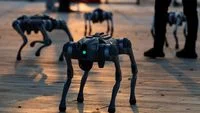
In an increasingly automated world where the line between science fiction and everyday reality continues to blur, a technology startup based in San Francisco, California, has introduced one of the most unusual employment opportunities of the modern era. Dimensional, an early-stage artificial intelligence firm nestled in the city’s Dogpatch district, has officially opened recruitment for positions that require candidates to walk robotic dogs through urban environments. Offering an hourly wage of US$20—complemented by fully paid training programs—the initiative is designed to gather vital real-world environmental data to train autonomous AI software systems.
While the job may sound like a whimsical internet meme or a dystopian novelty at first glance, it underscores a profound technical bottleneck currently facing the robotics and artificial intelligence sectors: software cannot yet reliably navigate the physical world without human intervention. As technology companies race to develop versatile humanoid and quadrupedal machines capable of operating autonomously in complex environments, the humble act of walking a mechanical canine down a city sidewalk has emerged as an indispensable step in the evolution of modern automation.
The Mechanics of the Role and Operational Challenges
According to details outlined in job postings published by Dimensional in early October, the startup is actively seeking reliable operators to manage quadrupedal robots during rigorous outdoor testing phases. Shifts typically range from four to six hours, during which workers guide the machines along predetermined outdoor routes across San Francisco. The compensation structure guarantees immediate payment upon the completion of each shift, making it an accessible gig-economy style position for locals.
Remarkably, the company does not require applicants to possess prior experience in robotics, engineering, or software development. Recognizing that managing unfamiliar hardware can be daunting, Dimensional provides comprehensive, paid training prior to deployment.
However, the position is not without its physical demands and operational frustrations. The robotic units utilized in the testing phases weigh approximately 33 pounds (15 kilograms). Operators must be prepared to handle various technical malfunctions that inevitably arise during field tests. In urban environments, unpredictable wireless signals, hardware glitches, or overheating components can cause the robotic dogs to stall, freeze, or abruptly shut down. When such failures occur, the human handler must physically retrieve and carry the heavy hardware back to the testing base.
The Bridge Between Artificial Intelligence and Physical Reality
The overarching objective behind Dimensional’s unorthodox hiring campaign is to bridge a critical gap in artificial intelligence research: the transition from digital simulation to physical execution. For decades, AI development has focused heavily on large language models, computer vision algorithms, and virtual simulations. However, teaching an algorithm to understand a three-dimensional physical space while successfully manipulating hardware remains one of the steepest challenges in computer science.
Stash Pomichter, the founder of Dimensional, explained the rationale behind relying on human operators during a recent interview with industry publications. According to Pomichter, current artificial intelligence models acting as software "agents" remain remarkably inept at directly controlling physical hardware in dynamic, unstructured environments.
"What we concluded from our dog-walking experiments is that agents are still very bad at controlling hardware, and humans are still necessary in the process," Pomichter noted.
During these field tests, human handlers retain primary control of the quadrupedal robots using handheld remote controls or dedicated mobile applications. Simultaneously, an array of onboard optical sensors, LiDAR systems, and high-definition cameras capture massive streams of environmental data. This telemetry is subsequently fed back into Dimensional’s open-source operating systems, gradually training the underlying AI models to recognize obstacles, understand terrain variations, and eventually replicate human navigation strategies.
Inside Dimensional’s Hardware Arsenal and Open-Source Vision
Founded with the mission of creating universal operating systems that enable AI agents to govern diverse robotic platforms, Dimensional operates at a scale that extends far beyond a few experimental quadrupedal units. Industry reports from outlets such as The New York Times indicate that the San Francisco startup has aggressively acquired a robust hardware fleet. The company has reportedly purchased more than 100 robotic dogs and over 50 humanoid robots sourced from manufacturers across the United States, China, and Germany.
The specific quadrupedal robots deployed on the streets of San Francisco are manufactured by Unitree Robotics, a prominent Chinese robotics firm known for producing agile, commercially viable mechanical dogs. Each unit commands a market price of roughly US$2,000. These machines are engineered with advanced joint mobility, allowing them to traverse uneven terrain, climb stairs, and maintain balance under moderate external force.
Dimensional’s ultimate ambition is to build an open-source architecture that democratizes robotics control, allowing software developers to deploy AI agents across a wide spectrum of industrial hardware. By decoupling proprietary software from specific machine manufacturers, the startup hopes to accelerate the integration of robotics into mainstream commerce.
Industrial Implications and the Future of Labor
The deployment of robot dogs and humanoid units is not intended merely for urban exploration or novelty data collection. Dimensional envisions its technology transforming high-labor industries where physical tasks expose human workers to repetitive strain, ergonomic hazards, or hazardous conditions.
Target sectors for future deployments include manufacturing facilities, large-scale data centers, active construction sites, and corporate or industrial security operations. In these environments, autonomous robots equipped with advanced AI could theoretically conduct inventory audits, inspect structural integrity, monitor thermal anomalies, and patrol perimeters without fatigue.
Pomichter expressed a strong philosophical motivation underpinning the company’s drive toward automation, pointing to the physical toll that manual labor extracts from the human workforce. "To be frank, it is barbaric that humans are still doing these physical tasks," Pomichter stated, referencing arduous duties such as lifting, carrying, and sorting heavy inventory boxes in warehouses.
By automating these foundational physical chores, proponents argue that robotics can liberate human labor for higher-level cognitive, creative, and supervisory tasks. However, this vision also amplifies ongoing societal debates regarding the future of employment, workplace displacement, and the economic security of low-skill workers as machines gradually encroach upon traditional blue-collar domains.
Broader Economic and Market Context
The recruitment strategy adopted by Dimensional mirrors a broader trend across Silicon Valley and global technology hubs, where the race for embodied artificial intelligence has intensified dramatically. Venture capital investment has surged into embodied AI—the intersection of machine learning and physical robotics—as investors look for the next paradigm shift following the generative AI boom.
Startups and established technology conglomerates alike are aggressively recruiting non-traditional talent pools to assist with data collection. From training autonomous driving systems to teaching robotic arms how to fold laundry or sort packages, the "human-in-the-loop" model has become a foundational pillar of modern machine learning pipelines. While automated synthetic data generation has advanced rapidly, real-world edge cases—such as unpredictable pedestrian behavior, sudden weather changes, and hardware anomalies—still necessitate extensive real-world testing.
As regulatory bodies, urban planners, and the public continue to observe the proliferation of autonomous machinery in public spaces, the presence of pedestrian handlers guiding robotic canines through city streets serves as a visible reminder of the technological transition currently underway. Whether initiatives like Dimensional’s will successfully bridge the chasm between artificial intelligence and flawless physical autonomy remains to be seen. In the interim, however, tech enthusiasts and job seekers in San Francisco have a unique opportunity to participate directly in shaping the mechanical workforce of tomorrow—one neighborhood walk at a time.