Aldio Oekon: A Profile of the Racing Professional Behind the High-Profile Engagement to Yoriko Angeline

The intersection of high-octane motorsport and celebrity culture recently captured public attention when Indonesian professional race car driver Aldio Oekon proposed to actress Yoriko Angeline in the romantic setting of the Palace of Versailles, France. The announcement, made public in early September 2026, transformed Oekon from a niche motorsport figure into a household name. While the public’s initial curiosity was piqued by the cinematic nature of the proposal, a closer look at Oekon’s trajectory reveals a multifaceted professional who has successfully navigated the demanding worlds of competitive racing and academic excellence.
A Journey from the Track to the Global Stage
Aldio Oekon’s path to the spotlight is not merely a tale of celebrity association; it is a story of disciplined progression in the automotive sector. Known primarily for his tenacity in the Porsche Sprint Challenge Indonesia (PSCI), Oekon has established himself as a formidable competitor on some of the most prestigious circuits in the country. His involvement with the Citadel Racing Team, where he piloted the high-performance Porsche 911 GT3 Cup, served as a catalyst for his rise within the national racing hierarchy.
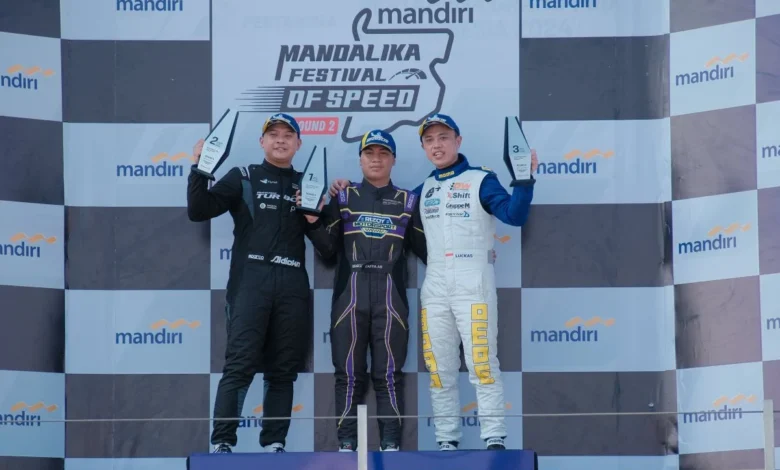
The year 2024 proved to be a pivotal season for Oekon. During the Mandalika Festival of Speed held at the Pertamina Mandalika International Circuit, Oekon demonstrated his ability to perform under the intense pressure of professional-grade competition. By consistently securing podium finishes and refining his technical approach to circuit racing, he earned the respect of his peers and observers in the Indonesian automotive community.
Academic Foundation: The Intellectual Edge
While the adrenaline of the racetrack defines a significant portion of his public identity, Oekon possesses an academic background that contrasts sharply with the high-speed nature of his career. His intellectual pursuits suggest a capacity for long-term strategic planning, a trait that often translates into the calculated maneuvers required in professional driving.
Oekon’s foundational education was rooted in the rigid discipline of urban development. In 2019, he completed his undergraduate studies at the Bandung Institute of Technology (ITB), specializing in Regional and Urban Planning. This academic rigor, which emphasizes resource management and spatial logic, provided him with a structured approach to problem-solving. Following this, he pursued international exposure by relocating to the United Kingdom to attend Birmingham City University. Between 2021 and 2022, he earned a Master of Science in Real Estate Management. This combination of technical planning and real estate expertise provides Oekon with a robust professional portfolio that extends far beyond the confines of a racing cockpit.
Chronology of Competitive Success
Oekon’s rise in the automotive world is best viewed through the lens of his consistent performance metrics. His transition from a participant to a podium contender was not accidental but the result of a multi-year dedication to the craft.
- 2024: Breakthrough Season. Oekon demonstrated his prowess in the Porsche Sprint Challenge Indonesia, culminating in a third-place finish in the overall season standings. His performances in the various series of the PSCI cemented his reputation as one of the most reliable and consistent drivers in the category.
- 2024: Mandalika Excellence. His participation in the Mandalika Festival of Speed highlighted his ability to adapt to complex track layouts, effectively utilizing the capabilities of his vehicle to compete against the best in the nation.
- 2025: Rallying Mastery. Broadening his horizon beyond circuit racing, Oekon made a significant impact in the world of rallying. Partnering with navigator Respati Adhi, Oekon secured a commanding victory in the third round of the FIA Asia Pacific Rally Championship (APRC) held in North Sumatra. Piloting a Hyundai i20 N Rally2, Oekon proved that his skills were not limited to tarmac circuits, showcasing his versatility in handling the unpredictable terrain of rally stages.
The Dynamics of a High-Profile Union
The engagement of Aldio Oekon and Yoriko Angeline represents a convergence of two distinct industries—motorsport and entertainment. Yoriko Angeline, a prominent Indonesian actress, has long been a figure of public interest. Their decision to formalize their relationship at the historic Palace of Versailles drew international media interest, highlighting the couple’s penchant for significant, milestone-driven life events.
The privacy they maintained prior to this engagement suggests a intentional approach to their relationship. In an era where digital footprints are often over-extended, the couple’s ability to keep their early courtship relatively shielded from the public eye is a testament to their desire for a grounded connection. The subsequent surge in public interest regarding Oekon’s professional life is a common phenomenon in celebrity-adjacent relationships, yet Oekon’s achievements provide a substantive narrative that sustains that interest beyond mere curiosity.
Broader Implications for Indonesian Motorsport
The visibility of figures like Aldio Oekon plays a vital role in the ecosystem of Indonesian motorsport. The sport has seen a resurgence in interest, driven in part by the construction and modernization of facilities like the Pertamina Mandalika International Circuit. By bridging the gap between professional racing and mainstream media visibility, Oekon has indirectly contributed to the broader marketing of the sport.
When an athlete of Oekon’s caliber gains a larger audience, it serves to normalize professional racing as a viable and respected career path within Indonesia. His success story—one that balances advanced education with competitive sporting success—provides a blueprint for younger athletes who seek to emulate his trajectory. Furthermore, his performance in international-standard competitions like the FIA APRC reflects the growing competitiveness of Indonesian drivers on the global stage.
Analyzing the Professional Trajectory
From a logistical standpoint, Oekon’s career serves as a case study in effective time management and career diversification. The transition from Regional and Urban Planning to Real Estate Management, while simultaneously maintaining a high-intensity racing schedule, indicates a high level of executive function. In the world of professional racing, where sponsorship and team management are just as critical as raw driving talent, Oekon’s academic background likely provides him with an advantage in understanding the business side of the sport.
As he moves into this new chapter of his personal life, the expectation from the public and the industry is that Oekon will continue to balance his professional commitments with his personal milestones. The discipline he has shown in the cockpit and in the classroom suggests that he is well-equipped to handle the pressures of both the professional racing calendar and his future family life.
Conclusion: A Future of Continued Growth
The story of Aldio Oekon is far more than a headline about a romantic gesture in Paris. It is a testament to the dedication required to excel in highly technical fields. Whether navigating the tight corners of a Porsche Sprint Challenge circuit or analyzing real estate data, Oekon has demonstrated a consistent ability to operate at a high level.
As he prepares for the next phases of his career, both on the track and off, the public can expect a continued focus on performance and precision. The intersection of his personal life with his professional achievements has undoubtedly brought him into the national spotlight, but his track record ensures that he will remain a figure of substance in the Indonesian automotive community for years to come. Through his commitment to excellence in every endeavor, Oekon remains a significant figure in the evolving landscape of Indonesian sports and public life. His journey serves as a reminder that with the right combination of academic preparation, professional drive, and personal commitment, individuals can successfully navigate the complexities of modern public life while maintaining their focus on what matters most.