Danang Wicaksana Sulistya Commits to Overseeing Relocation of 535 Families Affected by Karangnongko Dam Project in Blora

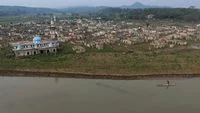
The ongoing national infrastructure push in Indonesia, spearheaded by strategic water resource developments, continues to reshape rural landscapes and local communities. Among these major initiatives is the construction of the Karangnongko Dam in Blora Regency, Central Java—a high-profile project designed to bolster agricultural irrigation, mitigate regional flooding, and secure raw water supplies. However, large-scale infrastructural interventions invariably introduce complex socioeconomic challenges, chief among them the displacement of local residents.
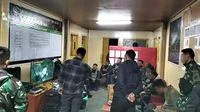
Addressing this pressing humanitarian and administrative concern, Danang Wicaksana Sulistya, a member of Commission V of the House of Representatives (DPR RI) representing the Great Movement Party (Gerindra) faction, has formally committed to overseeing and expediting the relocation process for 535 households directly affected by the dam’s development. This vital pledge was articulated following a series of constituent dialogues conducted during the legislative recess, where local residents voiced their primary concerns regarding land acquisition, housing security, and administrative transparency.
Main Facts of the Karangnongko Dam Displacement
The Karangnongko Dam project represents a significant national strategic investment aimed at transforming the agricultural dynamics of the border region between Central Java and East Java, along the flow of the Bengawan Solo River. While the long-term macroeconomic and regional benefits of the dam are well-documented, the immediate footprint of the construction encompasses 1,037 individual plots of land distributed across five distinct villages: Mendenrejo, Ngrawoh, Nginggil, Nglebak, and Megeri.
The breakdown of the affected land parcels highlights the localized scale of the displacement:
- Mendenrejo Village: 17 land plots
- Ngrawoh Village: 328 land plots
- Nginggil Village: 177 land plots
- Nglebak Village: 372 land plots
- Megeri Village: 143 land plots
In total, these spatial adjustments directly impact 535 families (Kepala Keluarga or KK), who must transition from their ancestral homes and agricultural lands to designated resettlement areas. The overarching objective for lawmakers like Danang is to ensure that this transition adheres strictly to principles of social justice, adequate compensation, and human-centric urban planning.
Chronology and Background Context of the Project
The conceptualization and eventual execution of the Karangnongko Dam stem from decades of regional water resource management planning managed by the Ministry of Public Works and Public Housing (PUPR). The Bengawan Solo river basin, while fertile and vital for Java’s rice bowl, has historically suffered from extreme seasonal fluctuations—causing severe droughts during the dry season and devastating floods during the monsoon period.
Planning phases for the dam accelerated significantly as part of the National Strategic Projects (PSN) framework. Initial feasibility studies, environmental impact assessments (AMDAL), and engineering designs were finalized to optimize water distribution to drought-prone agricultural zones in Blora and surrounding regencies.
Following the finalization of the project blueprint, socialization programs began in the targeted villages. Residents were informed of the impending inundation zones and the necessity of land clearance. However, as is common with major infrastructure projects of this magnitude, the gap between official policy implementation and grassroots reality quickly widened. Residents expressed anxieties over fair compensation valuations, the exact timeline of relocation, and the legal status of the proposed resettlement zones. It was against this backdrop of localized uncertainty that Danang Wicaksana Sulistya absorbed these grievances during his parliamentary recess, prompting his active intervention at the national legislative level.
The Relocation Dilemma: Land Status and Bureaucratic Hurdles
A critical component of Danang’s oversight strategy involves resolving the complex land-use status designated for the displaced families. According to current planning frameworks, the targeted relocation site is slated within a designated Special Purpose Forest Area, commonly known in Indonesia as Kawasan Hutan dengan Tujuan Khusus (KHDTK).
Presently, this specific tract of land falls under the administrative management and operational oversight of Gadjah Mada University (UGM). While preliminary institutional approvals have been secured regarding the willingness to utilize the space for humanitarian resettlement, the bureaucratic machinery required to finalize the transfer remains intricate.
Danang emphasized that while UGM has granted foundational clearance, the formal legal realization of the resettlement area is contingent upon the issuance of an official land-use conversion permit from the Ministry of Forestry. In the Indonesian administrative ecosystem, transitioning protected or university-managed forest zones for residential and public infrastructure purposes involves rigorous multi-agency evaluations, environmental audits, and cross-ministerial coordination.
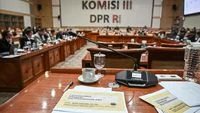
"This aspiration will be voiced during our working meetings and joint hearings with our institutional partners in Commission V," Danang stated in a written release. By keeping this bureaucratic hurdle at the forefront of parliamentary discussions, lawmakers aim to prevent administrative bottlenecks from stalling the project timeline or leaving displaced families in protracted legal limbo.
Broadening the Scope: Infrastructure, Regional Economy, and Social Welfare
Beyond the immediate scope of the Karangnongko Dam relocation, Danang’s recent legislative engagements in Blora have underscored a broader commitment to grassroots infrastructure development and poverty alleviation. During a formal inauguration ceremony for the Regional socio-Economic Infrastructure Development program (PISEW)—which successfully connected vital rural arteries across Dusun Sunggun, Dusun Parengan, and Mendenrejo Village within the Kradenan District—Danang proactively encouraged local village heads to expand their developmental horizons.
He urged local government officials to aggressively identify and submit proposals for additional community-centric infrastructure programs, most notably the Stimulant Assistance for Self-Help Housing, widely known as Bantuan Stimulan Perumahan Swadaya (BSPS) or the national "home surgery" (bedah rumah) program.
The BSPS initiative is designed to assist low-income families in upgrading substandard housing into habitable, safe, and sanitary dwellings. However, structural impediments have frequently hampered the equitable distribution of these housing grants to the citizens who need them most.
Advocating for Bureaucratic Simplification in Social Welfare Programs
A cornerstone of Danang’s policy commentary during his Blora constituents visit was a direct critique of administrative red tape associated with social assistance programs. He specifically called upon the Ministry of Housing and Residential Areas (PKP) to implement a thorough simplification of the administrative requirements mandated for low-income citizens seeking housing improvement grants.
In many developing regions, impoverished communities encounter insurmountable bureaucratic barriers—ranging from complex land-ownership documentation to stringent verification paperwork—that effectively disqualify them from receiving state aid. Danang argued passionately that procedural technicalities must never be allowed to supersede the fundamental human right to adequate shelter.
"When we speak of living quarters, we are not merely discussing physical comfort. We are directly addressing matters of public health, personal safety, and the overall quality of human life," Danang asserted. His advocacy aligns with wider national development goals aimed at reducing extreme poverty and upgrading slum settlements into sustainable rural and urban communities. By removing bureaucratic friction from programs like BSPS, the state can ensure that welfare interventions reach vulnerable populations with maximum efficiency.
Fact-Based Analysis of Implications and Future Outlook
The convergence of the Karangnongko Dam relocation project and the broader push for rural housing reform highlights several critical implications for regional development in Central Java:
-
Socioeconomic Transition Management: The successful relocation of 535 households is not merely a logistical exercise in moving physical structures; it requires comprehensive livelihood restoration. Displaced agricultural workers and rural laborers must be guaranteed continuous access to arable land, vocational training, and economic opportunities in their new settlements to prevent localized impoverishment.
-
Inter-Agency Synergy: The administrative dependency on both the Ministry of Forestry and the Ministry of Public Works underscores the necessity of robust inter-ministerial coordination. Delays in land-use conversion could create friction between construction milestones and human rights obligations. Parliamentary oversight by bodies like Commission V plays an indispensable role in maintaining accountability and keeping projects on schedule.
-
Housing as a Catalyst for Public Health: Danang’s emphasis on streamlining the BSPS program reinforces the understanding that substandard housing directly correlates with broader socio-economic vulnerabilities, including preventable health crises and educational setbacks for children. Simplifying access to housing grants yields compounding benefits for regional human development indices.
As the Karangnongko Dam project progresses toward its projected construction milestones, the eyes of the affected communities remain fixed on their elected representatives to deliver equitable solutions. Danang Wicaksana Sulistya’s pledge to monitor the relocation process through formal parliamentary channels serves as a vital bridge between grassroots expectations and state-level execution. Ensuring that these 535 families transition into secure, legally recognized, and well-supported environments will ultimately serve as a benchmark for how major national infrastructure projects balance economic progress with social responsibility in contemporary Indonesia.
Related posts: