Understanding the Jurisprudence of Sunnah Prayers During the Friday Khutbah and the Etiquette of Congregational Worship

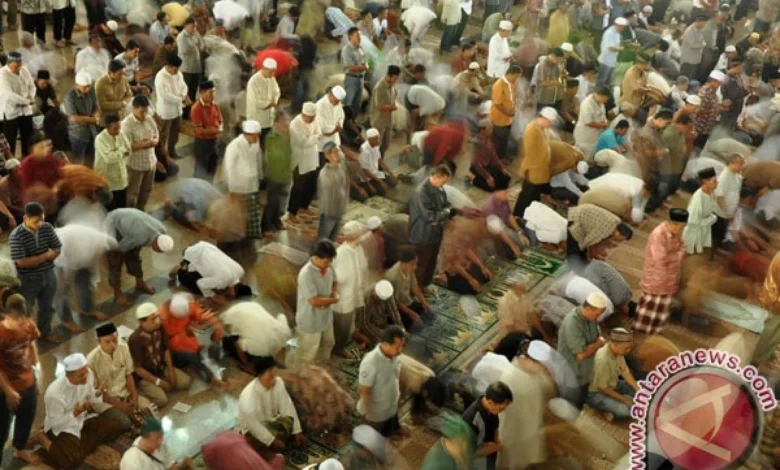
The legal standing of performing Sunnah prayers while the Friday khutbah or sermon is in progress remains a frequent point of inquiry among the Muslim community, particularly for congregants who arrive at the mosque after the khatib has already ascended the pulpit and commenced the address. The determination of whether such a prayer is recommended, permissible, or discouraged hinges upon the specific circumstances of the individual—specifically, whether they were already seated within the prayer hall or have just crossed the threshold of the mosque. Islamic jurisprudence, derived from the prophetic traditions (Hadith) and the interpretations of major legal schools (Madhabs), provides a nuanced framework to ensure that the sanctity of the Friday service is maintained while the individual’s spiritual obligations to the mosque are fulfilled.
For those already established within the mosque before the commencement of the sermon, the consensus among scholars is largely uniform: the priority shifts entirely toward attentive listening. However, the situation becomes more complex for the latecomer. This distinction is not merely a matter of ritualistic protocol but reflects a deeper balance between two competing virtues in Islamic worship: the "Tahiyatul Masjid" (the prayer to greet the mosque) and the mandatory obligation to listen to the Friday sermon, which is considered a prerequisite for the validity or the full reward of the Jumu’ah prayer.
The Historical and Scriptural Foundation of the Ruling
The primary evidence used by scholars to permit and even encourage Sunnah prayers during the khutbah is a specific historical incident recorded in the Sahih collections. This event serves as the chronological "case law" for Islamic jurists. According to the companion Jabir bin Abdullah, a man named Sulaik al-Ghatafani entered the mosque on a Friday while the Prophet Muhammad (peace be upon him) was delivering the sermon. Sulaik sat down immediately without praying. The Prophet interrupted his address to ask, "O Sulaik, have you prayed two rakaats?" When Sulaik replied in the negative, the Prophet commanded him, "Stand up and perform two rakaats, and make them brief."
This specific intervention by the Prophet is highly significant in legal analysis. Jurists note that the Prophet stopped his own sermon—a sacred act—to ensure the newcomer performed the greeting of the mosque. This suggests that the Tahiyatul Masjid holds a high status of recommendation (Sunnah Mu’akkadah) that is not entirely superseded by the presence of the khatib on the pulpit. However, the instruction to "make them brief" (wal-yatjawwaz fihima) provides a critical caveat: the prayer must be performed with speed and focus, avoiding lengthy recitations, so that the individual can return to the primary obligation of listening to the sermon as quickly as possible.
Conversely, the obligation to remain silent is rooted in another foundational Hadith. The Prophet stated, as recorded by Bukhari and Muslim, "If you say to your companion, ‘Be quiet’ or ‘Listen’ on Friday while the Imam is preaching, you have engaged in idle talk (Laghw)." The term "Laghw" in this context implies a loss of the specific rewards associated with the Friday prayer. If even a two-word command to be silent is considered a distraction, then any voluntary action—including prayer—must be carefully scrutinized within the context of the sermon’s sanctity.
Divergent Interpretations Among the Four Schools of Law
The interpretation of these Hadiths has led to a constructive divergence in the four major schools of Sunni Islamic jurisprudence. These differences reflect the various methodologies used by scholars to reconcile the command to pray Tahiyatul Masjid with the command to listen silently to the Imam.
The Shafi’i and Hanbali Schools take a literal and prioritised view of the Sulaik al-Ghatafani incident. Scholars within these traditions, which are predominant in Southeast Asia (including Indonesia) and parts of the Middle East, argue that the specific command given by the Prophet to the latecomer acts as an exception to the general rule of silence. Therefore, they maintain that it is sunnah (recommended) for a person entering the mosque to perform two short rakaats of Tahiyatul Masjid, even if the sermon has started. They posit that the Prophet’s direct order to a specific individual carries more weight for that specific circumstance than the general prohibition of "idle talk."
On the other hand, the Hanafi and Maliki Schools prioritize the Quranic and Prophetic injunctions regarding the absolute necessity of listening to the sermon. The Quran states in Surah Al-A’raf, "So, when the Quran is recited, listen to it and be silent that you may receive mercy." Since the Friday sermon typically includes Quranic verses and serves the same purpose as the remembrance of God, these schools argue that any activity—even a voluntary prayer—is prohibited (Makruh Tahrimi or Haram) once the Imam has begun to speak. They interpret the incident with Sulaik al-Ghatafani as a specific instruction for that time or a case that occurred before the final prohibition of speaking during the khutbah was solidified. For followers of these schools, a latecomer should sit down immediately and focus on the sermon without praying.
Practical Implications for Modern Congregants
In contemporary settings, especially in large metropolitan mosques in Jakarta or other global hubs, these differences in jurisprudence are visible every Friday. The Indonesian Ulema Council (MUI) and major organizations like Nahdlatul Ulama (NU) generally lean toward the Shafi’i interpretation, which is why it is common to see congregants performing a quick prayer upon arrival.
However, the consensus remains absolute on one point: those who are already seated must not start a new prayer once the khatib begins. If a congregant is in the middle of a Sunnah prayer (such as the Qobliyah Jumu’ah) when the Adhan is called or the khatib starts, they are advised to finish it quickly. The focus must be on the "dhikr" (remembrance) of the sermon.
Furthermore, modern scholars have expanded the definition of "idle talk" or "distraction" to include the use of technology. In an era of smartphones, the prohibition against "laghw" (idle behavior) is applied to checking social media, texting, or even recording the sermon if it distracts the individual from the actual message being delivered. The legal logic remains the same: the Friday sermon is a collective act of worship that demands the full cognitive and spiritual presence of the community.
The Etiquette of Friday Worship: Beyond the Prayer
To fully grasp the ruling on Sunnah prayers, one must view it within the broader context of the "Adab" (etiquette) of Jumu’ah. The objective of the Friday gathering is communal education and spiritual rejuvenation. Therefore, the physical and behavioral conduct of the congregant is designed to facilitate this goal.
Key etiquettes that complement the ruling on prayer include:
- Early Arrival: Arriving before the khatib ascends the pulpit allows a congregant to perform Tahiyatul Masjid and other voluntary prayers (Intidzar) without any legal ambiguity.
- Physical Preparation: Ritual purification (Ghusl), wearing clean clothes, and using perfume (for men) are emphasized to create a dignified environment.
- Prohibition of "Ihtiba": Some traditions discourage sitting in a way that promotes sleepiness (such as drawing the knees to the chest) during the sermon, as the goal is active listening.
- Non-Disruption: If the mosque is crowded, latecomers are strictly forbidden from "stepping over the necks" of those already seated to find a spot. It is better to pray in the back than to cause physical discomfort to others.
Analysis of the Spiritual and Social Impact
The debate over Sunnah prayers during the khutbah highlights the meticulous nature of Islamic law in balancing individual devotion with communal obligation. The "briefness" of the Tahiyatul Masjid prayer, as commanded by the Prophet, serves as a symbolic bridge. It acknowledges the mosque’s status as a house of God that deserves a greeting, yet it acknowledges that the message being delivered from the pulpit is the primary reason for the assembly.
From a social perspective, the Friday sermon serves as a weekly "state of the union" for the Muslim community, addressing moral, social, and spiritual issues. When congregants prioritize the sermon—either by sitting immediately (per Hanafi/Maliki view) or by praying with extreme brevity (per Shafi’i/Hanbali view)—they reinforce the importance of the collective over the individual.
The legal discussions also foster a culture of tolerance (ikhtilaf). In Indonesia, where the Shafi’i school is the standard, a visitor from a Hanafi-majority region like Pakistan or Turkey might sit down immediately without praying. An educated congregation understands that both actions are rooted in valid, scholarly interpretations of the Prophetic tradition. This diversity in practice, rather than being a source of conflict, illustrates the richness of Islamic intellectual history.
Conclusion and Summary of Guidance
In conclusion, the ruling on performing Sunnah prayers during the Friday khutbah is a clear example of how Islamic law adapts to the specific timing and status of the worshipper. For the majority of Indonesians following the Shafi’i tradition, the guidance is clear: if you arrive late and the sermon has started, perform two very short rakaats of Tahiyatul Masjid to honor the mosque, then immediately focus on the khatib. If you are already in the mosque, remain silent and still.
The overarching principle remains the avoidance of "laghw" or vanity. The Friday prayer is more than just a ritual; it is a moment of profound silence in a noisy world. By adhering to these juristic guidelines, congregants ensure that their worship is not only valid in a legal sense but also spiritually transformative. The wisdom of the Prophet’s instruction—to be brief in prayer and attentive in listening—remains the gold standard for achieving a successful and rewarded Friday experience. As mosques continue to serve as the heart of the community, understanding these nuances ensures that the sanctity of the "Day of Assembly" is preserved for generations to come.